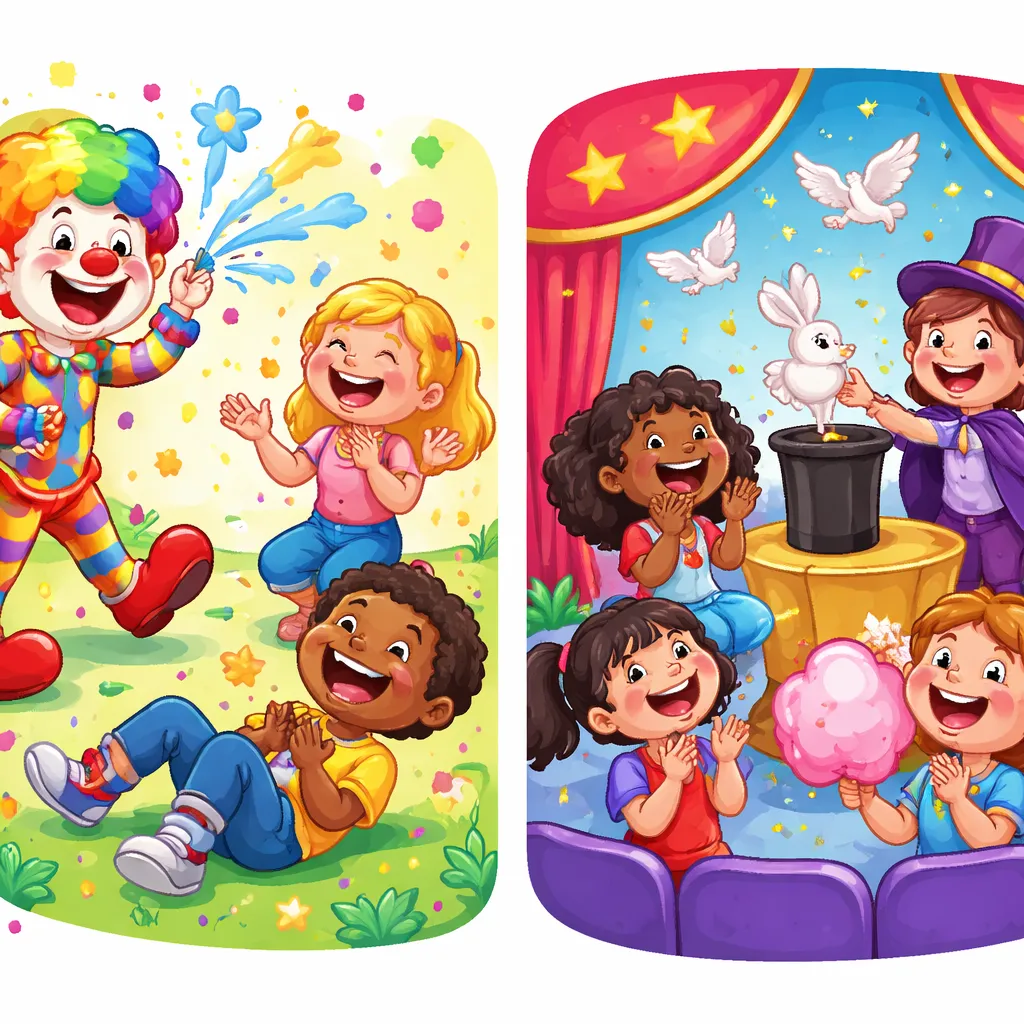

Hello, word explorer! Have you ever laughed at a silly joke? Or smiled at a cute comic? How do you describe that feeling? Do you say it is funny? Or do you say it is amusing? They both seem to mean something makes you happy. But are they the same? They are like two different types of laughter. One is a loud, belly laugh. One is a quiet, smiling chuckle. Let's find out! Today, we explore the word friends "funny" and "amusing". Knowing their secret is a cool social superpower. It helps you share your feelings about humor. Let's start our fun adventure!
First, let's be Laughter Detectives. Listen at home. Here are two sentences. "My dad told a very funny joke at dinner." "The cat's silly pose was quite amusing." They both talk about something that makes you smile. A joke. A cat. Do they sound the same? One feels stronger and louder. One feels lighter and softer. Can you sense it? Great observation! Now, let's look closer with our word microscope.
Adventure! Inside the World of Humor Words
Welcome to the world of humor! "Funny" and "amusing" are two different flavors of laughter. Think of "funny" as a big, colorful whoopee cushion. It makes a loud, surprising sound. Think of "amusing" as a clever, winding maze. It makes you smile as you follow it. Both are enjoyable. But they entertain you in different ways. Let's learn about each one.
The Loud Laugh vs. The Quiet Smile Think about the word "funny". "Funny" feels like a loud, sudden laugh. It is a strong reaction. It often describes something that makes you laugh out loud. A funny movie. A funny clown. The humor is clear and direct. Now, think about "amusing". "Amusing" feels like a quiet, gentle smile. It is a milder reaction. It describes something that pleasantly occupies your mind. An amusing story. An amusing coincidence. "Funny" is the big laugh. "Amusing" is the small smile. One is hilarious. The other is mildly entertaining.
The Strong Reaction vs. The Light Enjoyment Let's listen to their strength. "Funny" is a very common, strong word. Kids use it all the time. It means something causes laughter. That video is so funny! It is a powerful compliment for humor. "Amusing" is a lighter, softer word. It is a bit more formal. It means something is enjoyable and fun, but not wildly hilarious. I find his comments amusing. The game was amusing for a while. "Funny" is for big laughs. "Amusing" is for small pleasures. One is for comedy clubs. The other is for clever observations.
Their Special Word Partners and Common Uses Words have best friends. "Funny" is a very flexible, everyday word. It can describe people, things, and situations. A funny person. A funny feeling (strange). That's funny (odd). It is used in many casual phrases. "Amusing" is a bit more specific. It often describes things that are clever or witty. It is used more in writing and formal talk. An amusing anecdote. An amusing twist in the story. Note: We say "That's not funny!" when a joke is bad. We don't usually say "That's not amusing!" in the same way. They are different teams.
Let's visit a school scene. Your friend does a perfect impression of the teacher. The whole class bursts out laughing. You say, "That was so funny!" This matches the loud, group laughter. Now, in art class, you see a drawing of a dog wearing glasses. It makes you smile quietly. You think, "That is an amusing drawing." This matches your quiet, personal smile. Using "amusing" for the impression is okay, but "funny" fits the big reaction. Using "funny" for the drawing is fine, but "amusing" fits the clever smile.
Now, let's go to the playground. Your friend tells a joke with a silly punchline. You both laugh hard. The joke was funny. Later, you watch a squirrel try to steal a bird's food. Its sneaky moves are cute. The scene is amusing. The word "funny" paints the loud joke. The word "amusing" paints the cute animal scene.
Our Little Discovery So, what did we find? "Funny" and "amusing" are both about humor. But they are different levels. "Funny" is a strong, common word for things that make you laugh out loud. "Amusing" is a lighter, softer word for things that make you smile or feel mildly entertained. "Funny" is for big comedy. "Amusing" is for clever, cute, or witty things. Knowing this helps you describe humor just right.
Challenge! Become a Humor Word Expert
Ready for a fun test? Let's try your new skills!
"The Best Choice" Challenge Let's imagine a nature scene. A monkey at the zoo puts on a hat and sunglasses. It walks like a person. The crowd points and laughs loudly. The monkey is... what? Funny or amusing? The monkey is funny. It causes loud, clear laughter. Now, imagine a bird carefully arranging shiny bottle caps in its nest. It is interesting and cute to watch. The bird's behavior is amusing. It makes you smile quietly. "Funny" wins for the hilarious monkey. "Amusing" is the champion for the cute, clever bird.
"My Sentence Show" Your turn to create! Here is your scene: Watching a cartoon with your family. Can you make two sentences? Use "funny" in one. Use "amusing" in the other. Try it! Here is an example: "The scene where the character slipped on a banana was funny." This describes a classic laugh moment. "The way the clever mouse outsmarted the cat was amusing." This describes a clever, smile-worthy plot. Your sentences will show two levels of humor!
"Eagle Eyes" Search Look at this sentence. Can you find the word that could be better? Let's check a home context. "My grandfather's amusing story about his childhood had everyone in the room crying with laughter." Hmm. The phrase "crying with laughter" shows a very strong reaction. The word "funny" fits this strong laughter better. "My grandfather's funny story... had everyone crying with laughter." "Amusing" sounds too mild for such a big reaction. Did you spot it? Excellent word work!
Harvest and Action! Turn Knowledge Into Your Superpower
Great exploring! We started thinking "funny" and "amusing" were the same. Now we know they are two different levels of humor. We can hear the loud laugh of "funny". We can see the quiet smile of "amusing". You can now describe humor with perfect accuracy. This is a great skill for talking about movies, books, and jokes.
What you can learn from this article: You can now feel that "funny" is a strong, common word for things that make you laugh out loud. You can feel that "amusing" is a lighter, softer word for things that make you smile or feel cleverly entertained. You know that a comedian's joke is "funny", but a clever comic strip might be "amusing". You learned to match the word to the strength of the humor.
Life practice application: Try your new skill today! Watch a comedy show. What part was funny? What part was just amusing? Tell a friend about a funny thing that happened. Tell them about an amusing observation you made. Listen to how people use these words. You are now a master of humor words! Keep exploring the wonderful world of language.