
Introduction to Mexico
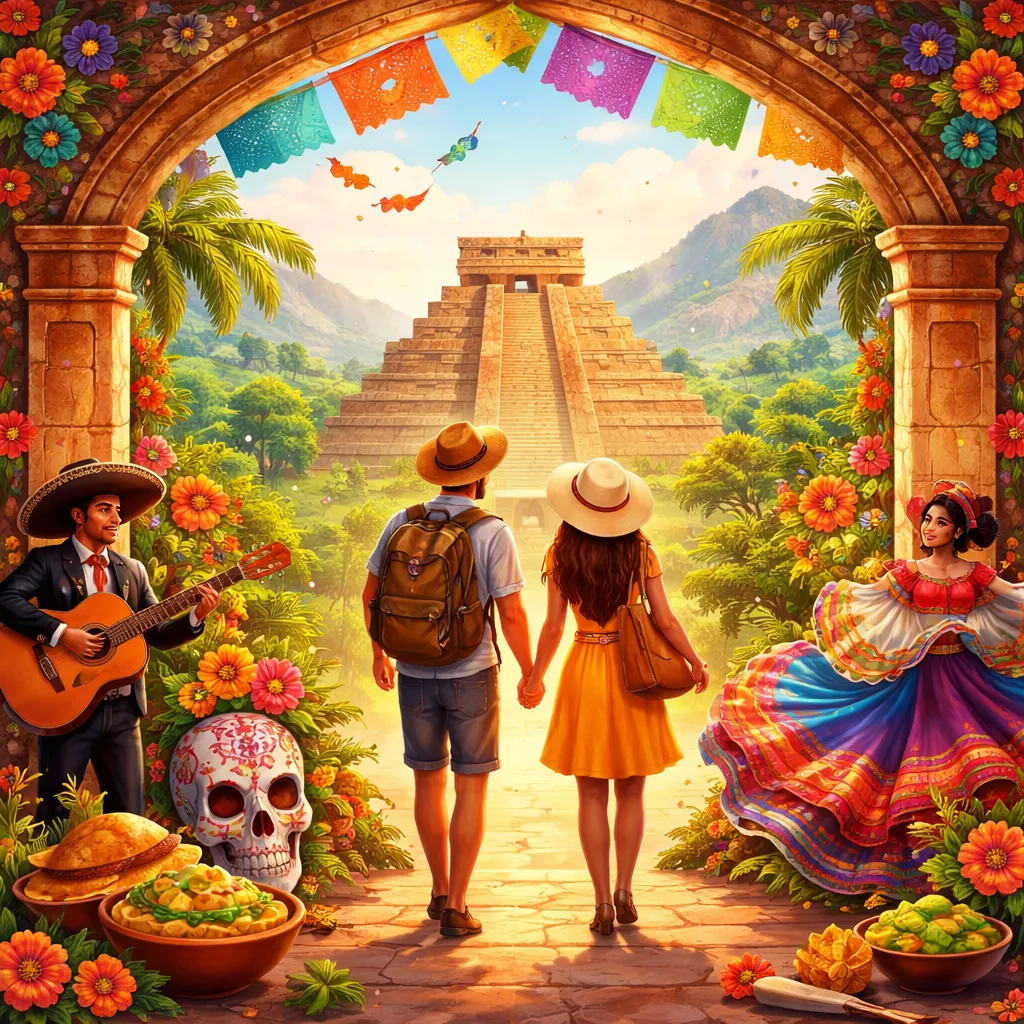
Language learning invites us to explore a land of ancient pyramids and vibrant festivals. Today we journey to a country that connects North and Central America. This nation holds stories of powerful empires and rich traditions. Children will discover the world of the Aztecs and Maya. They will learn about celebrations filled with music, color, and family. Exploring Mexico builds reading skills while revealing a culture of warmth and history. Every fact uncovers a new wonder. Every word invites young readers to experience the beauty of this remarkable country.
Where Is Mexico?
Mexico lies in North America, directly south of the United States. It shares borders with the United States to the north. Guatemala and Belize lie to the south. The Pacific Ocean stretches along the western coast. The Gulf of Mexico and the Caribbean Sea border the east. The capital city is Mexico City. Mexico City ranks as one of the largest cities in the world. It sits in a high valley surrounded by mountains and volcanoes. The country has diverse landscapes. Deserts cover the north. Rainforests grow in the south. Sandy beaches line both coasts. Finding Mexico on a map shows its long, curved shape connecting two continents.
Interesting Facts About Mexico
Mexico offers countless fascinating facts for young learners. It was home to advanced ancient civilizations. The Aztecs built their capital on an island in a lake. That island now lies beneath Mexico City. The Maya created complex calendars and wrote books using hieroglyphs. Another interesting fact involves pyramids. Mexico has more pyramids than Egypt. The Pyramid of the Sun at Teotihuacan ranks among the largest in the world. Visitors can climb its steep steps.
Mexico also has a unique celebration. Day of the Dead honors ancestors with colorful altars, marigolds, and sugar skulls. Families gather to remember loved ones. This tradition shows that death is part of life. Another fun fact involves food. Mexico gave the world chocolate, corn, and tomatoes. The Aztecs considered chocolate a gift from the gods. Mexican cuisine now ranks as a UNESCO cultural treasure.
The country also holds natural wonders. The monarch butterfly migrates here each year. Millions of butterflies cover the forests like orange blankets. Mexico also has cenotes—natural swimming holes formed in limestone caves. These clear pools served as sacred sites for the Maya. These facts show children a country where ancient and modern life blend seamlessly.
Key Vocabulary About Mexico
Let us build vocabulary for this vibrant nation. These words help children describe what they learn.
Pyramid: a large structure with a square base and triangular sides.
Civilization: a complex society with cities, government, and culture.
Hieroglyph: a symbol that represents a word or sound in ancient writing.
Cenote: a natural underground pool formed in limestone.
Marigold: a bright orange or yellow flower used in celebrations.
Volcano: a mountain that erupts with lava and ash.
Tradition: a custom or belief passed down through generations. Introduce these words with pictures and stories. Show the Pyramid of the Sun and explain its size. Show marigolds and sugar skulls from Day of the Dead. Let children say each word aloud. These vocabulary words give children the language to explore Mexico's rich heritage.
Simple Sentences for Reading Practice
Short sentences help new readers build confidence. Use these sentences about Mexico for practice.
Mexico is a country in North America.
The capital city is Mexico City.
Ancient pyramids stand in Mexico.
The Aztecs and Maya built great cities.
Day of the Dead is a special celebration.
Monarch butterflies travel to Mexico each winter.
People speak Spanish in Mexico. Read each sentence together. Let children point to the words. Encourage them to repeat after you. Use pictures to show each fact. These simple sentences prepare young readers for longer passages.
Short Reading Passage About Mexico
Here is a short passage for children to read together.
“Mexico stretches from the United States down to Central America. Two oceans touch its shores. Mountains, deserts, and rainforests fill the land. Long before Europeans arrived, great civilizations flourished here. The Maya built cities with pyramids and palaces. They studied the stars and created a writing system. The Aztecs built their capital on a lake. Today, Mexico City rises above that ancient site. Visitors can see pyramids at Teotihuacan. The Pyramid of the Sun offers a climb with a view. Mexico celebrates traditions that blend ancient and modern. Day of the Dead fills cemeteries with marigolds. Families build altars with photos and favorite foods. They remember loved ones with joy. The country also welcomes a special visitor each winter. Monarch butterflies fly thousands of miles to Mexico's forests. Millions of them cover the trees in orange and black. Mexican food delights the world. Corn, beans, chocolate, and tomatoes all began here. Mexico holds history, nature, and culture in every corner.”
Read this passage slowly together. Pause to talk about each idea. Ask children to find vocabulary words in the text. This activity builds reading fluency and deepens understanding.
Fun Questions About Mexico
Questions make reading interactive and engaging. Use these to start conversations with young learners.
What countries border Mexico to the north and south?
What is the capital city of Mexico?
Which ancient civilizations built cities in Mexico?
What celebration honors ancestors with altars and marigolds?
What insects travel to Mexico each winter?
What foods did Mexico give to the world? Let children answer in complete sentences. Encourage them to use new vocabulary. Ask them to imagine climbing the Pyramid of the Sun. What would they see from the top? Creative questions make the topic personal and exciting.
Tips for Learning English with This Topic
Use Mexico to create rich English learning experiences. Start with a map activity. Let children find Mexico and trace its borders. Point out the two oceans and the varied geography. Discuss how this diverse landscape supported different ancient civilizations. This connects geography to history in a meaningful way.
Next, introduce the vocabulary through a building activity. Let children build pyramids using blocks or clay. Talk about the Pyramid of the Sun and how people built these structures without modern machines. Use the word "civilization" to describe the Aztecs and Maya.
Read the passage aloud with warmth and celebration. Let your voice express the joy of Day of the Dead. After reading, let children draw a scene from Mexico. One child might draw a pyramid with steps. Another might draw a monarch butterfly resting on a marigold. Let them label their drawings with vocabulary words. Add bright colors for the flowers and butterflies.
Incorporate a cultural connection. Talk about Day of the Dead and how it celebrates family. Ask children about ways their family remembers loved ones or celebrates traditions. Compare this to Mexican customs. This shows children that language learning reading connects to understanding different cultures.
Use music and movement to enhance the experience. Listen to traditional Mexican music with mariachi bands. Let children move like butterflies migrating. Pretend to climb pyramid steps. Physical activity reinforces learning in joyful ways.
Encourage children to share their knowledge. Let them tell a family member about the monarch butterfly migration. They can explain why Mexico has so many pyramids. Teaching others builds confidence and deepens understanding.
Connect Mexico to your child's world. Ask, “What celebrations does our family enjoy?” Talk about how you honor traditions. Compare to Day of the Dead. Ask about foods you enjoy that came from Mexico, like chocolate or corn. These connections help children see that language learning reading is about understanding people and cultures everywhere. By exploring Mexico together, you give children a rich experience. They learn new words, discover a land of pyramids and traditions, and grow their love for reading. This vibrant nation becomes a cherished part of their learning journey.