
Opening Introduction
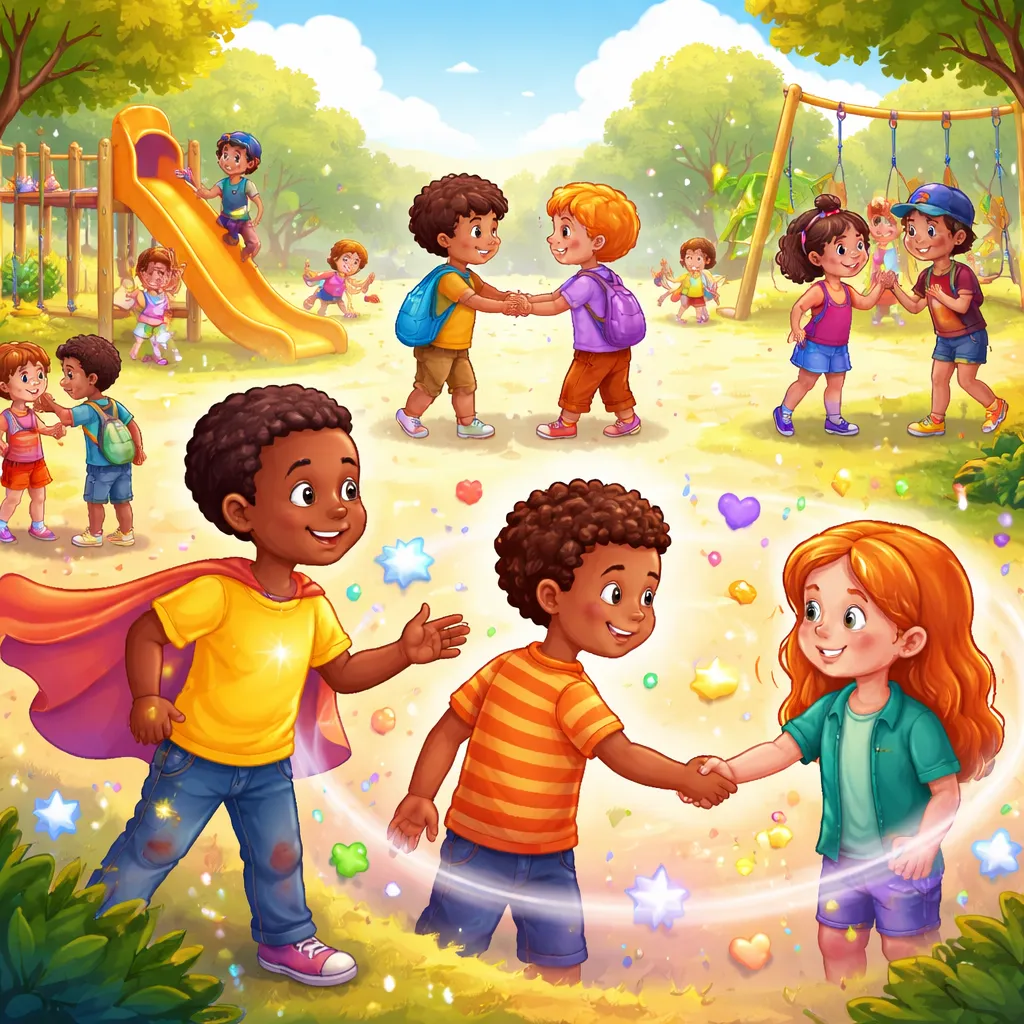
Leo and Sam were at the playground. They both ran to the swings at the same time. "I saw it first!" said Leo, grabbing the chain. "But I got here first!" said Sam, holding on too. They pulled the swing, getting angrier. Their friend, Mia, watched. She walked over. "Guys, pulling won't work. We need to use our words, not our muscles. There are special words to solve problems. They are called conflict resolution phrases for the playground. Want to learn them so we can all play?" Leo and Sam stopped pulling. Special words for solving fights? That sounded better than fighting. Let's learn these word tools together.
Core Knowledge Explanation
What is a conflict? A conflict is a disagreement or a fight. On the playground, conflicts happen. Someone takes a toy. Someone cuts in line. Someone says a mean word. Conflict resolution is solving the problem peacefully. It means finding a way so everyone feels okay. The best tools for this are words. Learning the right conflict resolution phrases for the playground helps you be a hero of peace, not a fighter.
Let's learn phrases for different steps. The first step is to calm down. When you are angry, take a deep breath. Then you can say, "I need a minute to calm down." This is a very important phrase. The second step is to say how you feel. Use "I feel" words. Say, "I feel upset when you take the ball without asking." Or, "I feel sad when you don't let me play." This tells the other person your feelings without blaming them.
The third step is to listen. After you speak, let the other person talk. You can say, "Can you tell me what happened?" or "I want to understand your side." Listening is a superpower. The fourth step is to find a solution. This is where you work together. You can use phrases like: "Can we take turns?" "How about we share?" "Let's play a different game together." "Can we agree to...?" These are the key conflict resolution phrases for the playground. They turn a fight into a teamwork project.
Another important phrase is the apology. If you did something wrong, say, "I'm sorry. I will try not to do that again." If someone apologizes to you, you can say, "I accept your apology." Or, "Thank you for saying sorry." These phrases help fix hurt feelings. Remember, the goal is not to win, but to find a way to keep playing and having fun. These words are your tools to build friendship bridges.
Fun Interactive Learning
Let's play a game called "Conflict Resolution Role-Play." This is the best way to practice. With a friend or family member, act out a playground problem. One person takes a toy. The other person uses the phrases. "I feel upset when you take my truck. Can we take turns? You can have it for five minutes, then it's my turn." Then switch roles. Try different scenes: cutting in line, breaking a sandcastle, not sharing. Use the conflict resolution phrases for the playground you are learning. This makes you ready for real life.
Another fun activity is to make "Peace Cards." Write the different phrases on index cards. Decorate them. "I feel...", "Can we take turns?", "I'm sorry.", "Let's find a solution." Keep them in a box. When you have a problem with a sibling or friend, pick a card and try to use that phrase. It turns problem-solving into a game. You can also play "What Would You Say?" Make up a story. "You are building a fort. Your friend kicks it down. What do you say?" Write down or say your answer using the new phrases. This builds your thinking skills.
Expanded Learning
Conflict is a normal part of life. Even adults have conflicts. The conflict resolution phrases for the playground you learn now are skills for your whole life. They are used in families, at work, and between countries. In different cultures, people might solve problems differently, but the idea of talking and listening is universal. Some cultures value talking quietly. Others might use a mediator, a person who helps. The phrases you are learning are a great start.
Animals have conflicts too! They often use body language, not words, to solve them. A dog might roll over to show it gives up. Birds might sing to mark their territory. But humans are lucky. We have words. Long ago, people made up rules and laws to solve big conflicts. Your conflict resolution phrases for the playground are like your own personal rules for fairness and friendship. Let's make a conflict resolution chant. Chants are easy to remember and say in your head when you are upset.
When there's a problem, stop and think, before you push or yell or blink! Take a breath and find the words, the kindest words you've ever heard! "I feel upset," you can say, then listen to what they convey! "Can we share?" or "Take a turn?" these are lessons you will learn! Using words is brave and strong, it helps us all get along!
What You Will Learn
You are learning about communication, empathy, and problem-solving. You are learning specific conflict resolution phrases for the playground: "I need a minute to calm down," "I feel upset when...", "Can you tell me what happened?", "Can we take turns?", "Let's share," "I'm sorry," "I accept your apology." You are also learning the steps of conflict resolution.
You are learning powerful, peaceful sentences. You can express, "I feel left out when you don't let me play." You can suggest, "How about we play rock-paper-scissors to decide?" You can apologize sincerely, "I'm sorry I broke your crayon. I will be more careful." You are using English to de-escalate tension and build understanding. This is a highly valuable social skill.
You are building essential life skills. You are building emotional regulation. You learn to calm down before acting. You are building assertive communication. You express your needs without aggression. You are building active listening. You learn to hear the other side. You are building creative problem-solving. You think of fair solutions. You are building confidence. You can handle difficult social situations.
You are forming a peaceful and proactive habit. The habit of using words as your first tool, not your fists or your shouts. You learn that being strong means being smart and kind with your words. Mastering these conflict resolution phrases for the playground makes you a leader, a friend, and a peacemaker wherever you go.
Using What You Learned in Life
Use your new phrases every time you have a disagreement. On the playground, at home with siblings, in the classroom. If someone takes your pencil, say, "I was using that. I feel frustrated. Can I have it back, please?" If you accidentally bump someone, say, "I'm sorry. Are you okay?" Be the one who suggests the solution. "We both want the red marker. Let's take turns every two minutes." You can also help your friends. If you see two people arguing, you can say, "Can I help you find a solution?" Use your phrases to guide them.
At school, you can ask your teacher if you can make a poster of peace phrases for the classroom. Teach the chant to your friends. When you read a story or watch a show, notice how the characters solve problems. Do they use good phrases or bad ones? The more you practice the conflict resolution phrases for the playground, the more natural they will feel. You are becoming a diplomat of the playground.
Closing Encouragement
You are a peacemaker. You are a word warrior. You are a kind and smart problem-solver. I am so incredibly proud of you. Learning these conflict resolution phrases shows you have a brave heart and a wise mind.
Take your new word tools everywhere you go. Remember, the most powerful kids are not the ones who win fights, but the ones who can end them. You are learning the language of peace, and that is a superpower that changes the world.
You are communicative, you are empathetic, and you are ready to build a happier playground for everyone. Great work, my wonderful peace hero.