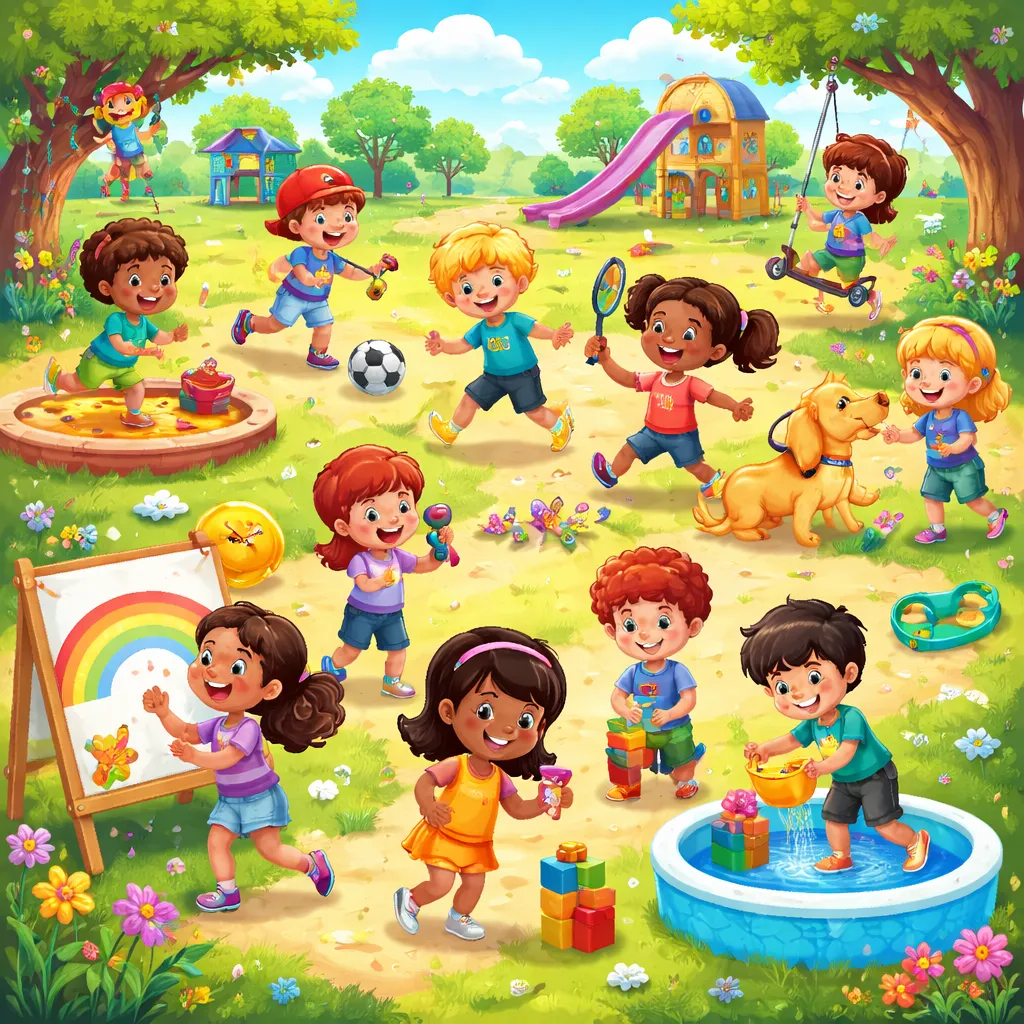

Hello, action star! Can you jump? Can you clap? When you jump and clap, you are doing an action. Words for actions are called verbs. A verb is an action word! It is the most exciting part of a sentence. It tells us what is happening. Today, we will learn about one hundred of the most common verbs. Your guide is Victor the Action Star. He is always moving and doing. He will show you verbs at home, on the playground, at school, and in nature. Let's get moving!
What Is a Verb? A verb is a word that shows an action or a state of being. Think of it as the movie in your sentence. The noun is the star actor, and the verb is what the star does. "The dog runs." 'Runs' is the action. It is the verb. "I am happy." 'Am' is a state of being. It is also a verb. Verbs make sentences come alive. They are the doing and being words. We will explore one hundred of these powerful words.
Why Learn These Action Words? Verbs make your words move. They help your ears listen. You can hear what is happening in a story. "The frog jumps!" You can picture it. They help your mouth speak. You can tell people exactly what you are doing. "I want milk." "I see a bird." They help your eyes read. Verbs help you follow the action in a book. They help your hand write. You can write about your fun day. "I played. I ate. I slept." Knowing these one hundred most common verbs gives you power to talk about your world.
What Are the Main Kinds of Verbs? Victor says verbs come in a few main types. Let's meet them!
Action Verbs: These are the big movers! They show clear action you can often see. Run, jump, eat, play, read, write, draw, sing. "I run fast." "The bird flies."
Being/Linking Verbs: These are quiet but important. They do not show big action. They link the subject to more information. They tell us what something is or is like. Am, is, are, was, were. "I am big." "She is my friend." "They are happy."
Helping Verbs: These are teamwork words. They help the main verb. Can, will, do, did, have, has. "I can jump." "She will come." "They do like it."
How Can You Spot a Verb? You can be a verb detective! Ask these questions.
Can I do it? If you can act it out, it is likely an action verb. Can you jump? Yes! 'Jump' is a verb. Can you sleep? You can pretend! 'Sleep' is a verb.
Can I put "I" or "he" in front of it? If you can say "I ____" or "He ____", and it makes sense, it's a verb. I eat. He runs. I am. He is.
Does it show a change or a state? Does the word tell you that something is happening or that something exists? "The flower grows." (happening) "The sky is blue." (state)
Look for the word that tells what the subject does. In "The cat sleeps on the bed," ask: What does the cat do? It sleeps. 'Sleeps' is the verb.
Victor shows us. Look at "My mom cooks dinner." What is the action? 'Cooks'! That is the verb. In "We are at the park," the verb is 'are'. It links 'we' to 'at the park'.
Where Do Verbs Go in a Sentence? The verb is often the heart of the sentence. A very simple sentence is just: [Noun] + [Verb]. "Bird flies." "Baby cries." "Sun shines."
You can add more: [Noun] + [Verb] + [the rest]. "My dog eats his food." "The kids play in the park." The verb usually comes right after the noun doing the action.
Let's Fix Some Wobbly Actions. Sometimes we mix up verbs with other words. Let's fix it.
Using a noun as a verb. "I ball." 'Ball' is a thing, not an action. To show the action, use a verb. "I bounce the ball." or "I play ball."
Forgetting the 's' for he/she/it. "He run fast." For one person (he, she, it), we often add an 's' to the verb. "He runs fast."
Using the wrong 'be' verb. "I is happy." 'I' needs 'am'. "You is happy." 'You' needs 'are'. The correct ones are: I am, you are, he/she/it is, we are, they are.
Missing the verb completely. "The boy happy." This is not a full sentence. We need a verb. "The boy is happy."
Can You Be the Action Star? You are great at this! Let's play. I say "jump." You do the action! Now, say the verb: "I jump." I say "sleep." Pretend to sleep. Say: "I sleep." Now, make a sentence with an action. "The cat sleeps." Perfect! You are using verbs.
Victor's Action List: 100 Most Common Verbs. Here is your big list of one hundred common verbs. Say them and act them out with Victor!
Action Verbs (The Big Movers - 60 words): run, walk, jump, hop, skip, play, eat, drink, bite, chew, see, look, watch, hear, listen, say, tell, talk, speak, ask, read, write, draw, color, paint, make, build, do, cut, paste, give, take, get, put, open, close, push, pull, throw, catch, kick, hit, clap, wave, laugh, smile, cry, hug, kiss, help, work, clean, wash, buy, like, love, want, need, think, know.
Being/Linking Verbs (The Quiet Ones - 10 words): am, is, are, was, were, be, being, been, look (as in "you look happy"), feel (as in "I feel good").
Helping Verbs (The Team Players - 10 words): can, could, will, would, shall, should, may, might, must, have, has, had, do, does, did.
Examples in Your World.
At Home: "I eat my food. Dad cooks. Mom sleeps. We watch TV. I love my family."
At the Playground: "We run and play. I swing high. She slides down. They laugh. We have fun."
At School: "The teacher reads. We listen. I write my name. You draw a picture. We learn new things."
In Nature: "Birds fly. Dogs bark. The sun shines. Flowers grow. I see a bug."
You Are Now a Verb Expert! You did it! You know that a verb is an action or being word. You can find verbs by asking "Can I do it?" You know action verbs like run and jump. You know being verbs like am and is. You know helping verbs like can and will. Victor gives you an action star badge. You have learned one hundred of the most common verbs. You can now talk about all the actions in your world.
Here is what you learned from our action adventure. You know a verb shows action or a state. You can find action verbs for things you do. You can use being verbs like 'am', 'is', 'are'. You know helping verbs work with other verbs. You have a big list of one hundred common action and being words.
Now, let's do some life practice! Your mission is today. Play a game of "Simon Says" using verbs. Say: "Simon says jump! Simon says clap! Touch your nose!" Then, tell your family about your day using three action verbs. Say: "Today, I played. I ate a snack. I read a book." Keep finding and doing your action words