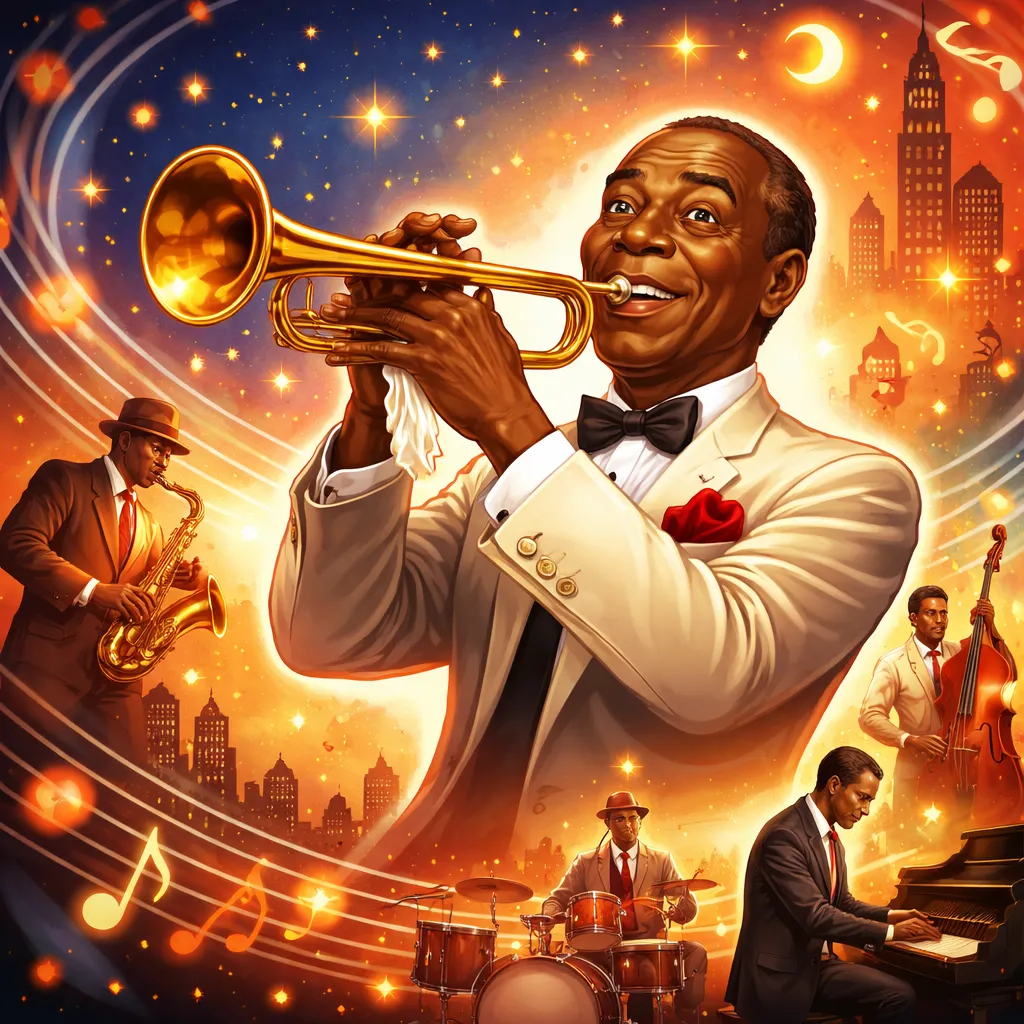

Introduction to Louis Armstrong
Louis Armstrong, born on August 4, 1901, in New Orleans, Louisiana, was one of the most influential figures in the history of jazz music. Known for his unique playing style and iconic voice, Armstrong helped shape jazz into the genre we know and love today. He was a virtuoso trumpet player, an innovative composer, and an unforgettable singer. Armstrong's impact on the world of music extends far beyond his lifetime, and he remains an enduring figure in both American music and global culture.
His career spanned decades, and during this time, he became a symbol of joy, perseverance, and artistic brilliance. Armstrong’s ability to infuse emotion into his trumpet playing and his vocal performances created a style that resonated with people around the world. His music continues to inspire musicians and music lovers, making him a key figure in the history of jazz.
Early Life and Background
Louis Armstrong was born into poverty in New Orleans, a city known for its rich musical heritage. He was raised by his mother, Mayann, after his father abandoned the family when Louis was just a baby. Life in New Orleans was difficult, but it was also a city filled with music, which would profoundly influence Armstrong's future.
At a young age, Armstrong showed an interest in music, particularly the trumpet. He started playing the cornet, a brass instrument similar to the trumpet, while at the New Orleans Home for Colored Waifs, a home for troubled boys where he was sent after being arrested for firing a gun in the street. It was during this time that Armstrong’s musical talent began to blossom. His music teachers at the home were impressed by his natural ability, and they nurtured his musical development.
After leaving the home, Armstrong began to play in various bands in New Orleans, learning the craft of jazz and honing his skills as a trumpet player. He was greatly influenced by the music of other jazz musicians, particularly the likes of King Oliver and the legendary Buddy Bolden. By the time he was a teenager, Armstrong was already a skilled musician, and he began to gain recognition for his unique trumpet playing.
Career Highlights and Achievements
Louis Armstrong’s career took a major turn in the early 1920s when he joined the King Oliver Creole Jazz Band in Chicago. This marked the beginning of his professional career as a jazz musician. Armstrong’s innovative trumpet playing quickly set him apart from other musicians, and his performances were filled with energy and passion.
In 1925, Armstrong joined the Fletcher Henderson Orchestra in New York, where he gained further recognition. His time with the orchestra helped him refine his skills and introduced him to a wider audience. He began recording his own compositions, creating a unique sound that blended New Orleans jazz with the more formal style of big band music.
One of Armstrong’s most famous achievements was his recording of "What a Wonderful World" in 1967. Although the song was not initially a big hit, it would later become one of his most beloved pieces. The song's positive message and Armstrong’s warm, gravelly voice struck a chord with people all over the world, and it remains one of his signature songs.
Armstrong's career continued to soar in the 1930s and 1940s, with numerous albums, performances, and international tours. His work in the 1930s, especially his Hot Five and Hot Seven recordings, are considered some of the most important contributions to the development of jazz. During this time, Armstrong also became known for his scat singing, a vocal improvisation style that he helped popularize.
Armstrong's influence was not limited to jazz. His music transcended genres, and he was embraced by audiences across the world. He became an international star and was celebrated for his contributions to both music and culture. Throughout his career, Armstrong received numerous accolades, including multiple Grammy Awards, the Presidential Medal of Freedom, and the Legion of Honor from France.
Famous Works or Performances
Louis Armstrong’s music is still celebrated today, with many of his performances regarded as classics. Here are some of his most famous works:
What a Wonderful World (1967): Perhaps Armstrong’s most iconic song, What a Wonderful World captures the beauty of life with its uplifting lyrics and Armstrong's soulful delivery. It has been covered by many artists, but Armstrong’s version remains the most popular. St. Louis Blues (1929): This song is one of Armstrong’s most important recordings. It blends his signature trumpet playing with his powerful vocals and showcases his ability to infuse emotion into every note. La Vie En Rose (1947): Armstrong's interpretation of the classic French song La Vie En Rose is a masterclass in emotive singing. His deep, raspy voice and unique phrasing brought a new dimension to the song. When the Saints Go Marching In (1938): This traditional New Orleans tune became one of Armstrong’s signature songs. His joyful performance of the song, with its catchy trumpet riffs and jubilant spirit, made it an anthem of jazz music. Hotter Than That (1927): One of Armstrong’s famous early recordings with his Hot Five band, this song highlights his virtuosic trumpet skills and his ability to improvise in the moment. Personal Life and Fun Facts
Louis Armstrong’s personal life was just as colorful as his musical career. He was married twice, first to Daisy Parker, whom he met in Chicago, and later to his second wife, the talented singer and pianist Lucille Wilson. Armstrong had no children, but he was very close to his extended family and had a special bond with his mother, who supported him throughout his career.
Armstrong was known for his larger-than-life personality and love of performing. He was often seen with a wide smile, and his infectious enthusiasm made him a beloved figure in the music world. Despite his fame, Armstrong was a humble and down-to-earth person. He was known for his kindness and generosity, often sharing his success with others.
In addition to his music, Armstrong had a lifelong passion for basketball and was an avid fan of the sport. He even played in some informal games with friends during his travels. Armstrong also enjoyed painting and was known to create art during his downtime.
Legacy and Influence
Louis Armstrong’s influence on the world of music cannot be overstated. He was not only a brilliant trumpet player but also an innovator who helped shape jazz into the genre it is today. Armstrong’s work in the 1920s, particularly his Hot Five and Hot Seven recordings, is regarded as one of the most important contributions to the development of jazz music.
Armstrong’s vocal style, with its distinctive gravelly voice and improvisational scat singing, became one of the hallmarks of jazz singing. He was one of the first musicians to truly blend improvisation with vocal performance, and his influence can be heard in the work of later jazz singers such as Ella Fitzgerald and Frank Sinatra.
Beyond jazz, Armstrong’s impact extended to pop music, blues, and rock ‘n’ roll. His ability to transcend genres and reach audiences worldwide made him one of the most beloved and influential musicians of all time. His contributions to music were not just technical; they were emotional and cultural, helping to bring joy and unity through music.
How to Learn from Louis Armstrong
Louis Armstrong’s life and career offer many valuable lessons. His dedication to his craft, his ability to overcome adversity, and his commitment to spreading joy through music are qualities that can inspire anyone. Armstrong faced many challenges in his life, from growing up in poverty to facing racial prejudice, but he always remained determined to succeed.
One of the key takeaways from Armstrong’s life is the importance of perseverance. Despite facing numerous setbacks, he never gave up on his dream of becoming a musician. He also taught us the power of positivity and the importance of sharing our passion with others.
Young musicians and artists can learn from Armstrong’s creativity, work ethic, and passion for his craft. His legacy shows that with dedication, talent, and a positive attitude, anything is possible. Armstrong’s music continues to inspire people of all ages, and his example remains a powerful reminder of the enduring power of art to bring people together.
Louis Armstrong's contributions to music have left an indelible mark on the world. His ability to blend innovation with emotion, his mastery of the trumpet, and his unique vocal style have influenced countless musicians and continue to inspire audiences today. Through his music, Armstrong created a legacy of joy, hope, and unity that transcends time and place.