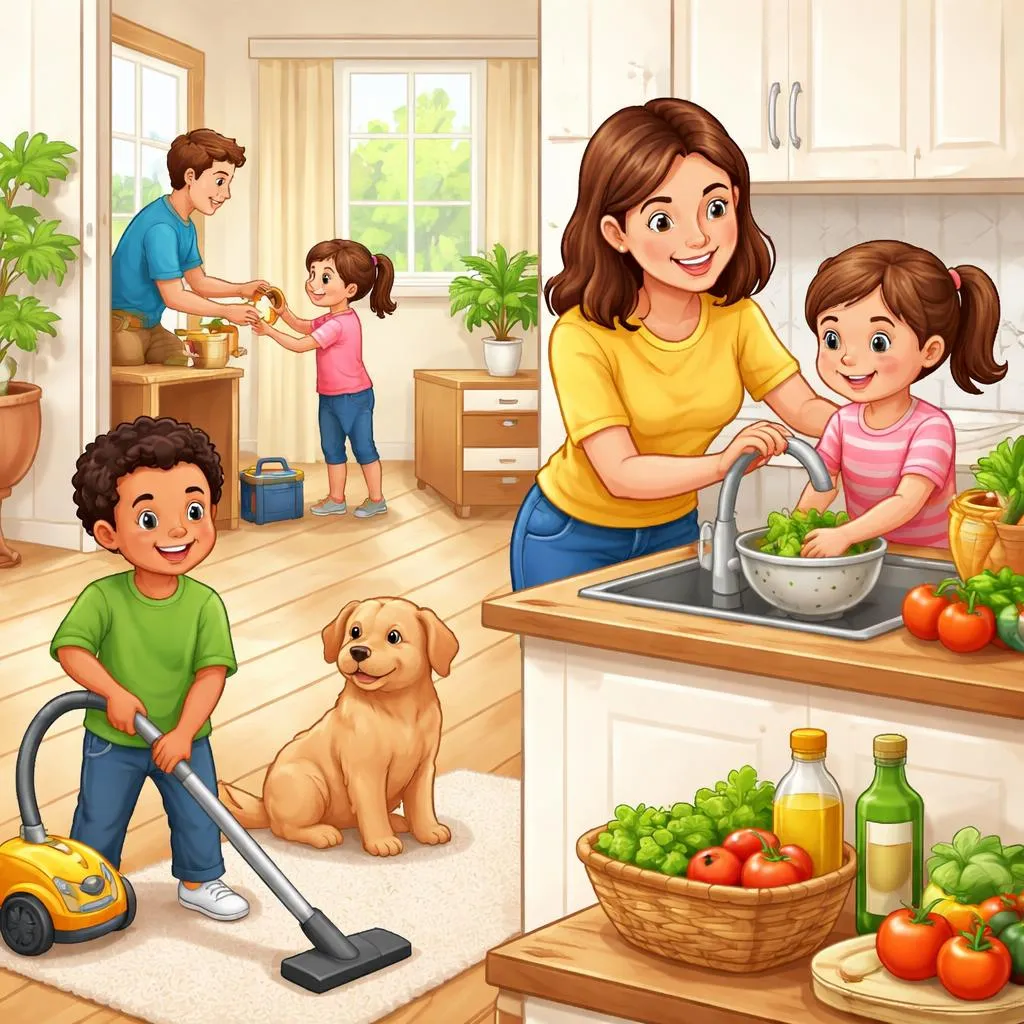

What Do These Expressions Mean? “Be helpful” and “offer assistance” both mean to do something that makes a task easier for someone else. They tell a child to look for ways to support others, especially when they seem to need help. Children hear these words when helping set the table, carrying groceries, or cleaning a mess. Both build caring hearts.
“Be helpful” is a direct instruction to act in a way that assists others. It is simple and common. A parent says it when a child sees someone struggling. It is a command to look for ways to help.
“Offer assistance” means to ask if someone needs help before acting, or to give help politely. It is more formal and specific. A parent might say it when teaching manners. It sounds more grown-up.
These expressions seem similar. Both mean “do something to help.” Both teach cooperation. But one is a general command while one is a polite, specific action.
What's the Difference? One is a general instruction to help. One is a specific polite act of asking to help. “Be helpful” means look around and do useful things without being asked. It is about taking initiative. It is everyday language.
“Offer assistance” means to ask “Can I help you?” before you act. It is polite and respectful. It is about giving the other person a choice. It is more formal.
Think of a child seeing a parent carry heavy bags. “Be helpful and take a bag” means just do it. “Offer assistance by asking ‘May I carry one?’” means ask first. One is direct action. One is polite asking.
One is for doing. The other is for asking politely. “Be helpful” for jumping in. “Offer assistance” for being polite. Use the first for action. Use the second for manners.
Also, “offer assistance” is often used in formal or professional settings. “Be helpful” is for home and everyday life.
When Do We Use Each One? Use “be helpful” for everyday home and family situations. Use it when you want a child to take action without being told. Use it to encourage initiative. It fits family talk.
Examples at home: “Be helpful and set the table.” “You can be helpful by putting your toys away.” “Thank you for being helpful today.”
Use “offer assistance” for formal or polite situations. Use it when teaching manners or when the person might not want help. Use it to be respectful. It fits polite talk.
Examples for politeness: “Offer assistance to the elderly neighbor by asking if she needs help.” “When you see someone struggling, offer assistance politely.” “In a store, you can offer assistance to a person who looks lost.”
Children can use both. “Be helpful” for family. “Offer assistance” for formal or polite moments. Both are good.
Example Sentences for Kids Be helpful: “Be helpful and hold the door.” “I try to be helpful at home.” “Being helpful makes others smile.”
Offer assistance: “Offer assistance to your friend who dropped his books.” “You can offer assistance by saying ‘Can I help?’” “It is polite to offer assistance before you start helping.”
Notice “be helpful” is direct action. “Offer assistance” is polite asking. Children learn both. One for doing. One for asking.
Parents can use both. At home: “be helpful.” Teaching manners: “offer assistance.” Children learn different helping styles.
Common Mistakes to Avoid Some children jump in to help when the person does not want help. Offer assistance first. Ask “Can I help you?” Respect the answer.
Wrong: (takes bag without asking) Better: “Offer assistance. Ask ‘May I carry that for you?’”
Another mistake: thinking helpfulness means doing everything. Helpfulness means doing your share, not doing everything. Teach balance.
Wrong: “Be helpful and clean the whole house.” (too much for a child) Right: “Be helpful by putting your shoes away.”
Some learners forget to offer assistance to adults in a respectful way. “Can I help you, please?” is kind. Teach polite phrasing.
Also avoid helping when it is not safe. Teach children to ask an adult before helping in dangerous situations. Safety first.
Easy Memory Tips Think of “be helpful” as two hands already lifting. Action. Doing. For direct help.
Think of “offer assistance” as a hand raised asking “May I?” Polite. Respectful. For asking before acting.
Another trick: remember the order. “Be helpful” = act. “Offer assistance” = ask first. Act gets “be helpful.” Ask gets “offer assistance.”
Parents can say: “Helpful for a hand. Offer for a command.”
Practice at home. Chores: “be helpful.” Stranger: “offer assistance.”
Quick Practice Time Let us try a small exercise. Choose the better phrase for each situation.
A parent asks a child to do a chore without being told every time. a) “Offer assistance to the family.” b) “Be helpful around the house.”
A child sees an elderly person struggling with a suitcase. a) “Be helpful and take it.” b) “Offer assistance by asking ‘May I help you with that?’”
Answers: 1 – b. Everyday family chores fit the direct “be helpful.” 2 – b. A polite approach to a stranger fits the respectful “offer assistance.”
Fill in the blank: “When I want my child to take the initiative at home, I say ______.” (“Be helpful” is the action-focused, family, everyday choice.)
One more: “When I teach my child to politely ask a stranger if they need help, I say ______.” (“Offer assistance” fits the polite, respectful, asking-first description.)
Helping others is a gift. “Be helpful” gives the gift directly. “Offer assistance” offers the gift politely. Teach your child both. A child who learns both will be both proactive and polite.