
Meaning
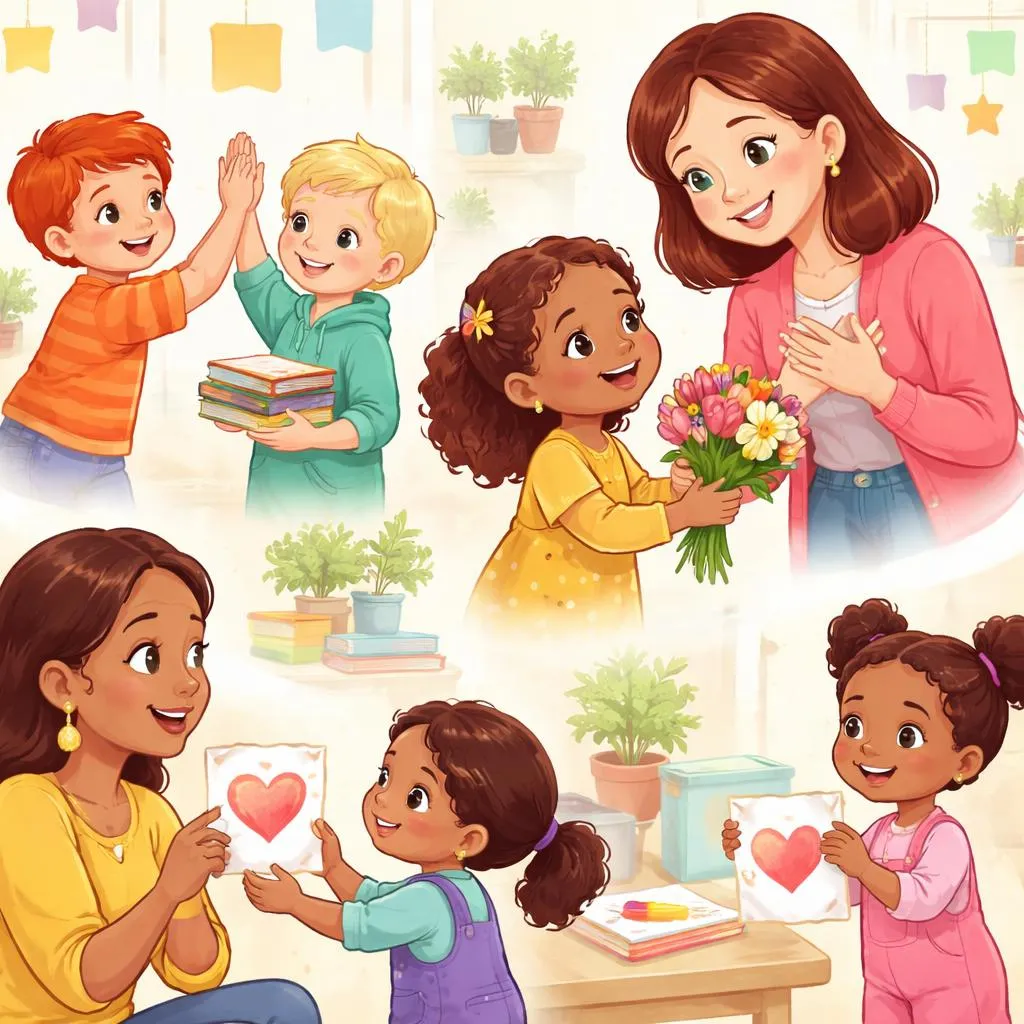
Hello, word friends. Today, we are going to learn about a very kind and important word. The word is "thank." This word is all about a good feeling. It is the feeling of gratitude. When you say "thank you," you are showing that you are grateful. You are happy because someone did something nice for you.
The word "thank" is a verb. A verb is an action word. The action of thanking is the act of showing your gratitude. Think of it as giving a word-gift. When someone helps you, you give them the gift of a "thank you." It makes their heart feel warm. Learning to use the word "thank" correctly is a big part of being polite and friendly. Let's learn all about this wonderful action word.
Conjugation
The word "conjugation" means changing the verb to match the subject and the time. For the verb "thank," the changes are simple. Let's look at how to use "thank" for different people.
In the present, we usually use it as "thank" or "thanks." I thank my teacher. You thank your mom. He thanks his friend. She thanks the bus driver. We thank our parents. They thank the helper. For he, she, or it, we add an 's': thanks.
The past tense is "thanked." It is a regular verb, so we add "-ed." I thanked you. You thanked him. He thanked her. We thanked them.
The future tense uses "will thank." I will thank you. She will thank them. We will thank everyone.
Present tense
We use the present tense of "thank" to talk about things we do now, as a habit. Let's look at examples.
I always thank my mom for dinner. You should thank your friend for the gift. He thanks the coach after practice. She thanks the librarian for the book. The child thanks the dentist. We thank the firefighters. They thank the teacher. In these sentences, the action of thanking is happening in the present or is a regular polite action.
We also use the short form "thanks" a lot. It is very common and casual. "Thanks for your help." "Thanks a lot." This is a quick and friendly way to use the verb.
Past tense
We use the past tense, "thanked," to talk about a time we already showed gratitude. Let's look at examples of "thank" in the past.
Yesterday, I thanked my grandma for the card. You thanked me last week. He thanked his sister for the advice. She thanked the mail carrier this morning. We thanked the guide after the tour. They thanked the host at the party. The action of thanking is finished. It already happened.
Even though the thanking is done, the good feeling remains. Using the past tense of "thank" helps you tell stories about kind things people did and how you appreciated them.
Future tense
We use the future tense, "will thank," to talk about plans to show gratitude later. Let's look at examples of "thank" in the future.
Tomorrow, I will thank my teacher. You will thank your dad when you see him. He will thank you for the present. She will thank the team after the game. We will thank the volunteers. They will thank the performers. This shows that the action of thanking is planned for a time that has not come yet.
We can also use "going to thank." I am going to thank her. You are going to thank them. This is another common way to talk about future plans to use the word "thank."
Questions
We can ask questions using the word "thank." These questions are about gratitude.
Did you thank your aunt for the present. The word "thank" is in its base form after "did." Have you thanked the teacher yet. Will you thank him. Who will you thank. How can I thank you enough. When should we thank them. These questions help us make sure we are being polite and thoughtful.
A very common question is, "Did you say thank you?" This reminds someone to use their good manners. Asking and answering questions with "thank" is an important part of polite conversation.
Other uses
The word "thank" is most often used in the phrase "thank you." This is a set phrase for expressing gratitude. We can make it stronger. Thank you very much. Thank you so much. Thank you a million.
We also use "thanks" as a casual noun. Give my thanks to your family. Many thanks for your letter. Here, "thanks" is a thing you give, like a gift.
We can use "thank" to show we are grateful for something, not just someone. I thank my lucky stars. This is an idiom meaning you feel very fortunate. The core idea of the word "thank" is always about appreciation.
Learning tips
A great way to learn the word "thank" is to use it every day. Make it a habit. When someone does anything nice, big or small, say "thank you" or "thanks." This practice makes it natural.
Make a "Thankfulness Chart." Each day, write or draw one thing you are thankful for. Then, write a sentence using "thank." "I thank the sun for a sunny day." "I thank my friend for playing with me." This connects the grammar to positive feelings.
Sing a "Thank You" song. Use a simple tune like "Happy Birthday" but change the words. "Thank you, thank you, for being kind. Thank you, thank you, it's on my mind!" Music makes the word and the habit joyful and memorable.
Educational games
Let's play "Thank You Role-Play." Set up different scenarios with toys or props. A toy kitchen where one "chef" gives "food" to another. The receiver must say, "Thank you for the pizza!" A doctor's office where the "doctor" helps a "patient." The patient says, "Thank you for helping me." This imaginative play puts the word "thank" into real-life contexts.
Try the "Gratitude Toss." Get a soft ball. Sit in a circle. The first player says, "I thank [person's name] for being my friend." Then they toss the ball to that person. The catcher says, "I thank [new person's name] for sharing toys." The game continues. This combines physical activity, social bonding, and practicing sentences with "thank."
Create "Thank You Cards" as a craft. Provide paper, crayons, and stickers. Each child makes a card for someone they want to thank. Help them write the sentence inside: "Thank you for..." They can draw a picture. This creative activity reinforces the purpose of the word "thank" and gives them a beautiful product to share their gratitude. It shows that saying thank you is an action that can be written, drawn, and gifted, making the lesson tangible and heartfelt.