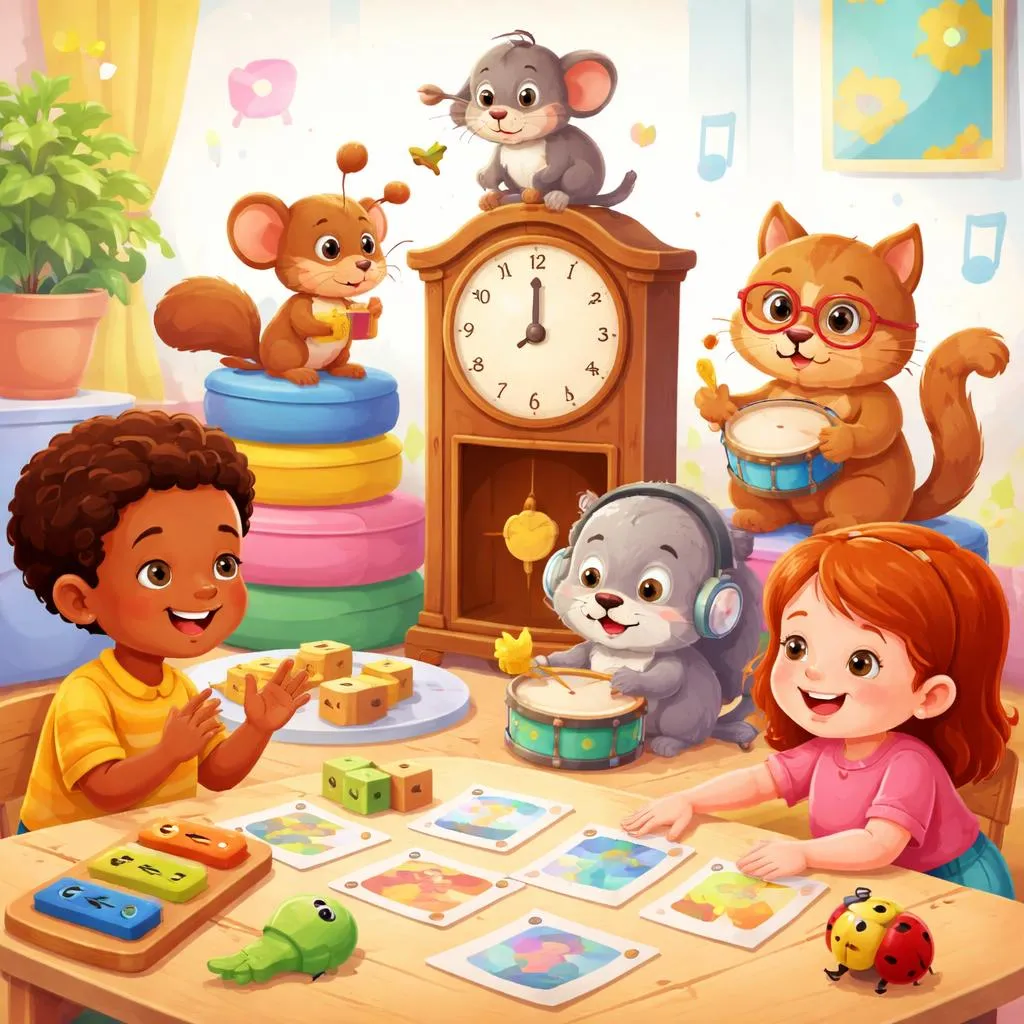

What Is The Rhyme? “Hickory Dickory Dock” is a classic English nursery rhyme. It tells a very short, rhythmic story about time. The most famous verse features a mouse running up a clock. However, many modern versions introduce a whole parade of Hickory Dickory Dock animals. These extended versions keep the same catchy rhythm. Each verse introduces a new animal and a different time. This structure is perfect for learning. The rhyme combines counting, animal names, and the concept of time. It turns a simple clock-ticking chant into a fun, expanding vocabulary lesson.
The Lyrics of Nursery Rhymes The lyrics of nursery rhymes for the extended version follow a clear pattern. The first verse is classic: "Hickory dickory dock, the mouse ran up the clock. The clock struck one, the mouse ran down, hickory dickory dock." Then new verses add different Hickory Dickory Dock animals. For example: "...the snake slid up at half past two..." or "...the squirrel ran up at quarter past three..." The lyrics maintain the “Hickory dickory dock” refrain. They change the animal, its action, and the time. This predictability helps children learn through repetition and anticipation.
Vocabulary Learning This rhyme is wonderful for building themed vocabulary. First, we learn the core words: clock, mouse, one (the number). From the Hickory Dickory Dock animals extensions, we learn many animal names: snake, squirrel, cat, monkey, elephant, bee. We also learn their action verbs: ran, slid, climbed, jumped, stomped, buzzed. We learn time phrases: one o’clock, half past two, quarter past three, four o’clock, five o’clock. We can group animals by size, speed, or how they move. This creates a rich set of nouns and verbs for describing action and time.
Phonics Points The rhyme itself, “Hick-ory Dick-ory Dock,” is a masterclass in rhythm and internal rhyme. The names of the Hickory Dickory Dock animals offer great phonics practice. We focus on beginning sounds and blends. The /m/ sound in mouse and monkey. The /s/ sound in snake and squirrel. The /cl/ blend in clock and climbed. We can highlight the /el/ sound in elephant and the /b/ sound in bee and buzzed. The rhyming words dock/clock and down/dock are clear. Clapping the strong beats (HICK-ory DICK-ory DOCK) teaches syllable stress, which is crucial for English pronunciation.
Grammar Patterns The rhyme models several useful grammar patterns. It uses the simple past tense to tell a completed story: “The mouse ran up. The clock struck one.” This is a clear example of narrative past. It introduces the structure for telling time: “The clock struck one.” “At half past two.” We see subject-verb agreement with different animals: “the snake slid,” “the elephant stomped.” Prepositions of place and direction are also present: up the clock, down. We can practice changing the tense: “Look! The mouse is running up the clock!”
Learning Activities Interactive activities bring the Hickory Dickory Dock animals to life. Try “Animal Action Charades.” One child acts out an animal from the rhyme (sliding like a snake, stomping like an elephant). Others guess and say the full line: “The snake slid up the clock!” Another is “Clock Face Play.” Use a toy clock. Sing a verse, and a child moves the clock hands to the correct time. Also, “Sequence the Animals” is fun. After learning several verses, provide picture cards of the animals. Children put them in the order they appeared in the song.
Printable Materials Printable resources support visual learning. Create a “Hickory Dickory Dock Story Strip.” It has a clock face and a path going up and down. Children can draw or glue different animals on the path. Design “Animal and Time Matching Cards.” One card has a picture of the squirrel, the matching card says “quarter past three.” A “My Own Verse” worksheet lets children invent a new animal and time. They can draw it and complete the sentence: “Hickory dickory dock, the ______ ran up the clock. The clock struck ______...” Also, provide coloring pages of the different animals next to a clock.
Educational Games Games make vocabulary practice playful. Play “What Time, Mr. Clock?” The leader (Mr. Clock) chants “Hickory dickory dock” and shows a time on a large clock card. The “animals” (other children) can only move (run, slide, jump) when the time matches their assigned animal card. Another game is “Rhythm and Rhyme.” Clap the steady beat of the rhyme. Then, say a new animal name (like “kangaroo”) and clap its syllables to fit the rhythm (“kan-ga-roo”). This builds phonological awareness. “Animal Bingo” with the Hickory Dickory Dock animals is also a great listening game.
Using the Hickory Dickory Dock animals extends a timeless rhyme into a dynamic English lesson. The simple, repetitive structure provides a safe and familiar framework. Within this framework, children can absorb new animal vocabulary, action verbs, and time concepts. The rhythm of the rhyme makes the language memorable and fun to recite. By acting it out, creating new verses, and playing matching games, children move from passive listeners to active language users. This approach teaches more than words; it teaches the rhythm of English, the joy of storytelling, and the confidence to play with language—all starting with a mouse running up a clock.