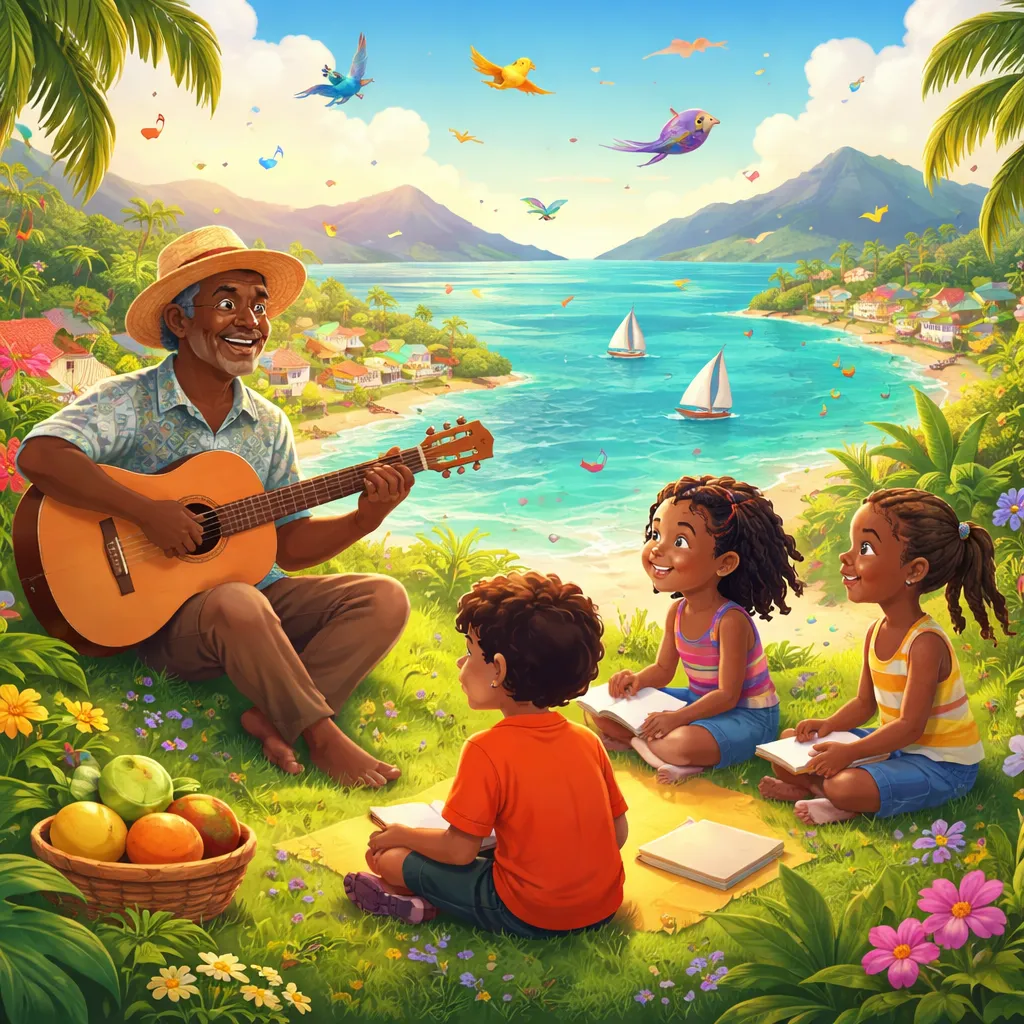

A Friendly Hello and First Impressions
Ol芍! (oh-LAH). This is the friendly "Hello" in Portuguese. Obrigado! (oh-bree-GAH-doo) 每 boys say this. Obrigada! (oh-bree-GAH-dah) 每 girls say this. Both mean "Thank you". Learning reading about Cabo Verde starts with these warm, musical words.
Cabo Verde is an island country. It is off the west coast of Africa. Imagine a string of ten jewels. The jewels are scattered in the Atlantic Ocean. The country is in Africa. Senegal is its closest neighbor on the mainland. The ten islands are divided into two groups. The windward islands face the wind. The leeward islands are more sheltered.
People call it the "Islands of the Wind". Strong trade winds blow all year. The winds shaped the history. Sailors used them to cross the ocean. Another name is the "Land of Morabeza". This word means warm hospitality. It is the spirit of the people. Are you ready to feel this island breeze?
Deep Dive into Culture and Stories
Echoes of History
The islands were uninhabited long ago. Portuguese explorers found them in 1456. They settled the islands. Cabo Verde became a colony. Its location was perfect for trade. It was a stopping point for slave ships. This created a unique blend of people. Africans and Europeans mixed here. This created the Creole culture of today.
A modern hero is Am赤lcar Cabral. He was an intellectual and revolutionary. He fought for independence from Portugal. He led a political movement. His work inspired many. Cabo Verde gained freedom in 1975. His ideas still guide the nation. His story is a key part of learning reading about Cabo Verde.
A Gift to the World's Ears
Cabo Verde gave the world beautiful music. The national music is called "Morna". It is soulful and poetic. It sounds a little like the blues. It speaks of love, longing, and the sea. A famous singer was Ces芍ria 谷vora. She was called the "Barefoot Diva". She sang Morna around the world. She made people feel the soul of the islands. Her voice is a gift of emotion.
A Land of Volcanoes and Beaches
Cabo Verde is a volcanic archipelago. The islands have dramatic landscapes. Some islands are flat and sandy. Others have high, rugged mountains. Pico do Fogo is an active volcano. It is the highest point. The coast has stunning black and white sand beaches. The ocean is a deep, clear blue.
The climate is dry and temperate. It feels like a permanent spring. Rain is scarce. The islands often face drought. This makes farming difficult. People grow corn, beans, and sugarcane. They catch fish from the sea. Houses are often painted in bright colors. The colors are like a rainbow against the blue sky. This brightens the dry landscape.
A special animal is the loggerhead sea turtle. It comes to the islands to nest. The turtles are protected. The national bird is the kestrel. It is a small falcon. The dragon tree is a unique plant. It looks like an umbrella. Its red sap is called "dragon's blood".
Landmarks of History and Fire
Visit Cidade Velha. It is on the island of Santiago. It was the first European city in the tropics. It is a UNESCO World Heritage site. You can see the old fort and a cathedral. A somber landmark is the "Pelourinho". It is a stone pillar. It was used for punishing enslaved people. The city is full of powerful history.
See the volcano on Fogo island. Pico do Fogo is still active. It last erupted in 2014. You can hike to the top. The landscape looks like the moon. Black lava rock is everywhere. A small village sits inside the crater. People grow coffee there. It is a place of powerful, raw nature.
Another wonder is the salt flats of Sal. The island's name means "salt". For centuries, people collected salt from ponds. The salt was white and pure. It was a valuable export. Today, you can see the bright white pans. They shine under the sun. It is a beautiful, surreal sight.
Festivals of Music and Color
The biggest festival is Carnival. It happens on the island of S?o Vicente. The town of Mindelo comes alive. The celebration is before Lent. People wear incredible costumes. They dance in the streets for days. The music is loud and joyful. Samba and African rhythms mix.
Groups create elaborate floats. They compete for the best presentation. The energy is infectious. Everyone joins the parade. The festival is a burst of color and sound. It shows the joyful spirit of the people.
Another important day is Independence Day. It is on July 5th. There are official ceremonies. The national flag is everywhere. Later, people have parties with music and food. They celebrate their freedom and identity.
Food and Flavors
The national dish is Cachupa. It is a slow-cooked stew. The base is corn and beans. People add fish, meat, or sausage. Each family has its own recipe. It is a dish of patience and love. People eat it for special Sunday meals. It tastes rich, hearty, and like home.
You must try Pastel. It is a delicious fried pastry. The filling is often tuna fish with onions. The pastry is half-moon shaped. It is crispy and golden. People eat it as a snack. A fresh, hot pastel is savory and satisfying. It is the perfect street food.
A Culture of Resilience and Green Energy
The people are masters of resilience. Life on dry islands is hard. But they are creative and strong. They value community and sharing. This spirit is called "morabeza". It means welcoming strangers as friends. This is central to learning reading about Cabo Verde.
The country is a leader in renewable energy. The strong winds are not a problem. They are a resource. The country uses wind turbines. It also uses solar power. It wants to use 100% renewable energy. This is smart thinking for an island nation. It is like using the wind that shaped its history.
Tips for Young Explorers
Cultural Manners Matter
Cabo Verdeans are relaxed and friendly. Greet people with a smile. Say "Bon dia" (Good day). A handshake is common. People are not very formal. They often use first names quickly. This is the island way.
"Morabeza" is the key. Be open, friendly, and polite. Accept invitations to talk or share. Do not rush. Enjoy the moment. The pace of life is slower. This is called "Cabo Verde time".
Dress is casual but neat. Swimwear is for the beach. Cover up when you are in town. This shows respect. In the evening, people might dress up a bit for music.
A Note on Staying Safe
Cabo Verde is generally safe. But be smart in cities. Do not leave your things alone on the beach. Keep your bag closed in crowds. Do not walk alone in dark, empty areas.
The ocean is powerful. Only swim where it is safe. Obey warning flags. Some beaches have strong currents. Never swim alone. Always have an adult watching you.
If you hike on the volcano, go with a guide. The terrain is rough. The weather can change. Tell someone your plan. Wear strong shoes and take water.
A Tasty Stop
Look for a "pastelaria". This is a pastry shop. Order a "Pastel de Atum". This is a tuna pastry. Eat it hot. The crispy shell and savory filling are perfect. Have it with a cold drink. It is a simple, delicious island snack.
Healthy and Happy Travels
The sun is very strong. You can burn quickly. Use a high SPF sunscreen. Wear a hat and sunglasses. Reapply sunscreen after swimming. Protect your skin.
Drink lots of bottled water. The sun and wind can dehydrate you. Drink water even if you are not thirsty. This keeps your energy high. It helps you enjoy the beaches.
Wear good shoes for walking. The streets in old towns are cobblestone. The stones can be uneven. Comfortable shoes let you explore all day. You can climb hills and see amazing views.
Your Invitation to Explore
Start your journey with music. Listen to Ces芍ria 谷vora. Her most famous song is "Sodade". Feel the emotion in her voice. Or, listen to some "Funana" music. It is faster and makes you want to dance. This is a wonderful way of learning reading about Cabo Verde.
Try a simple recipe. Make a version of Cachupa. Use canned corn, beans, and sausage. Cook them together in a pot with spices. Taste the hearty, island flavor. Imagine the slow-cooked pot in a Cabo Verdean home.
The world is a big, wonderful book. Each country is a different chapter. Cabo Verde's chapter is about wind, music, and morabeza. Open it with an open heart. Read about its volcanoes, mournful songs, and bright houses. Your curiosity is your guide.
Cabo Verdean families share a pot of cachupa. Friends play music together on a porch. Children play soccer on the beach. We all know these feelings. We love sharing meals. We enjoy music with friends. We play games in the sun. Learning about Cabo Verde shows us this. Our global family shares the same simple joys. Keep exploring, one page, one country, at a time. Your adventure has just begun.