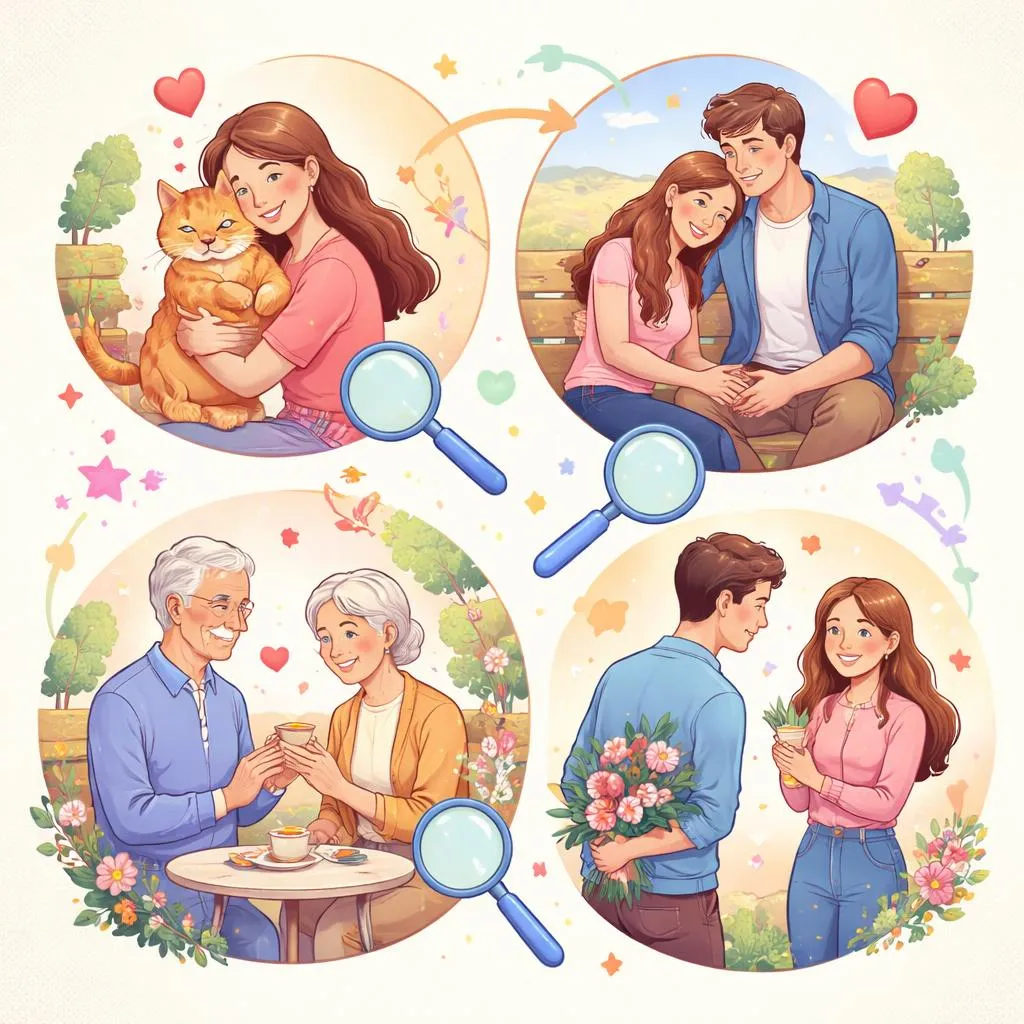

Hello, word friend! Have you ever really liked something? You might say, "I am fond of chocolate." Or, "I remember it fondly." Your feeling is fondness. Maybe you are fonder of milk chocolate. They all talk about liking. But they are not the same! The words fond, fondly, fondness, and fonder are a "Word Feeling Team". They all connect to affection. Each team member shares a different part of the feeling. Your job is to learn their parts. Let's see a quick example at home.
At home, you might say: "My dad is fond of old songs." That describes his liking. But you could also say: "He sings them fondly." That describes how he sings. Which one is right? They both are! You need the right team member for your sentence. Let's start our feeling adventure!
Adventure! Decoding the Feeling Team
Welcome to the word heart! Our four feeling words are here. They share a root idea. But they are different. Meet Fond. It is an adjective for liking. Meet Fondly. It is an adverb for the loving manner. Meet Fondness. It is a noun for the feeling. Meet Fonder. It is the comparative adjective. Let's explore their emotions.
Dimension One: The Role Reveal – What's Your Job in the Sentence?
Every word has a role. Is it a describing word? Is it a word that describes an action? Is it a thing? Or is it a comparing word?
Fond: The Describing Adjective. This word is an adjective. It describes a person or animal. It tells us they have a liking or affection. It often uses "of".
School example: "My teacher is fond of helpful students." The word "fond" describes the teacher. It means she likes them.
Playground example: "She is fond of team sports." The word "fond" describes her. It means she likes them.
Fondly: The Manner Adverb. This word is an adverb. It describes how an action is done. It often ends in "-ly". It means in a loving or affectionate way.
Home example: "My grandma smiled fondly at the photo." It describes how she smiled. It means with love.
Nature example: "The mother cat licked her kitten fondly." It describes how she licked.
Fondness: The Feeling Noun. This word is a noun. It names the feeling of liking or affection. It is the idea itself.
School example: "He has a great fondness for history." It names the feeling. It is the thing he has.
Playground example: "My fondness for soccer began last year." It names the feeling that began.
Fonder: The Comparing Adjective. This word is the comparative form of "fond". It is an adjective. It compares two things. It shows a stronger liking for one.
Playground example: "I am fonder of swimming than running." It compares two activities. One is liked more.
Home example: "Are you fonder of apples or oranges?" It compares two fruits.
Dimension Two: The Meaning Focus – State, Method, Idea, or Comparison?
These words point to different parts of liking. One is the state of liking. One is the method of showing. One is the abstract idea. One is the relative degree.
Fond: The State of Liking. This word focuses on the condition of having affection. It answers "What is the person like?"
Fondly: The Way of Showing. This word focuses on the manner in which an action expresses affection.
Fondness: The Abstract Feeling. This word focuses on the feeling as a concept. It is the noun form of the adjective.
Fonder: The Relative Liking. This word focuses on the comparison between two likes. It shows a greater degree.
Dimension Three: The Team-Up – What Words Do They Work With?
Knowing their common "friends" helps us use them correctly.
Fond (Adjective): It is used with linking verbs. "I am fond of you." It is almost always followed by "of". "Fond of music".
Fondly (Adverb): It usually modifies a verb. It often pairs with verbs like "remember", "smile", "speak", "think". "Remember fondly".
Fondness (Noun): It is often used with "have a", "feel a", or "show". "Have a fondness for". It is often followed by "for".
Fonder (Comparative Adjective): It is used in comparisons. It is often followed by "of" and "than". "Fonder of cats than dogs."
Our Discovery Map: The Feeling Team Guide
Our feeling guide is clear. Do you want to describe someone who has a liking? Use the adjective fond with "of". Do you want to describe how an action is done, with affection? Use the adverb fondly. Do you want to name the feeling of liking? Use the noun fondness with "for". Do you want to compare how much you like two things? Use the comparative adjective fonder with "of" and "than". Remember their teams: fond describes with "of", fondly describes verbs, fondness is a thing with "for", and fonder compares with "than".
Challenge! Become a Word Feeling Master
-
Best Word Choice: Read the scene. Pick the best word. (Nature/Animal Scene) A wildlife biologist has worked with elephants for years. She has a deep feeling of affection and care for them. a) She is fond of elephants. b) She has a great fondness for elephants. Which one names the deep feeling she has? (Answer: b)
-
Two-Word Sentence Showdown: (School/Friendship Scene) Imagine talking about an old friend. First, use the adjective to describe your general feeling. Example: "I am very fond of my friend from kindergarten." Now, use the adverb to describe how you remember your time together. Example: "I remember our playtimes fondly."
-
Eagle Eye! Find the Glitch: Look at this sentence. One word is not quite right for the meaning. Can you fix it? (Home/Hobby Scene) "I have a fond for painting and drawing." What's wrong? "Fond" is an adjective. After "a", we need a noun. Or we can change the structure. Fixed sentence: "I have a fondness for painting and drawing." Or, "I am fond of painting and drawing."
Your Takeaway and Mission! Make Your Sentences Warm
Great exploring, word friend! You learned the special roles of each word. You can now choose the right word for any situation. Your English will be more precise and heartfelt.
What you can learn from this article:
You now see that fond, fondly, fondness, and fonder are a team. But they express liking in different ways. You learned to use "fond" to describe someone who likes something. You use "fondly" to describe an action done with affection. You use "fondness" to name the feeling of liking. You use "fonder" to compare how much you like two things. You know that "fond" is an adjective with "of". "Fondly" is an adverb. "Fondness" is a noun with "for". "Fonder" is a comparative adjective.
Live Practice Application:
Try this today! Think of something you like. Describe it: "I am fond of my pet." Remember a happy memory: "I think of it fondly." Name your feeling: "I have a fondness for sunny days." Compare two likes: "I am fonder of reading than TV." When you write or speak, think: Is it a description? Use fond. Is it the way? Use fondly. Is it the feeling itself? Use fondness. Is it a comparison? Use fonder. Choosing the right word makes your language warm and clear. You are now a master of the feeling team. Well done!