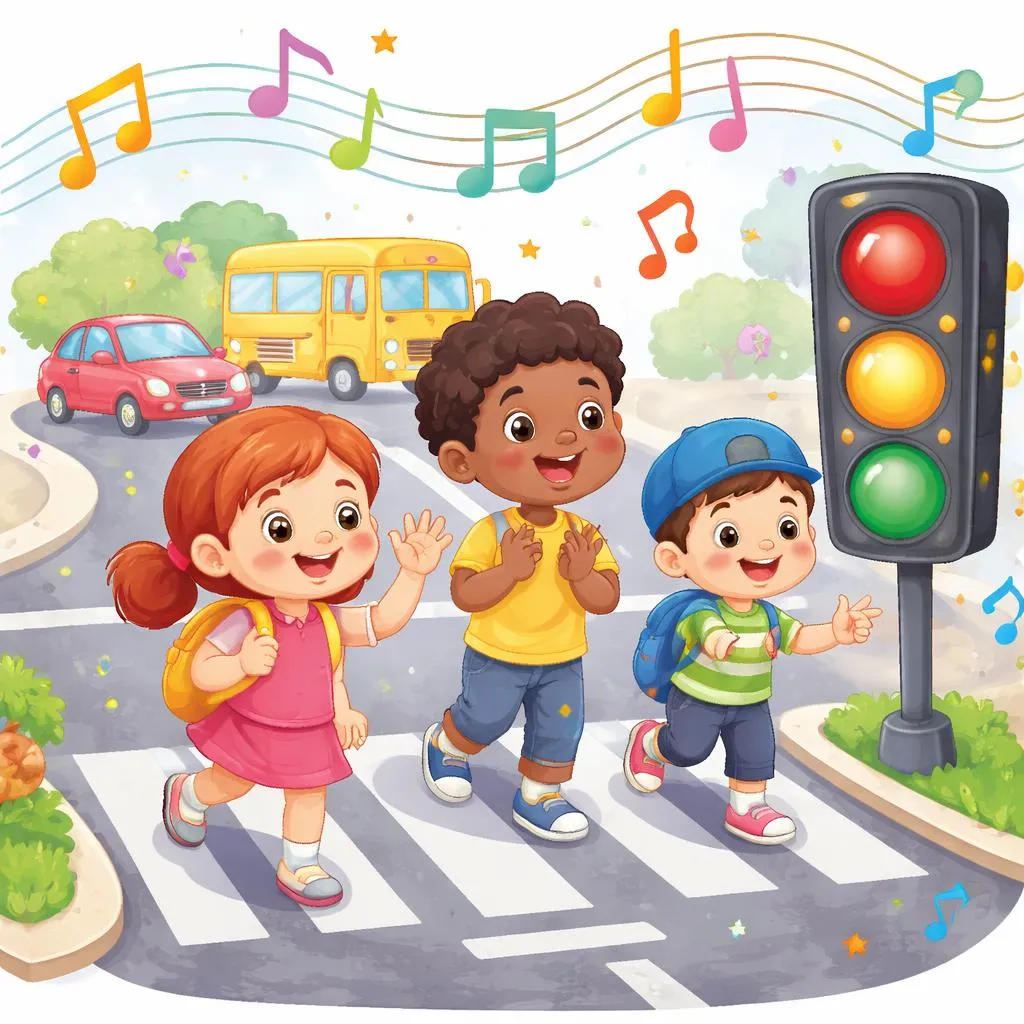

Hello, joyful teachers and wonderful young learners! Today we explore a song that teaches an important lesson. It helps children understand when to move and when to be still. It uses simple words and actions. The stop and go song is fun and educational. Children learn about traffic safety. They learn to follow directions. They learn to control their bodies. The song builds listening skills and self-regulation. Let us discover this playful song together. Let us learn when to stop and when to go.
What Is the Stop and Go Song Rhyme? The Stop and Go Song is a children's action song. It teaches the concepts of stopping and going. These are important for safety. Children learn that red means stop and green means go. They learn to pay attention to signals.
The song has a simple, repetitive structure. It tells children when to move and when to freeze. This helps them practice self-control. They learn to start and stop on command. This is good for listening skills and body awareness.
The song often includes hand motions. Children might pretend to drive a car. They stop when they hear "stop." They go when they hear "go." This makes the learning physical and fun.
The Lyrics of the Nursery Rhyme Let us look at a common stop and go song lyrics. Many versions exist. Here is one that children enjoy.
Red light, red light, what do you say? I say stop and stop right away! Green light, green light, what do you say? I say go and go right away!
Stop and go, stop and go, Fast and slow, fast and slow. When you see the red light, stop! When you see the green light, go!
Red means stop, green means go, Yellow light means slow, slow, slow! Stop and go, stop and go, This is what the lights all know!
Driving in my little car, Driving not too fast or far. See the red light, I must stop, See the green light, off I pop!
Some versions add yellow light. Yellow means slow down or be careful. This teaches the full traffic light sequence.
Vocabulary Learning from the Song This safety song teaches many useful words. Let us explore them together.
Traffic words: The song introduces traffic light vocabulary. Red light, green light, yellow light. Children learn what each color means. This helps them understand street safety.
Action words: The song teaches important verbs. Stop, go, slow, drive. These are words children use in many situations. Learning them through song makes them memorable.
Direction words: The song uses "fast" and "slow." Children learn to describe speed. They understand that different situations need different speeds.
Question words: The song asks "what do you say?" This teaches a question form. Children learn to ask about what things communicate.
Color words: The song mentions red, green, and yellow. Children learn these important color names. They connect colors to meanings.
Phonics Points in the Rhyme The stop and go song offers good phonics practice. Let us look at some important sounds.
Listen to the "s" sound. It appears in "stop" and "slow" and "say." The "s" sound is a soft hiss. Practice together. "S-s-stop." "S-s-slow." This sound appears in many action words.
Listen to the "g" sound. It appears in "go" and "green." The "g" sound is made at the back of the throat. Practice together. "G-g-go." "G-g-green." This sound appears in movement words.
Listen to the long "o" sound. It appears in "go" and "slow." The long "o" says its name. Practice together. "G-o." "Sl-o-w." This sound appears in many action words.
The rhyming words are simple and clear. Say and away. Go and slow. Car and far. This builds phonemic awareness.
Grammar Patterns in the Song The song contains useful grammar patterns for young learners.
Imperative verbs: The song gives commands. "Stop!" "Go!" "Slow down!" This teaches the imperative form. Children learn to understand and follow directions.
Questions and answers: The song asks questions. "Red light, what do you say?" Then it provides the answer. This teaches question and response patterns.
Present tense: The song uses present tense throughout. "Red means stop." This describes facts that are always true. Children learn to state rules using present tense.
Prepositions: The song uses "in my little car." This teaches location words. Children learn to describe where they are.
Learning Activities for the Song The song lends itself to many activities. Here are some ideas to extend learning.
Traffic Light Craft: Make a traffic light from paper plates or construction paper. Use red, yellow, and green circles. Children can hold up the correct color while singing. This makes the song visual and interactive.
Red Light, Green Light Game: Play the classic game. One person is the traffic light. They stand with their back to others. When they say "green light," children move forward. When they say "red light," children freeze. Anyone still moving must go back. This builds listening and self-control.
Driving Pretend Play: Give children paper plate steering wheels. They pretend to drive around the room. Hold up colored circles. Red means stop. Green means go. Yellow means slow down. This makes the song physical.
Safety Walk: Take a walk around the neighborhood. Look for real traffic lights. Practice stopping and going at the crosswalk. Talk about what each color means. This connects the song to real life.
Printable Materials for the Song Printable resources support learning from the song. They provide visual reinforcement.
Traffic Light Poster: Create a poster showing a traffic light. Label each color with its meaning. Red = Stop, Yellow = Slow, Green = Go. Display it during singing time.
Color Flashcards: Create flashcards for red, yellow, and green. Use them during the song. Hold up the color and children do the action.
Traffic Light Coloring Page: Create a coloring page of a traffic light. Children color each circle the correct color. This reinforces color meanings.
Lyrics Poster: Create a colorful poster with the full lyrics. Add pictures of traffic lights and cars. Display the poster during singing time.
Educational Games for the Song Games make learning from the song even more fun.
Traffic Light Bingo: Create bingo cards with red, yellow, and green squares. Call out actions. "Stop!" Children cover a red square. "Go!" Children cover a green square. This builds color-action association.
Stop and Go Freeze Dance: Play music. Children dance. When the music stops, they freeze. When it starts again, they dance. This is like the song but with music. It builds listening and self-control.
Color Hunt: Look for red, yellow, and green objects around the room. When children find something red, they say "stop!" When they find something green, they say "go!" This builds color recognition.
Traffic Light Sorting: Gather objects in red, yellow, and green. Children sort them by color. Then they practice the actions for each color. This builds categorization skills.
New Verses Creation: Challenge children to create new verses. What other things tell us to stop and go? Stop signs, walk signals, crossing guards. This builds creativity and extends learning.
Through this simple song, children learn important safety rules. They understand that red means stop and green means go. They practice listening and following directions. They learn to control their bodies. The stop and go song creates joyful learning. Every time they sing, they reinforce these important concepts. The song prepares them for real-world safety. They will remember the words when they see traffic lights. Music and movement make the lesson stick.