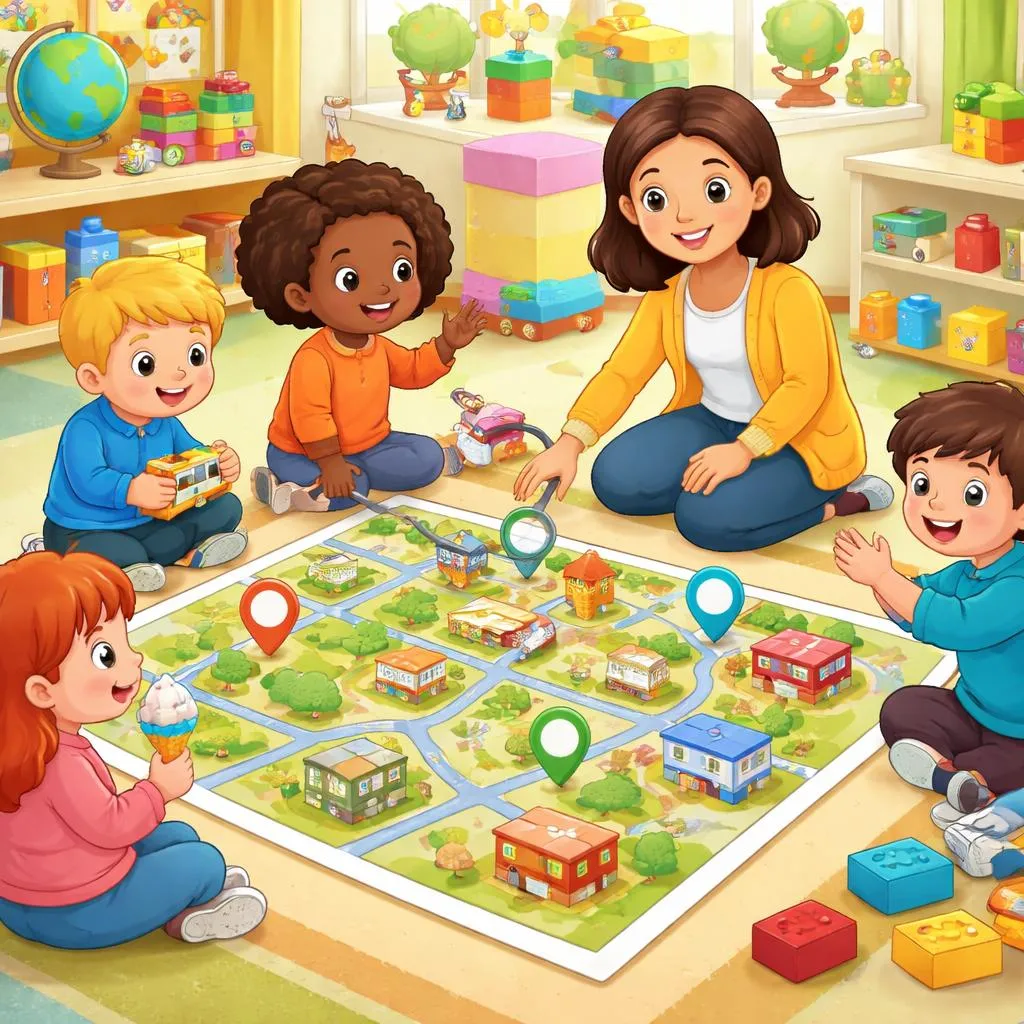

Hello, wonderful teachers and curious young learners! Today we take a walk through a town. We will explore all the places people visit every day. We will stop at the school and the library. We will visit the supermarket and the fire station. Learning the places of the town helps children understand their community. These words help them talk about where they go. They help describe locations in stories. They build confidence for conversations. Knowing place words helps children ask for directions. It helps them share experiences. Let us discover these important words together. Let us explore the places that make a town special.
What Are the Places of the Town? Places of the town are the locations people visit in a community. Some are buildings where people work. Some are places where people shop. Some are where people go for fun. Some are where people get help. All these places together make a town complete.
Think about a typical day in a town. A child wakes up at home. They walk to school. After school, they go to the park. They stop at the supermarket with a parent. They visit the library for story time. Each of these is a place in the town. Each has a name and a purpose. Learning these names helps children talk about their daily life. It helps them tell stories about where they went and what they did.
Town place vocabulary also helps with safety. Children learn the names of important buildings. The hospital, the police station, the fire station. They learn what happens in each place. This knowledge helps them understand their community. It helps them know where to go for help.
Meaning and Explanation of Town Places Town places have different purposes. Understanding these purposes helps children use the words correctly.
Community service places help people in different ways. The hospital helps sick people get better. The fire station has firefighters who put out fires. The police station keeps people safe. The post office sends letters and packages. These places are staffed by community helpers.
Shopping places are where people buy things. The supermarket sells food and household items. The bakery sells bread and cakes. The bookstore sells books. The toy store sells toys and games. Each store has different things to buy.
Entertainment places are for fun and relaxation. The park has playgrounds and grass. The movie theater shows films. The zoo has animals to see. The museum has interesting things to learn about. These places make a town enjoyable.
Learning places help people gain knowledge. The school is where children learn. The library has books to borrow. The museum teaches about history and science. These places support curiosity and growth.
Food places are where people eat. Restaurants serve meals. Cafes serve coffee and snacks. Ice cream shops sell sweet treats. These places bring people together over food.
Categories or Lists of Town Places Organizing town places into categories helps learning. Children can see connections between similar places.
Essential Community Places: School, hospital, fire station, police station, post office, library. These are places every town needs. They provide basic services.
Shopping Places: Supermarket, bakery, bookstore, toy store, clothing store, shoe store, pharmacy, flower shop. These are places where people buy things.
Food and Drink Places: Restaurant, cafe, pizza place, ice cream shop, candy store, fast food restaurant. These are places for eating and drinking.
Fun Places: Park, playground, zoo, aquarium, movie theater, arcade, swimming pool, sports field. These are places for play and entertainment.
Transportation Places: Bus stop, train station, taxi stand, parking lot, gas station. These are places related to travel and vehicles.
Places of Worship: Church, temple, mosque, synagogue. These are places where people gather for religious reasons.
Daily Life Examples of Town Places Town place words appear throughout daily life. Pointing them out helps children learn naturally.
Morning routines involve town places. "Time to go to school." "We will meet at the bus stop." "After school, we go to the park." These simple phrases teach place names in context.
Weekend outings offer many examples. "We are going to the zoo." "Let's visit the library." "Do you want to go to the movies?" Children hear and use these words during fun activities.
Errands teach community places. "First we go to the post office." "Then we stop at the supermarket." "After that, we go to the bakery." Children learn the names of places where families do business.
Stories and books are full of town place words. Reading together, we can point to places in pictures. "Look, the children are at the playground." "The family is eating at a restaurant." This connects reading to real-world vocabulary.
Emergencies teach important place names. Children learn that the hospital helps sick people. The fire station helps when there is a fire. The police station helps keep everyone safe. This knowledge is both practical and reassuring.
Printable Flashcards for Town Places Flashcards are excellent for teaching town place vocabulary. They provide clear images with words.
Building Flashcards: Create cards showing different town buildings. School, hospital, fire station, police station, library, supermarket. Each card has a clear picture and the word. Children learn to recognize buildings by their appearance.
Store Flashcards: Create cards showing different shops. Bakery, bookstore, toy store, clothing store, shoe store, pharmacy. Use bright, appealing pictures. These cards help children talk about places they like to visit.
Fun Place Flashcards: Create cards showing entertainment places. Park, playground, zoo, aquarium, movie theater, swimming pool. These are places children love. The cards help them talk about favorite outings.
Food Place Flashcards: Create cards showing places to eat. Restaurant, cafe, pizza place, ice cream shop, candy store. These cards can spark conversations about favorite foods and treats.
Use the cards for games. Hold up a card and name the place. Ask children to find the card for a place you name. Play memory match with two sets. Place cards around the room and go on a scavenger hunt. The possibilities are endless.
Learning Activities or Games for Town Places Games make learning town place vocabulary active and fun.
Where Am I? Guessing Game: Describe a place without naming it. "In this place, you can borrow books. You can read stories. You can sit quietly. Where am I?" Children guess "the library." This builds listening and reasoning skills. It encourages children to think about what makes each place special.
Build a Town: Use blocks or boxes to build a town. Add paper signs for different places. School, hospital, fire station, supermarket, park. As children build, they name each place. They can move toy people and cars around the town. This hands-on activity makes place words concrete.
Town Map Drawing: Give children a large piece of paper. Ask them to draw a map of their town. They can include their home, their school, and other places they know. They label each place. This builds spatial awareness and vocabulary.
I Spy Town Places: Look at a picture book or a busy town scene. Play I Spy with places. "I spy a place where people buy food." Children look for a supermarket or bakery. "I spy a place where sick people get help." They look for a hospital. This builds observation and vocabulary.
Place Sorting: Create cards with different town places. Also create cards with activities. "Borrow books" matches with library. "Buy bread" matches with bakery. "See animals" matches with zoo. Children match each activity to the correct place. This builds understanding of what happens where.
Field Trip Discussion: Before a field trip to a town place, talk about it. What will we see there? What do people do there? After the trip, talk about what happened. Use the place vocabulary naturally. This connects words to real experiences.
Town Helper Dress Up: Gather simple costumes or props for community helpers. A doctor's coat, a firefighter's hat, a police officer's badge, a teacher's pointer. Children dress up and talk about where they work. "I work at the hospital." "I work at the fire station." This builds imaginative play and vocabulary.
Through these activities, town place vocabulary becomes part of children's active language. They learn to name the world around them. They can describe where they go and what they do. They can understand stories and share their own adventures. Knowing the places of the town opens doors to communication and community. It helps children feel at home in their town, in any language.