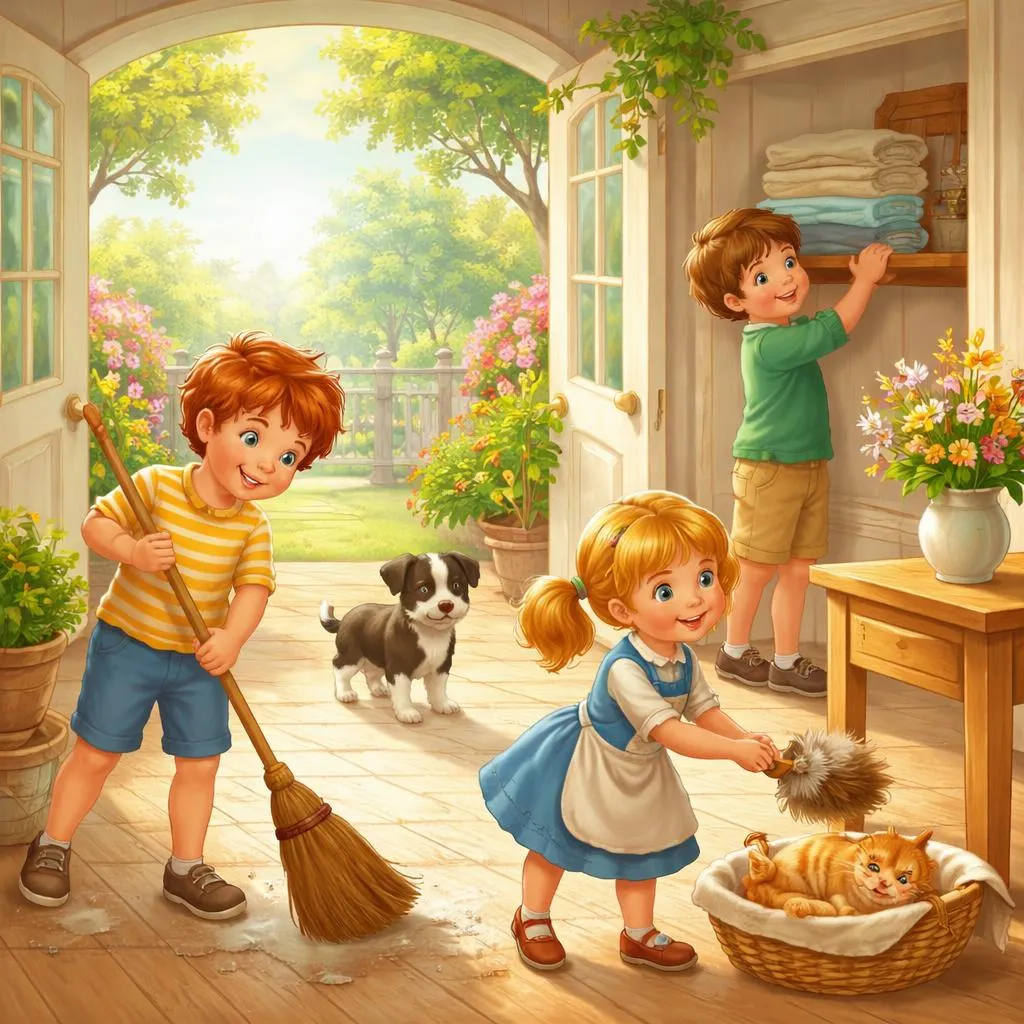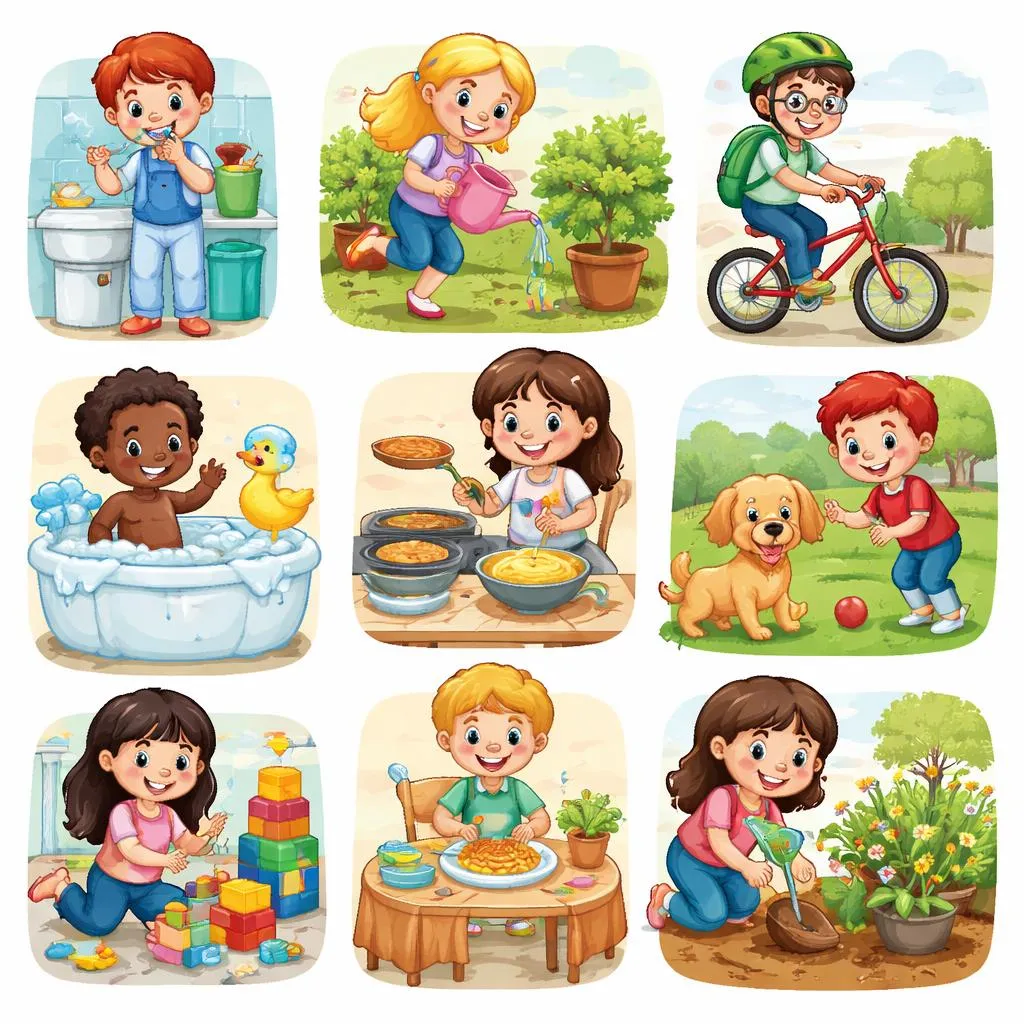

The phrases in Set 2 of Daily Activities describe common routine actions. Because of the vocabulary selection, with terms like “make dinner”, these cards are suitable for teaching adults or young adults. That said, younger classes with a sense of humour will also enjoy asking each other about shaving, putting on makeup, making dinner, etc. ?? Five of the phrases in this set contain pronouns; the labels and word cards for these images are written in the 1st person singular, present tense (ex. brush my hair).
Word list: brush my hair, brush my teeth, comb my hair, eat breakfast, eat dinner, eat lunch, floss, go to bed, make breakfast, make dinner, make lunch, put on makeup, shave, take a bath, take a shower, wake up, wash my face, wash my hair
Click here to download the full Daily Activities – Set 2 PDF — free
By practicing with flashcards, children can:
Using flashcards featuring daily activities helps children learn common routine vocabulary in an engaging and interactive way. These cards introduce simple verbs and phrases such as "brush my hair," "eat breakfast," and "take a shower," which are essential for everyday communication. Children develop their speaking and listening skills, improve memory retention, and gain confidence in using first-person present tense expressions. Additionally, the visual cues on the cards support comprehension and make learning more enjoyable, fostering independence as children describe their own daily routines.
How to Teach Daily Activities Flashcards with Flashcards
Parents and teachers can use these flashcards to create a structured yet fun learning environment. Start by introducing a few cards at a time, showing the picture and saying the phrase clearly. Encourage children to repeat after you and act out the action to reinforce understanding. Use questions like "What do you do in the morning?" to prompt responses using the flashcards. Incorporate daily routine discussions during mealtime or bedtime to make the vocabulary relevant. Repetition and positive reinforcement help children remember the phrases and connect them to their own experiences.
(1) Fun Daily Activities Flashcard Games
Games such as "Flashcard Charades," where children act out the activity on the card while others guess, make learning dynamic and interactive. Another game is "Memory Match," where children match picture cards with word cards, strengthening visual memory and word recognition. "Simon Says" using flashcard actions encourages listening skills and physical movement. These games keep children motivated and provide opportunities to practice vocabulary in a playful context.
(2) Example Sentences with Daily Activities Vocabulary
Children can practice sentences like "I brush my hair every morning," or "I make dinner with my family." Adding emotions to sentences, for example, "I feel happy when I eat breakfast," helps children express feelings alongside routine actions. This approach builds sentence structure skills and emotional vocabulary, making communication richer and more meaningful.
Free Daily Activities Flashcards PDF Download
Parents and educators can download free printable flashcards featuring daily activities from trusted educational websites. These PDFs are easy to print and cut out, allowing for convenient use at home or in the classroom. Having physical cards supports hands-on learning and can be laminated for durability. Access to free resources ensures that everyone can benefit from quality educational materials without cost barriers.
FAQ about Daily Activities Flashcards
Q: What age group are these flashcards best for?
A: They are suitable for young children aged 3-8, as well as older learners who are beginning to practice daily routine vocabulary.
Q: How often should children practice with these flashcards?
A: Short daily sessions of 5-10 minutes are effective for steady progress without overwhelming the child.
Q: Can these flashcards be used for language learners?
A: Yes, they are ideal for ESL learners to build foundational vocabulary related to everyday life.
Q: Are there suggestions for adapting the flashcards for different skill levels?
A: Yes, beginners can focus on recognition and repetition, while advanced learners can create full sentences and role-play scenarios.
Q: What activities complement flashcard learning?
A: Singing songs about daily routines, drawing pictures of activities, and storytelling help reinforce vocabulary in varied ways.