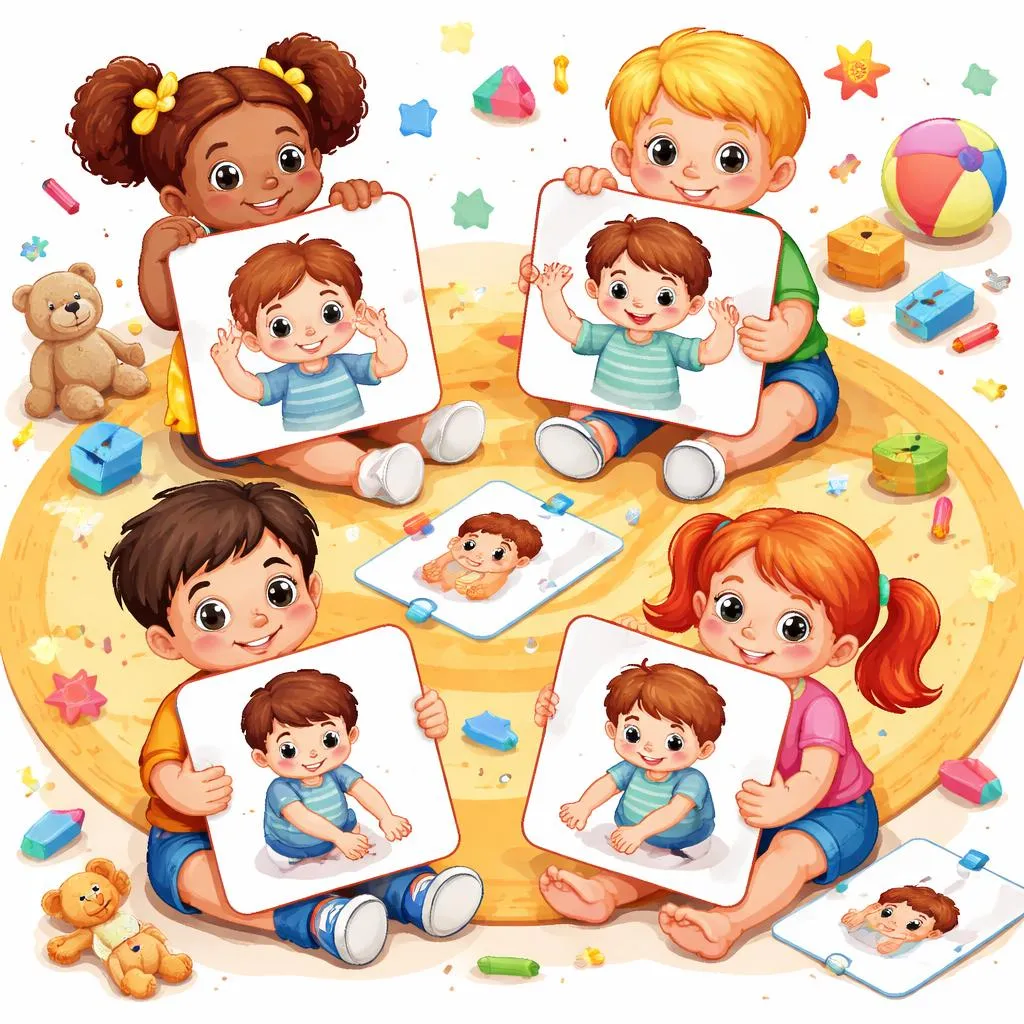

Use these parts of the body flashcards with the classic kids’ song, “Head Shoulders Knees & Toes.”
Contains 8 Cards : head, shoulders, knees, toes, eyes, ears, mouth, nose
Download For best results, we recommend printing with Adobe Acrobat Reader . Related Songs Head Shoulders Knees & Toes (Sing It) Head Shoulders Knees & Toes (Speeding Up) Head Shoulders Knees & Toes (Learn It) Head Shoulders Knees And Toes
Click here to download the full Head Shoulders Knees & Toes Flashcards PDF — free
By practicing with body parts flashcards, children can:
- Learn and recognize basic parts of the body such as head, shoulders, knees, toes, eyes, ears, mouth, and nose.
- Improve their vocabulary and pronunciation through repeated exposure and practice.
- Develop listening and speaking skills by singing along with classic songs like “Head Shoulders Knees & Toes.”
- Enhance memory and cognitive skills by associating words with images and physical movements.
- Engage in interactive and fun learning activities that promote physical coordination and language development.
How to Teach Body Parts Flashcards with Flashcards
Parents and educators can use body parts flashcards to introduce children to essential vocabulary in a fun and interactive way. Start by showing each card and saying the word clearly, encouraging the child to repeat after you. Use the classic song “Head Shoulders Knees & Toes” to combine visual, auditory, and kinesthetic learning. Point to the corresponding body part on the child or yourself as you sing, helping them make connections between the word, image, and their own body. Repetition and positive reinforcement will help children remember the words more effectively.
(1) Fun Body Parts Flashcard Games
There are many engaging games to reinforce learning with body parts flashcards. For example, play “Simon Says” using the flashcard words, where children touch or point to the body part named. Another game is matching the flashcards to the correct body part on a doll or a picture. You can also use the flashcards to create a memory matching game or a scavenger hunt where children find and name body parts around them. These activities make learning dynamic and enjoyable.
(2) Example Sentences with Body Parts Vocabulary
Using the flashcard vocabulary in simple sentences helps children understand context and usage. Examples include: “I touch my nose,” “She has big eyes,” “He shakes his shoulders,” or “We stomp our toes.” Adding emotions or actions, such as “I smile with my mouth” or “I listen with my ears,” makes the sentences more relatable and memorable. Encourage children to create their own sentences to practice speaking.
Free Body Parts Flashcards PDF Download
You can easily access and print free body parts flashcards in PDF format to use at home or in the classroom. These printable flashcards feature clear images and words for head, shoulders, knees, toes, eyes, ears, mouth, and nose. For best printing results, use Adobe Acrobat Reader. Download the full set here: https://static.giggleacademy.com/admin/materials/802932862901509/b3771a30-6f42-4a35-b1bb-facb744675f8.pdf. Having physical flashcards on hand makes it easy to practice anytime.
FAQ about Body Parts Flashcards
Q: At what age are body parts flashcards suitable?
A: They are ideal for preschoolers and early learners aged 2 to 6 years.
Q: How often should children practice with these flashcards?
A: Daily short sessions of 5-10 minutes are effective for retention.
Q: Can these flashcards be used for children learning English as a second language?
A: Yes, they are excellent tools for ESL learners to build foundational vocabulary.
Q: Are there any recommended activities besides singing?
A: Yes, activities like drawing body parts, labeling pictures, and role-playing help reinforce learning.
Q: How can parents encourage shy children to participate?
A: Use games and songs that involve movement and praise to build confidence gradually.