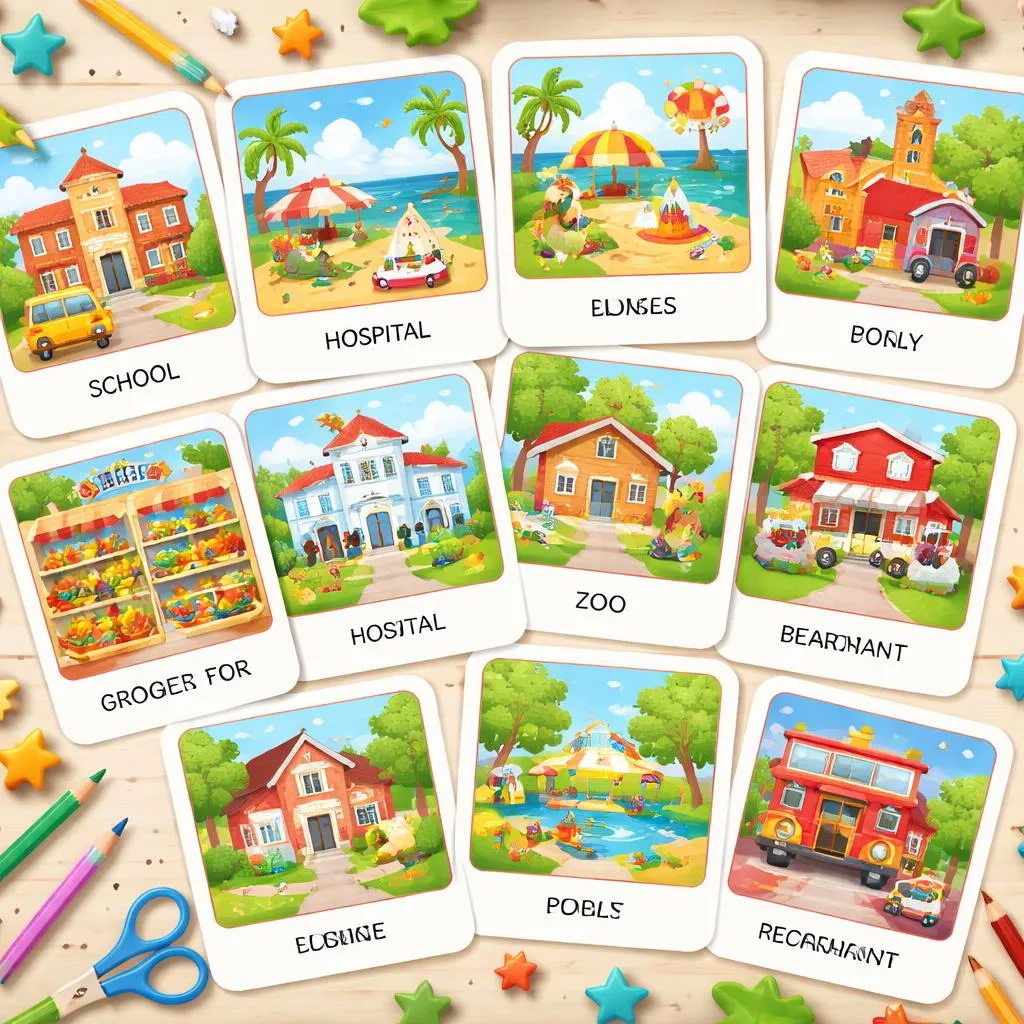

This is a big set of places! The mix of city and country locations makes this flashcard set suitable for a traditional lesson about summer or winter vacation: Where did you go for vacation? or Where would you like to go? For younger students, you can sort the cards into “city” and “country” places and then ask students which is their favourite. If your class knows the comparative form, use these places flashcards to debate which place is better for vacation. For example, tape “ desert ” and “ ice rink ” flashcards to the board and have students generate comparative sentences. Take notes beneath: The desert is… warmer, drier, more beautiful. The ice rink is… colder, more fun, etc. The place with the most positive sentences wins.
Word list: airport, arctic, backyard, beach, cave, circus, city, desert, dump, farm, forest, golf course, ice rink, island, park, playground, school, sea, snow hill, stadium, street, supermarket, swimming pool, toy store, volcano, zoo
Click here to download the full Places PDF — free
By practicing with Places flashcards, children can:
- Enhance their vocabulary related to various locations, both urban and rural.
- Develop their speaking and sentence-building skills by describing and comparing places.
- Improve their understanding of adjectives and comparative forms through interactive activities.
- Foster critical thinking by debating which places are better for vacations.
- Boost memory and recognition through sorting and categorizing exercises.
How to Teach Places Flashcards with Flashcards
Parents and educators can start by introducing the flashcards one by one, naming each place clearly and showing a picture for visual association. For younger children, sorting the cards into “city” and “country” categories helps build classification skills. Asking questions like “Which place do you like best?” encourages children to express preferences and practice speaking. For older kids, use the cards to form simple sentences or comparisons, such as “The beach is warmer than the forest.” Repetition and interactive discussion make the learning process engaging and effective.
(1) Fun Places Flashcard Games
Games are a great way to reinforce learning. Try “Place Match,” where children match flashcards to pictures or real objects. Another fun game is “Guess the Place,” where one child describes a place without naming it, and others guess which card it is. Use the cards to create a “Vacation Debate” game, encouraging children to use comparative sentences to argue which place is better. These activities combine language practice with play, making learning enjoyable and memorable.
(2) Example Sentences with Emotions Vocabulary
Using the flashcards, children can practice sentences that express feelings about places, such as “The beach makes me happy because I love swimming,” or “The desert feels hot and dry, so I don’t like it.” This helps them connect vocabulary with emotions and personal experiences, enriching their language skills and emotional expression.
Free Places Flashcards PDF Download
You can easily print and download the full set of Places flashcards for free from the provided link. This resource is perfect for home or classroom use, allowing repeated practice and easy access to all the vocabulary. Having physical cards supports hands-on learning and makes the lessons more interactive.
FAQ about Places Flashcards
Q: What age group are these flashcards best for?
A: They are suitable for young learners from preschool to early elementary school.
Q: How often should children practice with the flashcards?
A: Daily short sessions of 10-15 minutes are ideal for retention and engagement.
Q: Can these flashcards be used for other languages?
A: Yes, they can be adapted for bilingual learning by adding translations.
Q: Are there activities for advanced learners?
A: Yes, older children can use the cards to write stories or create dialogues about the places.
These flashcards provide a versatile tool for building vocabulary, speaking confidence, and fostering a love for learning about the world.