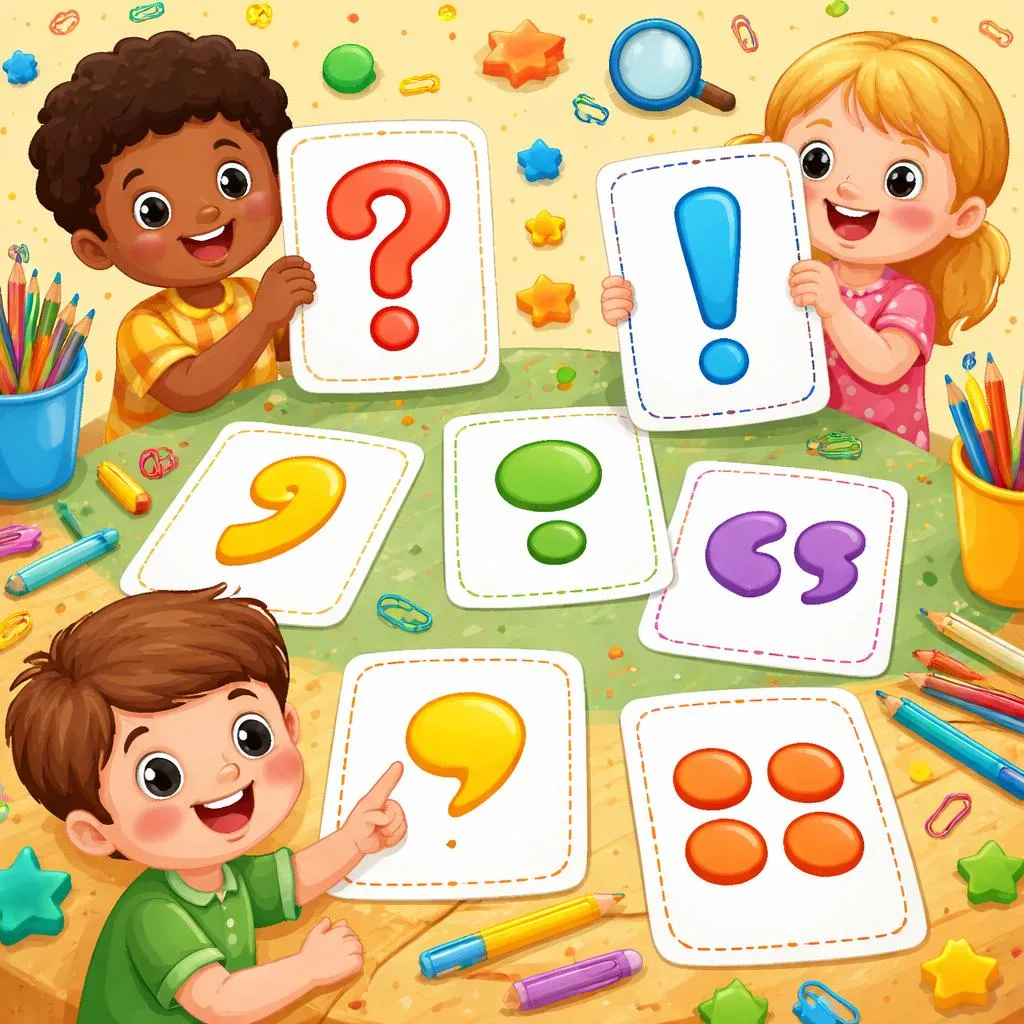

Help your students master written self-expression beyond correct spelling. The 18 flashcards in this set present the most common signs, symbols and marks that learners will encounter in written English texts.
The set includes: final punctuation marks basic marks learners of all levels will need (ex. comma, apostrophe, etc.) punctuation you may not need to teach until intermediate level (ex. single and double quotation marks, the dreaded semicolon ) symbols needed for communicating on the web The set does not include: math symbols ( + , -, =, % ) currency symbols ( $, £, ¥) Lessons in Punctuation Looking for fun ways to bring punctuation lessons into grammar or writing class? These websites have interesting ideas for teaching punctuation: https://www.cambridge.org/elt/blog/2019/01/18/teaching-punctuation/ https://www.differentiatedteaching.com/punctuation-activities/
Word list: ampersand, apostrophe, asterisk, at sign, colon, comma, ellipsis, exclamation point, hyphen, number sign, parentheses, period, question mark, quotation marks, semicolon, single quotations, slash, underscore
Click here to download the full Punctuation Marks PDF — free
By practicing with punctuation flashcards, children can:
- Recognize and name common punctuation marks used in English writing.
- Understand the basic functions of punctuation to improve reading comprehension.
- Develop skills to express themselves clearly and correctly in written language.
- Gain confidence in writing by mastering essential symbols like commas, periods, question marks, and quotation marks.
- Prepare for more advanced punctuation concepts as their language skills grow.
How to Teach Punctuation Flashcards with Flashcards
Parents and educators can use punctuation flashcards as interactive tools to introduce children to the symbols and their uses. Start by showing one card at a time, naming the punctuation mark, and explaining its purpose with simple examples. Encourage children to repeat the names and sounds, and practice identifying punctuation in storybooks or everyday writing. Use the cards to create matching games or sorting activities that reinforce recognition and understanding. Consistent, short practice sessions help children build familiarity without feeling overwhelmed.
(1) Fun Punctuation Flashcard Games
Engage children with games like “Punctuation Hunt,” where they search for punctuation marks in sentences, or “Flashcard Memory,” matching punctuation cards with example sentences. Another game, “Punctuation Relay,” involves children placing the correct punctuation card at the end of a spoken sentence. These activities make learning dynamic and memorable, helping children associate punctuation marks with their real-life uses.
(2) Example Sentences with Emotions Vocabulary
Using the flashcards, children can practice sentences that express feelings, such as “Wow! That’s amazing!” (exclamation point) or “Are you coming to play?” (question mark). This approach links punctuation to tone and emotion, deepening understanding and making writing more expressive and fun.
Free Punctuation Flashcards PDF Download
Parents and teachers can easily access and print free punctuation flashcards from the provided PDF link. These downloadable resources are perfect for classroom use, homeschooling, or extra practice at home. The printable sets include clear images and labels for each punctuation mark, making them ideal for hands-on learning and review.
FAQ about Punctuation Flashcards
Q: At what age should children start learning punctuation flashcards?
A: Children can begin recognizing basic punctuation marks as early as kindergarten, with more complex marks introduced gradually.
Q: How often should children practice with punctuation flashcards?
A: Short daily sessions of 5-10 minutes are effective for steady progress.
Q: Can punctuation flashcards help with reading skills?
A: Yes, understanding punctuation improves reading fluency and comprehension.
Q: Are there digital versions of these flashcards?
A: Many websites offer interactive punctuation flashcards and games for online learning.
Q: How can I assess my child’s understanding of punctuation?
A: Use simple writing prompts and ask your child to add the correct punctuation, or play flashcard games that require identifying marks in sentences.
These activities and resources make punctuation learning engaging and accessible, supporting children’s growth as confident readers and writers.