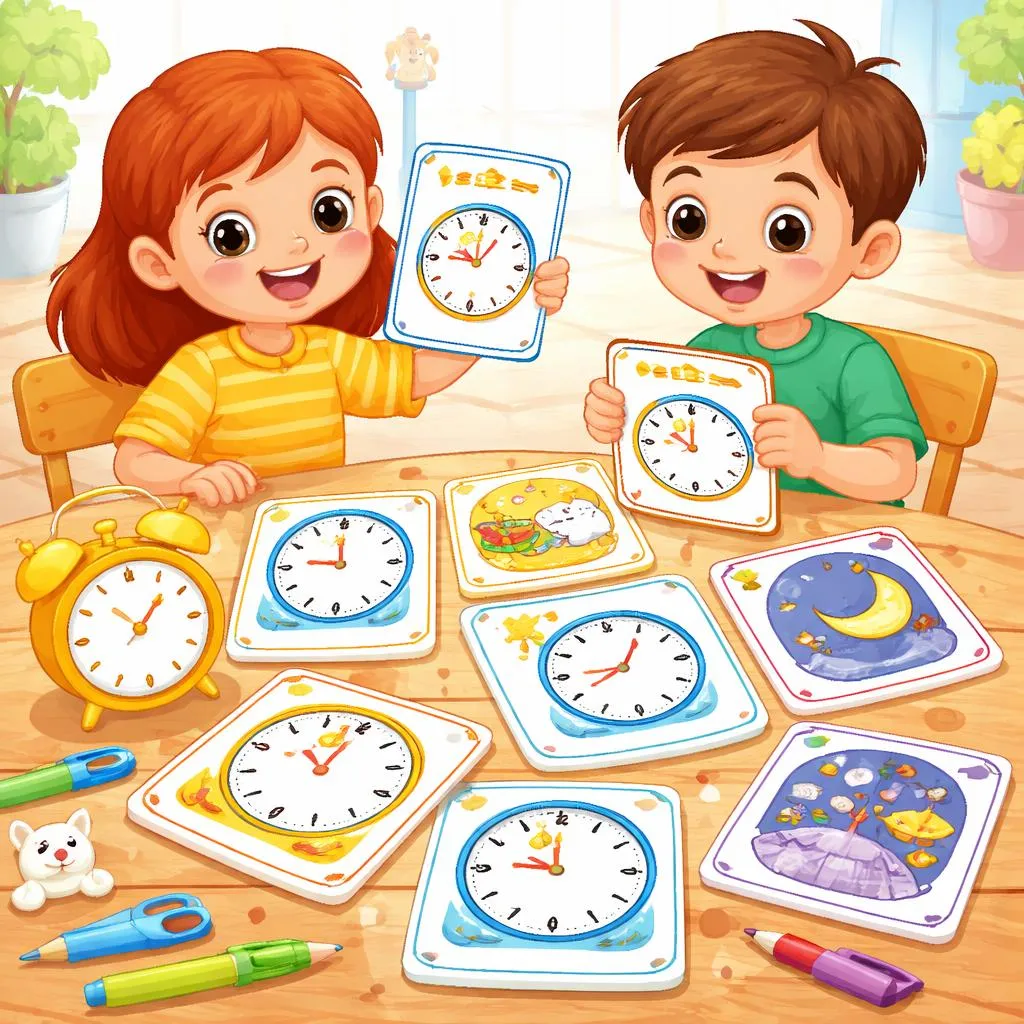

Stop drawing the time and start teaching it! This set of time flashcards includes a picture of an analog clock for every 15 minutes of the day: 1:00, 1:15, 1:30, 1:45… There are 49 cards in total, including one blank clock. Variations Images with labels : Pictures of the analog clock with the digital time written below. Digital time with phrases : Time written in numbers with a phrase written in words below. NO IPA? Correct. I have not made an IPA transcription for the Time Flashcards set.
Word list: 1:00, 1:15, 1:30, 1:45, 10:00, 10:15, 10:30, 10:45, 11:00, 11:15, 11:30, 11:45, 12:00, 12:15, 12:30, 12:45, 2:00, 2:15, 2:30, 2:45, 3:00, 3:15, 3:30, 3:45, 4:00, 4:15, 4:30, 4:45, 5:00, 5:15, 5:30, 5:45, 6:00, 6:15, 6:30, 6:45, 7:00, 7:15, 7:30, 7:45, 8:00, 8:15, 8:30, 8:45, 9:00, 9:15, 9:30, 9:45
Click here to download the full Time Flashcards PDF — free
By practicing with time flashcards, children can:
- Learn to read and understand analog clocks at 15-minute intervals, building a strong foundation in telling time.
- Connect digital time with its corresponding analog clock image, enhancing their ability to translate between formats.
- Develop vocabulary related to time, including phrases like "quarter past," "half past," and "quarter to."
- Improve concentration and memory skills through repetitive practice and engaging activities.
- Gain confidence in using time expressions in everyday conversations.
How to Teach Time Flashcards with Flashcards
Parents and educators can use these time flashcards by first introducing the analog clock images alongside the digital times. Start with whole hours (e.g., 1:00, 2:00) and gradually move to quarter past, half past, and quarter to times. Encourage children to say the time aloud and match the clock face with the digital number. Using the blank clock card, children can practice drawing the hands themselves, reinforcing their understanding. Consistent daily practice in short sessions helps maintain interest and retention.
(1) Fun Time Flashcard Games
Engage children with games such as "Time Match," where they match digital times to the correct analog clock card, or "What Time Is It?" where one child shows a card and others guess the time aloud. Another game is "Clock Bingo," using the flashcards as bingo cards to recognize times quickly. These interactive games make learning enjoyable and encourage verbal participation.
(2) Example Sentences with Time Vocabulary
Children can practice sentences like "It is quarter past three," "The clock shows half past six," or "We will start at quarter to nine." Using emotions or daily routines, sentences such as "I feel happy at 3:00 PM when I play outside" help contextualize time in their daily lives, making the learning more meaningful.
Free Time Flashcards PDF Download
Our complete set of 49 time flashcards, including analog clocks for every 15 minutes and a blank clock for practice, is available for free download. Parents and teachers can print these flashcards at home or in the classroom to support hands-on learning. Access the PDF anytime to refresh lessons or create custom activities.
FAQ about Time Flashcards
Q: What age group is best suited for these flashcards?
A: These flashcards are ideal for children aged 5 to 8 who are beginning to learn how to tell time.
Q: Can these flashcards be used for digital time learning only?
A: While they focus on analog clocks, the inclusion of digital times and phrases helps children understand both formats.
Q: How often should children practice with these flashcards?
A: Short daily sessions of 10-15 minutes are most effective for steady progress without overwhelming the child.
Q: Are there suggestions for extending learning beyond flashcards?
A: Yes, incorporating daily routine discussions and using clocks around the home can reinforce concepts learned with flashcards.