
Fun Introduction
Last Wednesday, Mia sat at her desk. She opened her tablet. She connected to the Wi-Fi to watch a video. The screen loaded quickly. Later, Mia played with her friend Leo. They linked arms to skip together. Their steps matched perfectly. Both actions joined things. But one used technology. The other used bodies. Let’s learn the difference.
Word Breakdown
Connect To Do
Imagine plugging a charger into your tablet. The cable clicks in. Your device powers up. That is connect to do. It means joining to a system or network.
It feels digital and instant. Like connect to Bluetooth for music. Or connect to a printer for homework. Your fingers tap or plug. Your mind expects a signal. The memory anchor is a plug icon. See the prongs? That is connect to do.
Link To Do
Think of holding hands with friends. You form a circle. Everyone is connected. That is link to do. It means joining physically or socially.
It feels warm and human. Like link arms to dance. Or link paper clips to make a chain. Your hands grasp. Your heart feels together. The memory anchor is two links of a chain. See them hook? That is link to do.
Advanced Comparison
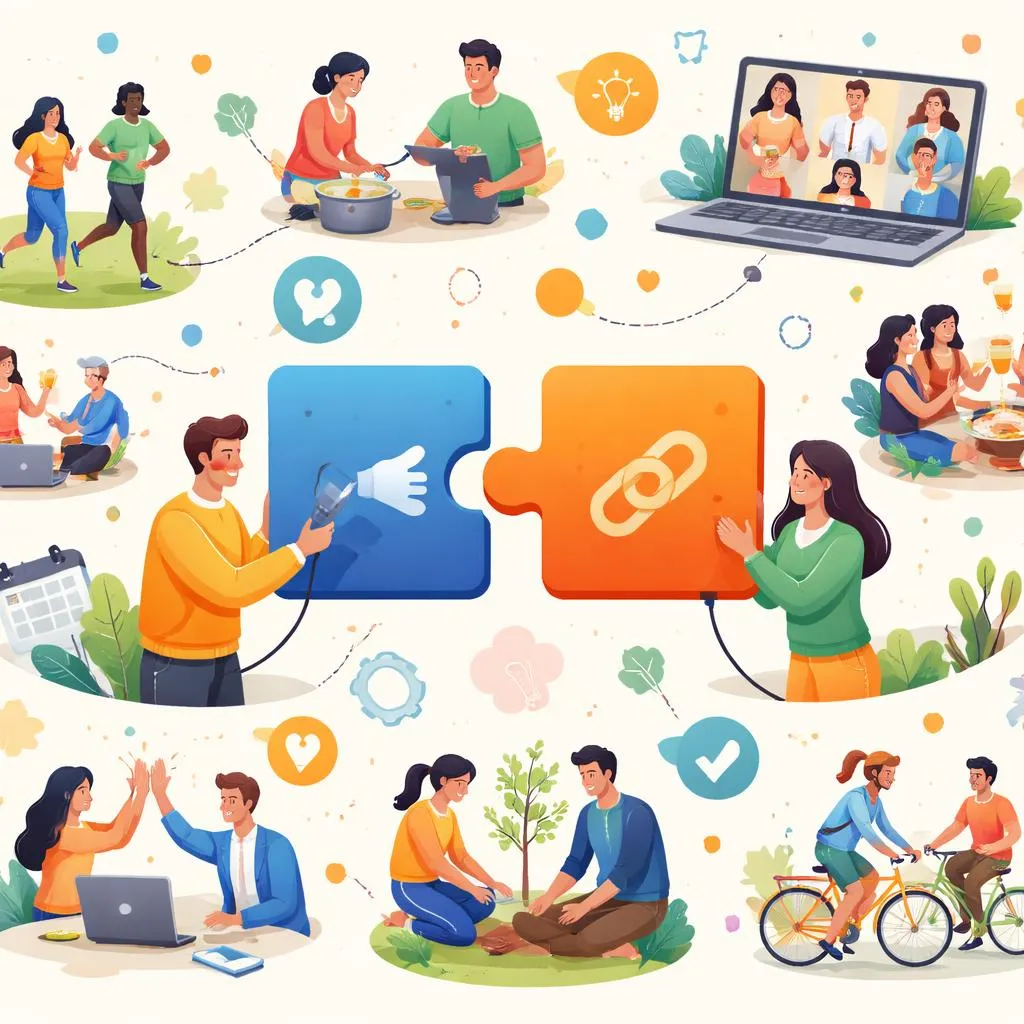
Connect is for devices and networks. Link is for physical or social bonds. Connect often uses technology. Link uses touch or ties. Use connect for electronics. Use link for people or objects.
Scene Comparison
Scene One happens in the computer lab. Leo needs to print his essay. He connects to the school printer. The machine hums to life. Leo smiles as pages slide out. This is connect to do—joining a device.
Scene Two takes place at recess. Emma and her friends stand in a line. They link arms to swing together. They chant a silly song. Their laughter echoes. This is link to do—joining bodies.
Scene Three occurs at home. Ben does online research. He connects to the internet for facts. Later, he video calls his cousin. They link faces through the screen. Notice the shift. Connecting is technical. Linking is relational.
Pitfalls Deep Reminder
Mistake One is saying “I linked to the Wi-Fi.” Why wrong? Wi-Fi is a network. It needs connecting. Funny result? Friends think you made a paperclip chain. Correct phrase is connect to Wi-Fi. Memory trick: Connect has “net” in it—network.
Mistake Two is saying “I connected arms with my sister.” Why wrong? Arms are physical. They link together. Funny result? Sister tries to plug into your arm. Correct phrase is link arms with sister. Memory trick: Link sounds like “chain”—physical.
Mistake Three is saying “I linked my headphones to my phone.” Why wrong? Headphones pair electronically. They connect. Funny result? Teacher thinks you tied them with string. Correct phrase is connect headphones to phone. Memory trick: Connect for gadgets.
Hidden Trap: Some kids think link is fancier. But it is about physical bonds. Choose based on what joins.
Interactive Exercises
First Level: Choose the Right Phrase. Read each sentence. Pick connect or link.
I ___ to the school network for research. (connect/link)
She ___ arms with her best friend. (connect/link)
We ___ to the speaker for music. (connect/link)
He ___ paper clips to make a chain. (connect/link)
They ___ to the video call with grandma. (connect/link)
Answers: connect, link, connect, link, connect.
Second Level: Mini Theater. Act with a friend. Use the phrases.
Scene A: Tech Time
A: Help me ___ to the printer to print my poster.
B: Sure, I will plug it in.
Scene B: Playground Fun
A: Let’s ___ arms and spin in a circle!
B: Wheee! This is so fun.
Third Level: Spot the Mistake. Which sentence sounds odd? Explain why.
Sentence: I linked to the Bluetooth speaker.
Reason: Bluetooth is wireless tech. Use connect instead.
Sentence: I connected hands with my little brother.
Reason: Hands are physical. Use link instead.
Sentence: We linked to the online game server.
Reason: Server is digital. Use connect instead.
Fourth Level: Create Sentences. Use both phrases.
Connect to do: I connect to my tablet to play games.
Link to do: I link my shoes with a cool lace pattern.
Bonus Challenge: You want to join a group video chat. Do you connect or link? Answer: Connect. It is digital.
Rhyme Time
Connect to tech, link to chain.
One plugs in, one holds plain.
Digital? Choose connect.
Physical? Link to gain.
Homework Task
Pick one activity. Complete it this week. Share with family.
Option One: Drawing Journal. Get a small notebook. Draw three pictures. Write a sentence under each.
Picture One: You connect to Wi-Fi. Sentence: I connected to Wi-Fi to watch a show.
Picture Two: You link arms with a friend. Sentence: I linked arms with Mia to skip.
Picture Three: You connect to a printer. Sentence: I connected to the printer for homework.
Show your journal to a parent. Explain the differences.
Option Two: Role Play. With a parent, act out moments. Use phrases correctly.
You: Mom, I need to connect to the internet for school.
Parent: Okay, let me help you log in.
You: Dad, let’s link arms to walk to the park.
Parent: Sure, that sounds fun.
Practice until it feels natural.
Option Three: Sharing Time. Tomorrow at school, tell a friend. Describe one connect and one link. Say: Yesterday I connected to the library database. I linked pinkies with my friend. Ask your friend about theirs.
Life Practice
Week Challenge: Try one task. Complete within seven days. Share your success.
Task One: Observation Log. For three days, note connect and link moments. Draw icons.
Day One: Connect to tablet. Draw a tablet icon.
Day Two: Link with friends. Draw a chain icon.
Day Three: Connect to TV. Draw a TV icon.
Show your log to your teacher. Place it on the classroom wall.
Task Two: Action Demo. Use both phrases in real actions.
Step One: Plug in a cable. Say: I connect this to the speaker.
Step Two: Hook elbows with sibling. Say: We link arms to dance.
Demonstrate to a sibling. Explain the difference.
Task Three: Social Mission. Use phrases with others.
Connect to a classmate’s hotspot. Say: I connected to your hotspot for research!
Link with a friend to cross the street. Say: We linked arms to stay safe!
Record a short voice message. Send it to your teacher.
Task Four: Creative Story. Write a short tale. Include both phrases.
Title: The Connected Day.
Story: I connected to my laptop for homework. Then I linked hands with my sister to sing. What joy!
Share your story in class.
Remember, practice makes perfect. Use these phrases often. Soon they will feel easy.