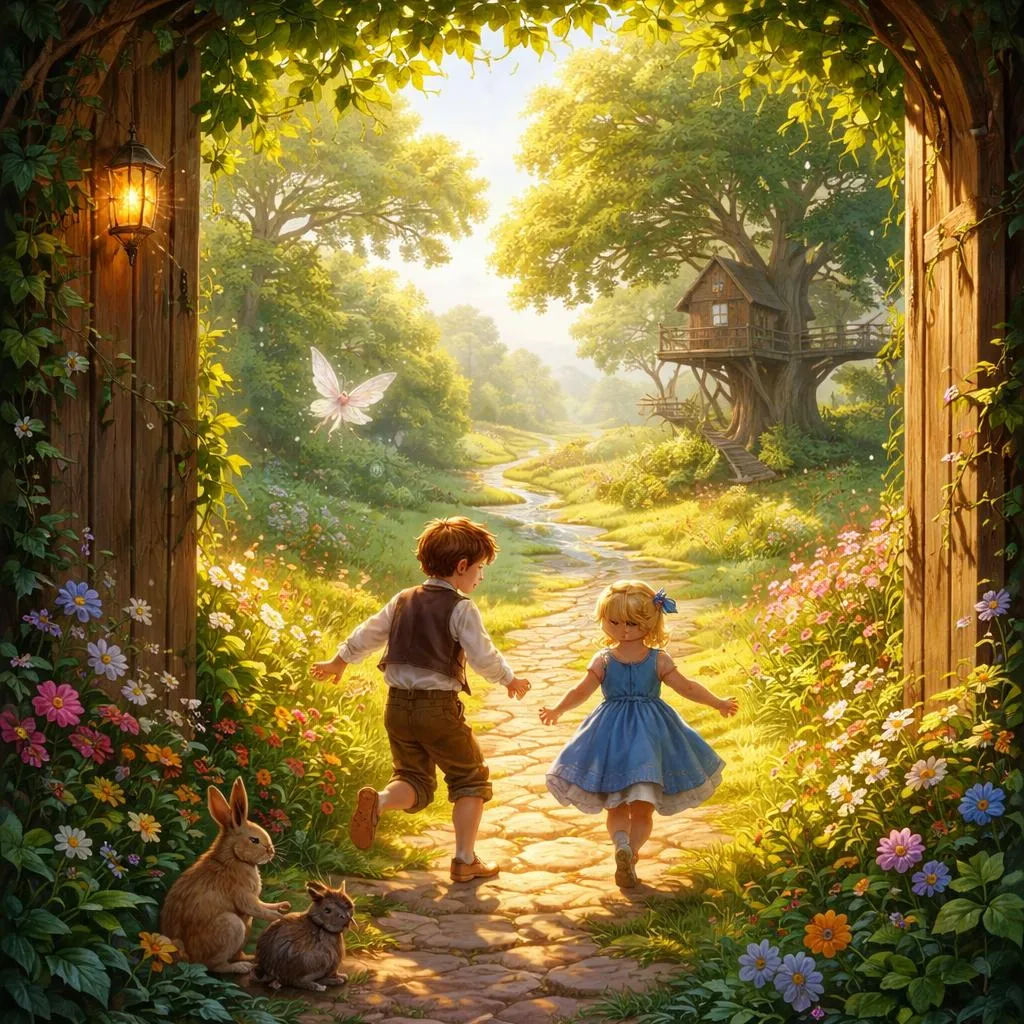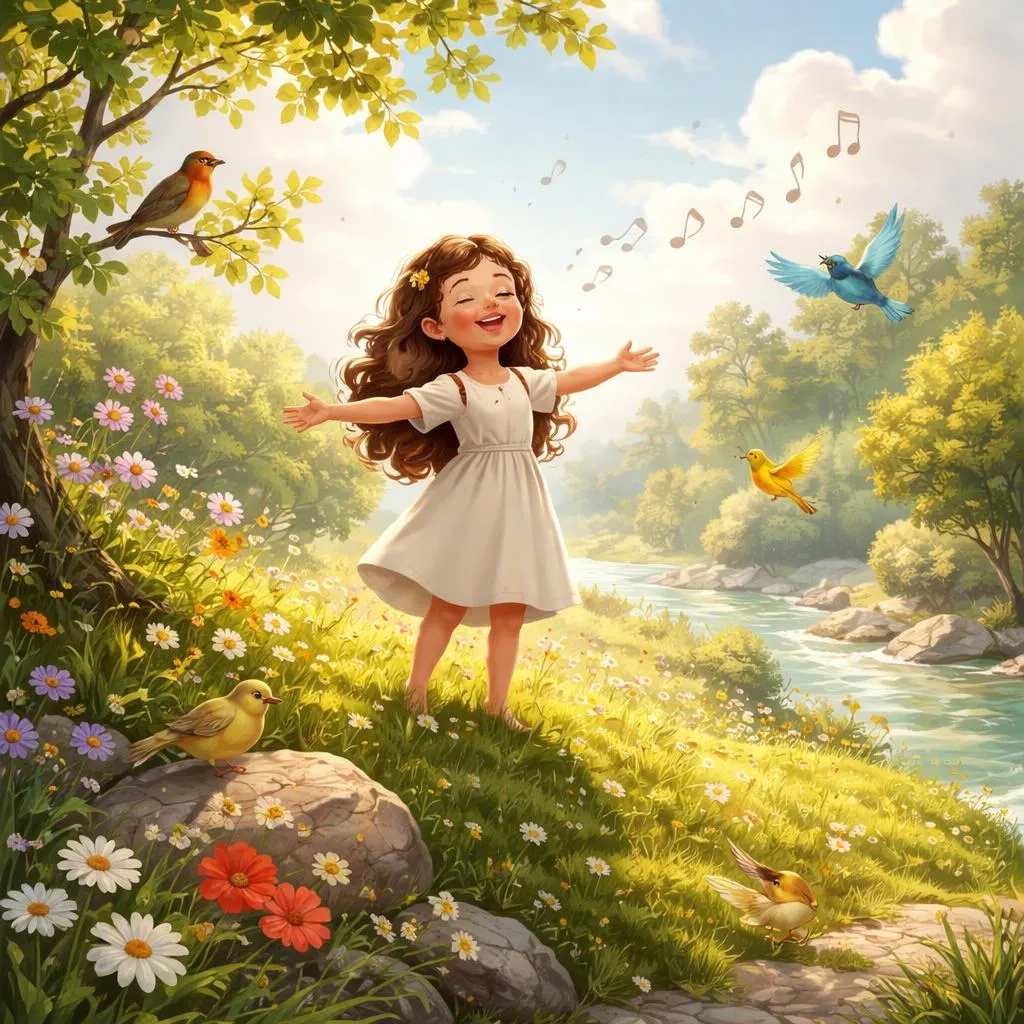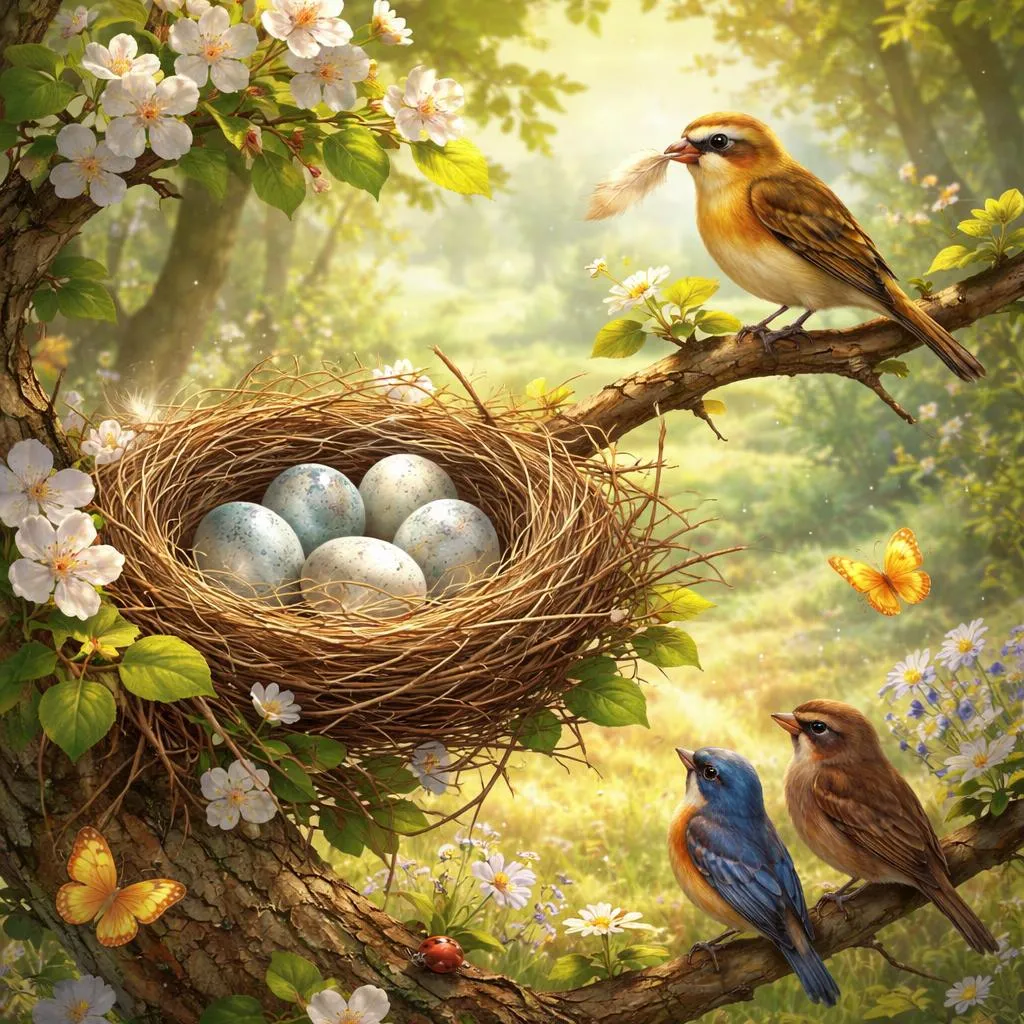

Birds all the sunny day Flutter and quarrel Here in the arbour-like Tent of the laurel. Here in the fork The brown nest is seated; Four little blue eggs The mother keeps heated. While we stand watching her Staring like gabies, Safe in each egg are the Bird’s little babies. Soon the frail eggs they shall Chip, and upspringing Make all the April woods Merry with singing. Younger than we are, O children, and frailer, Soon in the blue air they’ll be, Singer and sailor. We, so much older, Taller and stronger, We shall look down on the Birdies no longer. They shall go flying With musical speeches High overhead in the Tops of the beeches. In spite of our wisdom And sensible talking, We on our feet must go Plodding and walking.
Story Background and Author Introduction
This beautiful poem captures the delicate and lively world of birds in springtime. It is often attributed to a classic nature poet who loved to observe and celebrate the small wonders of the natural world. The poem invites readers to witness the tender care of a mother bird warming her eggs and the joyful anticipation of new life about to emerge. The imagery of birds fluttering, chirping, and eventually flying high above the trees connects deeply with themes of growth, change, and freedom.
The author, a keen observer of nature, wrote this poem to help children and readers of all ages appreciate the cycles of life and the beauty found in everyday moments. The language is simple yet vivid, making it accessible for young readers while also inspiring a sense of wonder and respect for the natural world.
Detailed Interpretation and Meaning
At its heart, the poem is about life’s stages and the passage of time. The mother bird’s nest, with its four blue eggs, symbolizes new beginnings and the nurturing care necessary for growth. The poem contrasts the fragile eggs and their unborn chicks with the older children who watch them. This contrast highlights the idea of youth and innocence versus maturity and experience.
The “frail eggs” soon hatch, and the baby birds will fill the woods with their songs, symbolizing joy, renewal, and the promise of the future. The older children recognize that although they are bigger and stronger, they cannot fly like the birds; they must “plod” and “walk.” This reflects a gentle acceptance of human limitations and the different paths life takes.
The poem also touches on themes of observation and learning. The children watch “staring like gabies” (fools or simpletons), suggesting that sometimes adults or older children can learn from the natural world’s simplicity and beauty.
What Children and Students Can Learn
-
Appreciation of Nature: The poem encourages children to observe and appreciate the small details in nature, such as birds nesting and singing. This fosters curiosity and respect for the environment.
-
Understanding Growth and Change: By watching the eggs hatch and the birds grow, children learn about life cycles, patience, and the natural process of development.
-
Respect for Different Stages of Life: The poem teaches that everyone has a unique role and stage in life, whether young and fragile or older and grounded.
-
Patience and Care: The mother bird’s careful warming of her eggs models nurturing behavior and responsibility.
-
Joy in Simple Things: The birds’ singing and flying remind children to find happiness in everyday moments.
Applying These Lessons in Life, Learning, and Social Settings
-
In Life: Children can learn to be patient with themselves and others as they grow and develop new skills, just like the baby birds take time to hatch and learn to fly.
-
In Learning: Observing nature and asking questions can inspire curiosity and a love of science and the environment. Teachers can encourage outdoor learning and nature walks to connect lessons with real-world experiences.
-
In Social Settings: The poem’s message about different stages of life can help children understand and respect people of all ages, fostering empathy and kindness.
Cultivating Positive Values and Behaviors
-
Nurturing Care: Like the mother bird, children can practice caring for pets, plants, or younger siblings, learning responsibility and compassion.
-
Patience: Understanding that growth takes time helps children develop patience with themselves and others.
-
Observation Skills: Encouraging children to watch and listen carefully to their surroundings enhances mindfulness and concentration.
-
Joy and Positivity: Finding delight in small things, such as birdsong or a walk outside, promotes mental well-being and a positive outlook.
Conclusion
This poem is a gentle reminder of the beauty and lessons found in nature. By engaging with its imagery and themes, children and students can develop a deeper appreciation for the world around them and learn important values such as patience, care, respect, and joy. These lessons not only enrich their understanding of life but also help them grow into thoughtful, kind, and curious individuals.