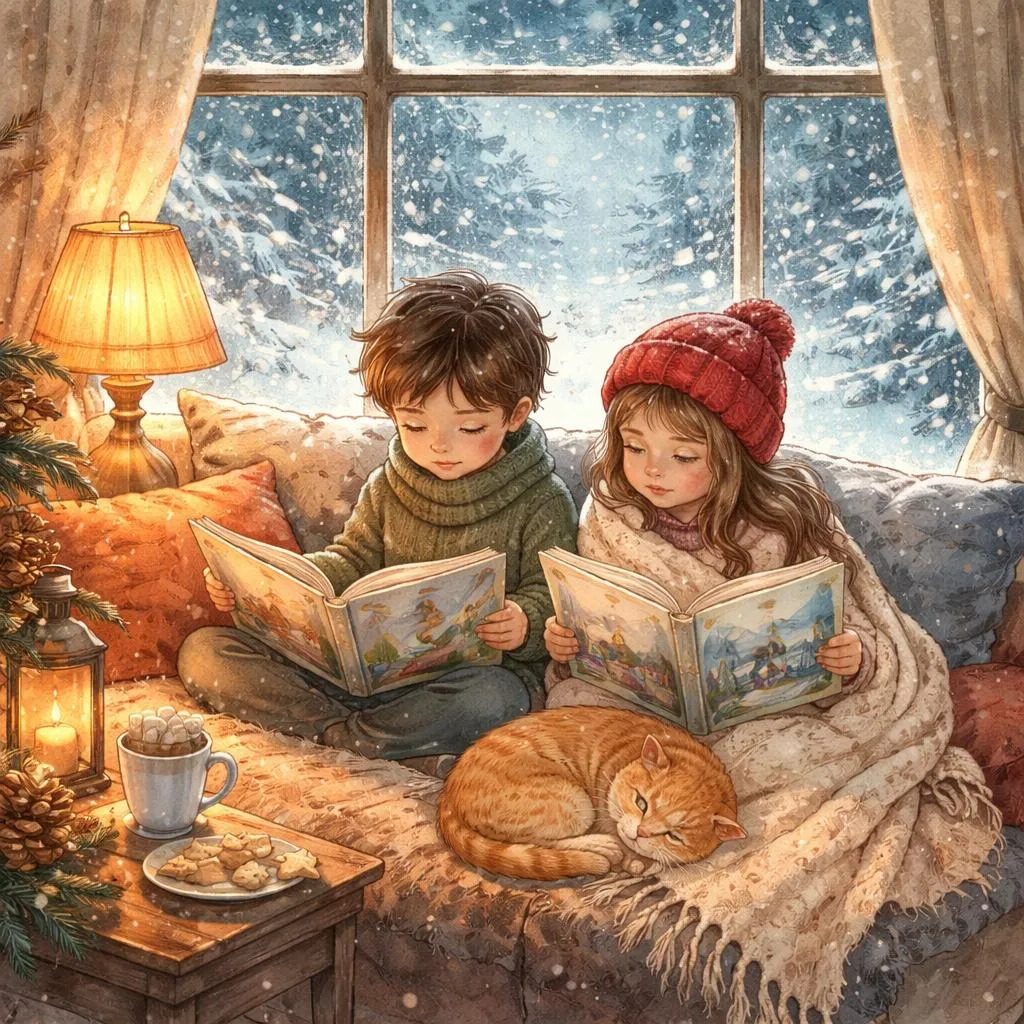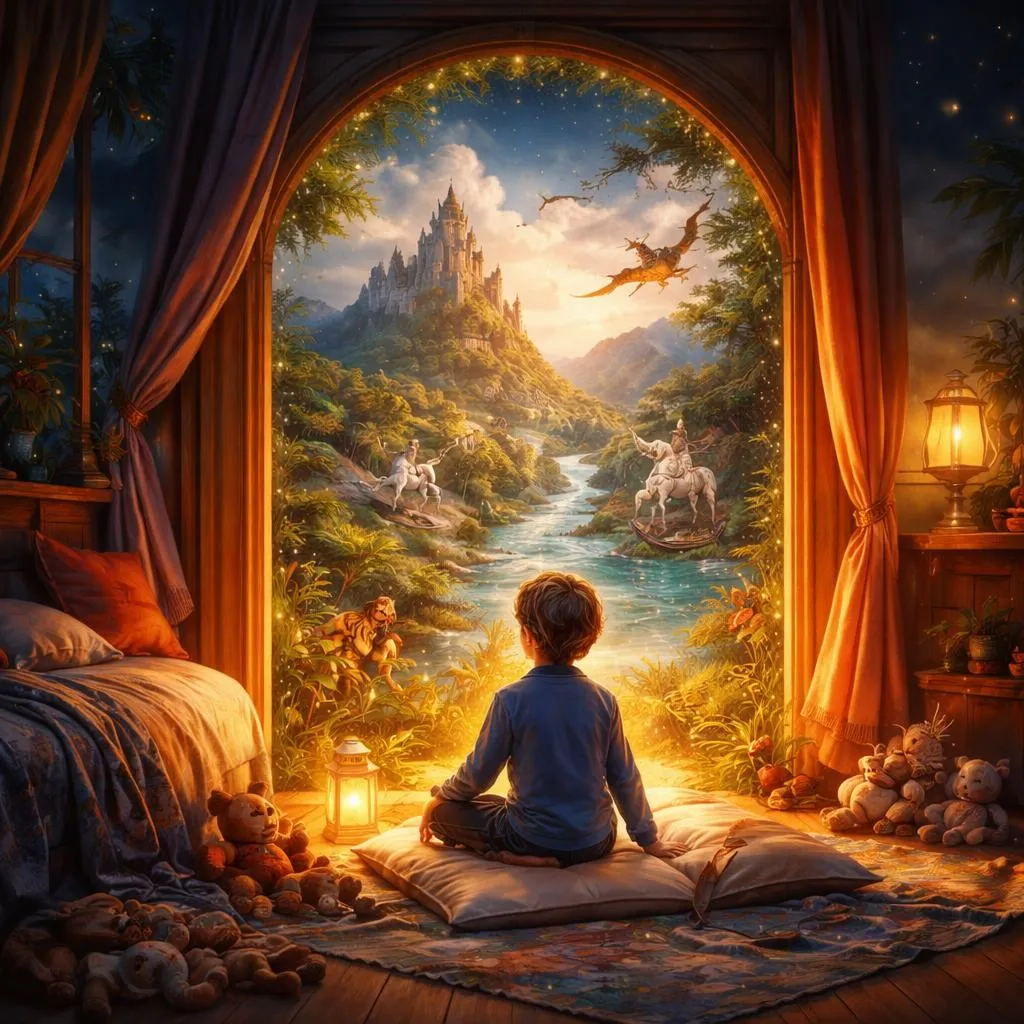

At evening when the lamp is lit, Around the fire my parents sit; They sit at home and talk and sing, And do not play at anything. Now, with my little gun, I crawl All in the dark along the wall, And follow round the forest track Away behind the sofa back. There, in the night, where none can spy, All in my hunter’s camp I lie, And play at books that I have read Till it is time to go to bed. These are the hills, these are the woods, These are my starry solitudes; And there the river by whose brink The roaring lions come to drink. I see the others far away As if in firelit camp they lay, And I, like to an Indian scout, Around their party prowled about. So when my nurse comes in for me, Home I return across the sea, And go to bed with backward looks At my dear land of Story-books.
Introduction to the Story
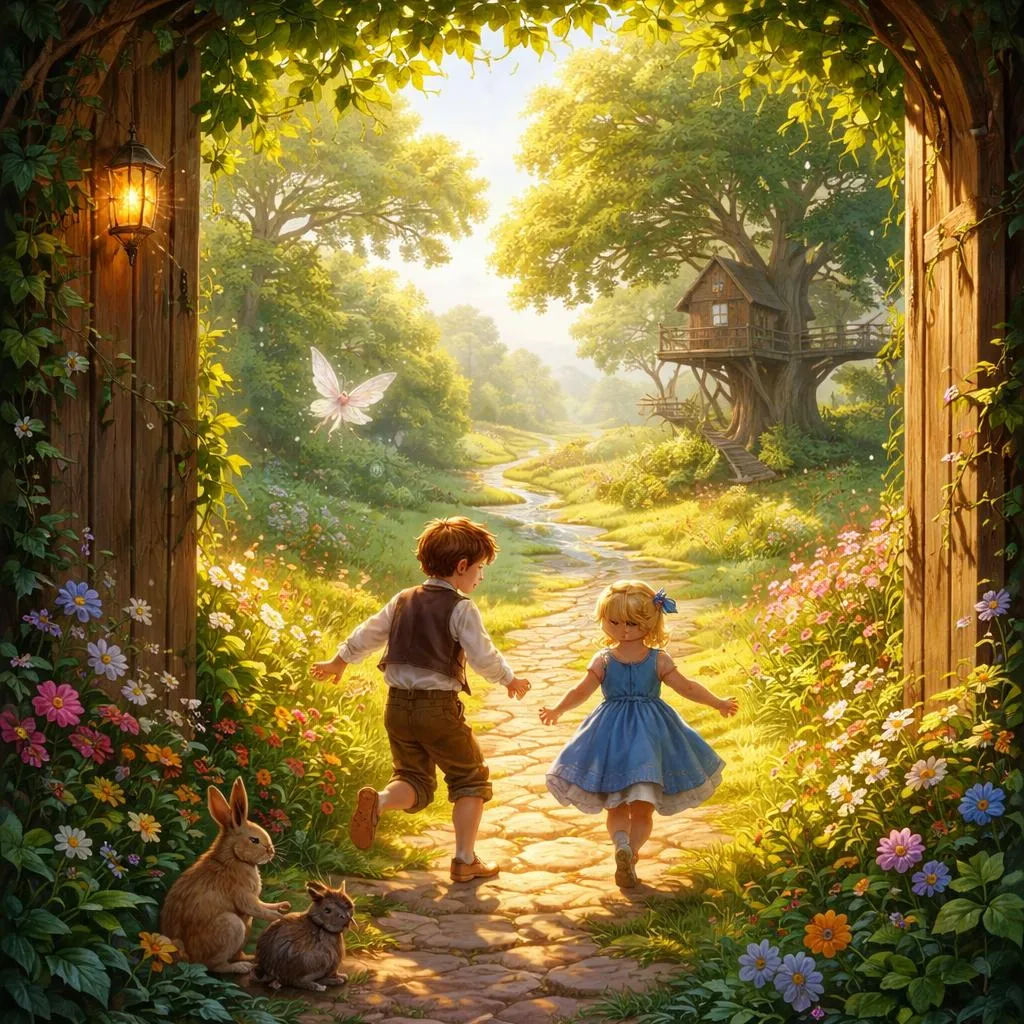
This beautiful poem captures a child's imaginative playtime in the evening. While the parents sit quietly by the fire, the child embarks on an adventurous journey within the home, pretending to be a hunter in a forest, exploring hills, woods, and rivers filled with wild animals. The poem ends with the child reluctantly returning to bed, looking back fondly at the magical world of storybooks.
Background and Author
This poem is by Robert Louis Stevenson, a famous Scottish author best known for his adventure stories such as Treasure Island and Kidnapped. Stevenson wrote many poems and stories that celebrate childhood imagination and the joy of storytelling. He believed that stories and play are essential parts of growing up, helping children explore their feelings and the world around them.
Detailed Interpretation and Meaning
The poem vividly illustrates the power of imagination. The child’s home transforms into a vast wilderness filled with exciting adventures. The "little gun" and "hunter’s camp" symbolize the child’s active role in creating stories and exploring new worlds. The poem also contrasts the quiet, calm world of the parents with the lively, imaginative world of the child, showing how children often see the world differently.
The “starry solitudes” and “roaring lions” represent the wonders and mysteries that children discover through books and play. The child’s role as an “Indian scout” shows bravery and curiosity, qualities that are important for learning and personal growth.
What Children and Students Can Learn
-
Imagination and Creativity
This poem encourages children to use their imagination to create their own adventures. Imaginative play helps develop creativity, problem-solving skills, and emotional expression. -
The Joy of Reading
The poem highlights how books can transport readers to magical places and inspire new ideas. Reading regularly can improve language skills and open up new worlds of knowledge. -
Observation and Exploration
Like the child in the poem, students can learn to observe their surroundings carefully and explore new ideas, whether in nature, books, or everyday life. -
Balancing Play and Rest
The poem ends with the child going to bed, reminding young readers that rest is important after a day full of activity and learning.
Applying These Lessons in Daily Life
- At Home: Encourage children to create their own stories and games using everyday objects. This can foster creativity and make learning fun.
- In School: Teachers can use storytelling and imaginative play to help students understand new concepts and express themselves.
- Social Skills: Playing roles like the “hunter” or “scout” helps children practice empathy and cooperation, as they imagine different perspectives and work with others.
- Self-Discipline: The poem’s ending teaches children the importance of knowing when to pause their play and get enough rest, which supports healthy habits.
Cultivating Positive Spirit and Behavior
- Curiosity: Encourage children to ask questions and explore new ideas, just like the child in the poem who explores the “forest track.”
- Bravery: Support children in trying new activities and facing challenges, inspired by the child’s adventurous spirit.
- Respect for Imagination: Celebrate children’s stories and creative ideas, showing that imagination is valuable and important.
- Balance: Teach children to balance fun with responsibility, including rest and study time.
Through this poem, children and students can learn that stories are not just entertainment but powerful tools for growth, learning, and understanding the world. By embracing imagination and curiosity, they can develop skills and values that will help them succeed in many areas of life.