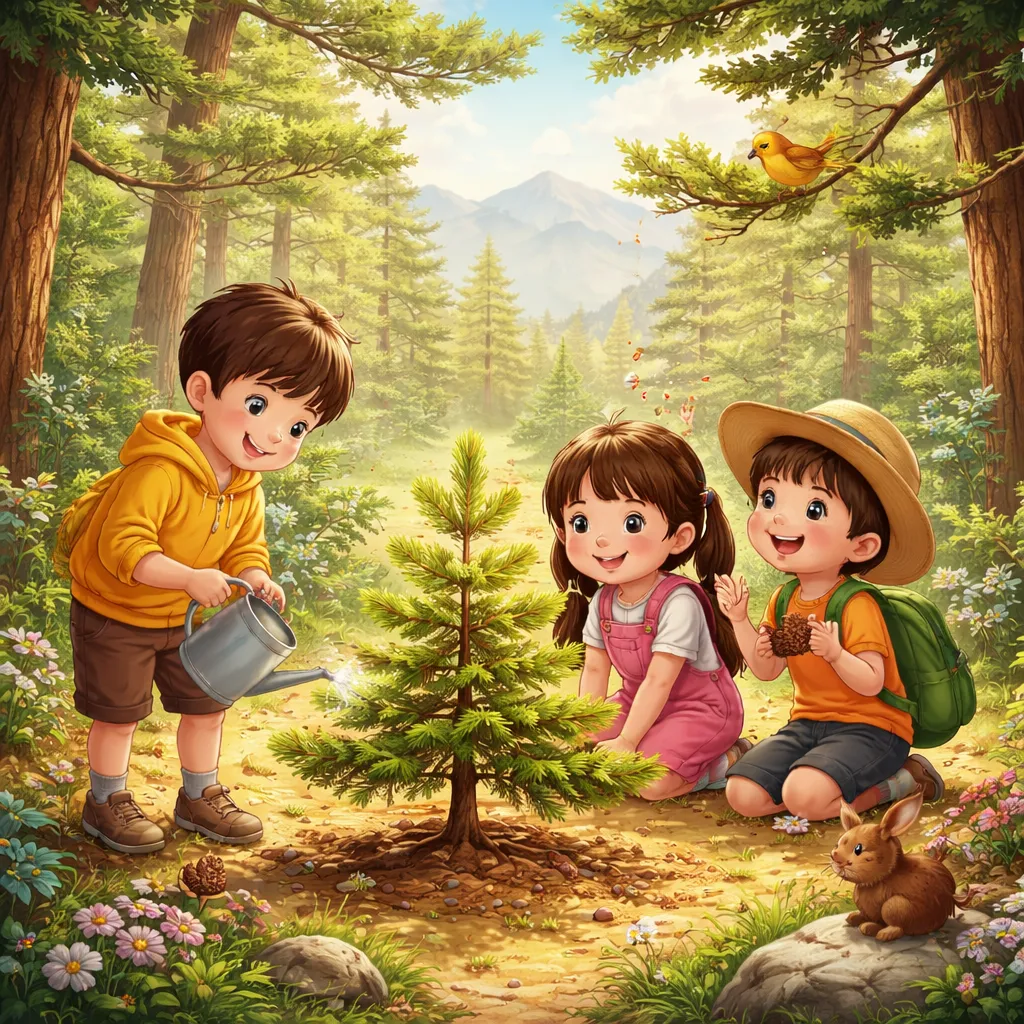

Some songs plant seeds of wisdom that grow for a lifetime. The Chinese Songs: Little Pine Tree (小松树) does exactly that. This gentle children's song celebrates the quiet strength of a small pine tree growing tall and green through all seasons. For families learning English and Chinese together, this song offers a beautiful way to explore nature words, growth concepts, and the virtue of patience. Let us discover what makes this traditional song so meaningful for young learners.
What Is the Story Behind This Famous Song?
The Chinese Songs: Little Pine Tree (小松树) is a beloved children's song from China. It describes a small pine tree growing on a mountainside, staying green through winter snow and summer sun. The song teaches children about strength, resilience, and the slow miracle of growth.
Pine trees hold special meaning in Chinese culture. They represent longevity, endurance, and unwavering spirit. Pine trees stay green all year, even in cold winter when other trees lose their leaves. This makes them symbols of perseverance.
The song personifies the little pine tree as a friend who grows slowly but steadily. It doesn't complain about wind or snow. It simply keeps growing, reaching toward the sky. Children learn that good things take time.
The melody is gentle and steady, like a tree growing. It doesn't rush. It moves calmly from phrase to phrase. Children often sway like trees while singing, imagining themselves rooted and reaching upward.
Understanding this背景 helps families appreciate the song's connection to Chinese values and the universal wonder of watching things grow. It opens conversations about nature, seasons, and the patience required for growth.
The Complete Lyrics of the Song
Reading the words helps us understand this quiet growing story. Here are the lyrics to the Chinese Songs: Little Pine Tree (小松树) in Chinese characters, pinyin, and English.
小松树,小松树,在山坡上长大 Xiǎo sōng shù, xiǎo sōng shù, zài shān pō shàng zhǎng dà Little pine tree, little pine tree, on hillside grow big
风吹来,雨打下,它从来不害怕 Fēng chuī lái, yǔ dǎ xià, tā cóng lái bù hài pà Wind blows come, rain beats down, it never is afraid
小松树,小松树,绿绿的叶子发 Xiǎo sōng shù, xiǎo sōng shù, lǜ lǜ de yè zi fā Little pine tree, little pine tree, green green leaves grow
冬天到,雪花飘,它还穿着绿褂褂 Dōng tiān dào, xuě huā piāo, tā hái chuān zhe lǜ guà guà Winter arrives, snowflakes float, it still wears green little coat
小松树,小松树,慢慢长高啦 Xiǎo sōng shù, xiǎo sōng shù, màn màn zhǎng gāo la Little pine tree, little pine tree, slowly grow tall
长成材,做栋梁,大家都爱它 Zhǎng chéng cái, zuò dòng liáng, dà jiā dōu ài tā Grow into timber, become building beam, everyone all love it
Learning New Words from the Song
The Chinese Songs: Little Pine Tree (小松树) introduces many useful words. Let us explore them in both Chinese and English.
First, "小松树" (xiǎo sōng shù) means little pine tree. "松" (sōng) means pine. "树" (shù) means tree. Together they name this special evergreen.
"在山坡上" (zài shān pō shàng) means on hillside. "山" (shān) means mountain or hill. "坡" (pō) means slope. "上" (shàng) means on top.
"长大" (zhǎng dà) means grow big. "长" (zhǎng) means grow. "大" (dà) means big. This phrase describes the process of getting bigger.
"风吹来" (fēng chuī lái) means wind blows come. "风" (fēng) is wind. "吹" (chuī) means blow. "来" (lái) means come toward.
"雨打下" (yǔ dǎ xià) means rain beats down. "雨" (yǔ) is rain. "打" (dǎ) means hit or beat. "下" (xià) means down.
"从来不害怕" (cóng lái bù hài pà) means never afraid. "从来" (cóng lái) means always or all along. "不" (bù) means not. "害怕" (hài pà) means afraid.
"绿绿的叶子" (lǜ lǜ de yè zi) means green green leaves. Repeating "绿" (lǜ) makes the green more vivid. "叶子" (yè zi) means leaves.
"发" (fā) here means grow or sprout. Leaves come out from the branches.
"冬天到" (dōng tiān dào) means winter arrives. "冬天" (dōng tiān) is winter. "到" (dào) means arrive.
"雪花飘" (xuě huā piāo) means snowflakes float. "雪" (xuě) is snow. "雪花" (xuě huā) means snowflakes, literally "snow flowers". "飘" (piāo) means float gently.
"它还穿着绿褂褂" (tā hái chuān zhe lǜ guà guà) means it still wears green little coat. "穿" (chuān) means wear. "着" (zhe) shows ongoing action. "褂褂" (guà guà) is a child's word for little coat. This personification makes the tree feel like a friend.
"慢慢长高啦" (màn màn zhǎng gāo la) means slowly grow tall. "慢慢" (màn màn) means slowly. "高" (gāo) means tall. "啦" (la) is a playful sentence ending.
"长成材" (zhǎng chéng cái) means grow into timber. "成" (chéng) means become. "材" (cái) means useful wood.
"做栋梁" (zuò dòng liáng) means become building beam. "栋梁" (dòng liáng) are the main beams that support a roof. In Chinese culture, this phrase also means becoming a person who can support others.
"大家都爱它" (dà jiā dōu ài tà) means everyone all love it. This sweet ending shows how valuable the tree becomes.
Exploring Pronunciation and Rhythm
The Chinese Songs: Little Pine Tree (小松树) offers wonderful practice with Mandarin tones and rhythm. The steady melody matches the tree's patient growth.
Listen to "Xiǎo sōng shù" repeated. The tones go: xiǎo (third tone, falling then rising), sōng (first tone, high level), shù (fourth tone, falling). The contrast between high level and falling tones creates interest.
The phrase "fēng chuī lái" uses first tone for "fēng" (high level), first tone for "chuī" (high level), and second tone for "lái" (rising). The rising tone on "lái" suggests wind arriving.
"Yǔ dǎ xià" uses third tone for "yǔ" (falling then rising), third tone for "dǎ" (falling then rising), and fourth tone for "xià" (falling). The falling tone on "xià" emphasizes rain coming down.
"Lǜ lǜ de yè zi" uses fourth tone for "lǜ" (falling), repeated, then neutral "de", fourth tone for "yè" (falling), and neutral "zi". The falling tones emphasize the green color.
Finding Grammar Patterns in the Lyrics
The Chinese Songs: Little Pine Tree (小松树) offers useful grammar examples for Chinese learners. One pattern appears with location words. "在山坡上" (zài shān pō shàng) uses "在" (zài) for location and "上" (shàng) for position. This structure is essential for describing where things are.
The song uses "来" (lái) and "下" (xià) as directional complements. "吹来" (chuī lái) shows wind coming toward. "打下" (dǎ xià) shows rain beating down. These complements add precision to verbs.
Another pattern appears with the particle "着" (zhe) in "穿着" (chuān zhe). This shows an ongoing state. The tree continues wearing its green coat through winter.
The phrase "从来不" (cóng lái bù) means never. This structure teaches how to express that something has never happened.
The word "成" (chéng) in "长成材" shows result. The tree grows and becomes useful timber. This resultative complement is common in Chinese.
The final line uses "都" (dōu) to mean "all". "大家都爱它" shows how "都" comes before the verb.
Fun Learning Activities for the Whole Family
Listening to the Chinese Songs: Little Pine Tree (小松树) can inspire many family activities. Here are some ideas to try together.
First, plant a tree or small plant together. Choose a pine tree if possible. Dig a hole, place the seedling, cover with soil, and water. Practice Chinese words while gardening. "树" (tree), "土" (soil), "水" (water), "长大" (grow). This connects language to real growth.
Second, observe pine trees in nature. Go for a walk and find pine trees. Notice their needles stay green all year. Touch the bark. Smell the pine scent. Use Chinese words to describe what you see. "绿绿的" (green green), "高高的" (tall tall), "松树" (pine tree). This builds observation vocabulary.
Third, create a growth chart. Measure your child's height and mark it on a wall or paper. Talk about how they grow slowly, like the little pine tree. Use Chinese phrases. "慢慢长高" (slowly grow tall) and "长大啦" (grew big). This connects the song to personal experience.
Creating Printable Materials at Home
Families can make simple learning tools based on the Chinese Songs: Little Pine Tree (小松树). These activities help reinforce new ideas.
Create bilingual tree flashcards. On one side, write the Chinese character and pinyin for tree words. Tree, 树. Pine, 松. Leaf, 叶. Root, 根. On the other side, draw a picture and write the English word. Review these cards together during nature walks.
Make a four seasons tree drawing. Draw a simple pine tree four times, showing it in spring, summer, autumn, and winter. Label each season in Chinese. 春天, 夏天, 秋天, 冬天. Color the tree green in all seasons. This builds seasons vocabulary.
Create a fill-in-the-blank page using song lyrics in pinyin. Remove key words like "sōng shù", "fēng", "yǔ", "xuě", "lǜ", and "dōng tiān". Leave blanks where those words belong. Listen to the song together and fill in the missing words. This builds listening and character recognition.
Connecting the Song to Daily Life
The Chinese Songs: Little Pine Tree (小松树) connects to daily life through growth and patience. Everything living grows slowly. Children themselves grow slowly, just like trees.
Talk with your children about how they have grown. Show baby photos and compare to now. Use Chinese to describe growth. "你长高了" (you grew taller) or "慢慢长大" (slowly growing up). This builds personal connection to growth vocabulary.
The song also teaches about facing challenges bravely. The little pine tree faces wind and rain without fear. In life, children face challenges too. Use Chinese to talk about being brave. "不怕困难" (not afraid of difficulty) or "像小松树一样坚强" (strong like little pine tree). This builds character vocabulary.
Parents can model patience. When children want things immediately, say "要像小松树一样慢慢长大" (need to grow slowly like little pine tree). This teaches that good things take time.
Educational Games to Play Together
Games make learning with the Chinese Songs: Little Pine Tree (小松树) exciting. Here are some simple games to try.
Play the tree and wind game. One person is the little pine tree, standing tall and still. Others are wind and rain, gently blowing and tapping. The tree stays strong. Use Chinese words. "风吹来" (wind blows) and "雨打下" (rain beats). The tree says "我不怕" (I'm not afraid). This builds action vocabulary and resilience.
Try the season guessing game. Describe a season in Chinese without naming it. "下雪了,很冷" (snows, very cold). Others guess "冬天" (winter). Take turns describing seasons. This builds descriptive vocabulary.
Play the growth measuring game. Use a measuring tape to measure family members. Record heights in Chinese numbers. "一米二十" (one meter twenty). Check again in a month to see growth. This builds number and measurement vocabulary.
Why This Song Helps Language Learning
The Chinese Songs: Little Pine Tree (小松树) helps learners in special ways. The steady tempo makes words easy to hear. Each phrase is clear. This helps children catch new vocabulary without feeling rushed.
The repetition in the song reinforces key phrases. "小松树" repeats throughout. "慢慢" appears, teaching the concept of slowness. Repetition builds memory without effort.
The nature theme connects to universal experiences. Children everywhere see trees. This makes the Chinese words meaningful and memorable.
The growth theme parallels children's own development. They understand getting bigger. This personal connection deepens learning.
Making Music Part of Your Routine
Families can make songs a regular part of bilingual learning. Choose one song each week to explore together. Listen during quiet times or while looking at trees.
The Chinese Songs: Little Pine Tree (小松树) works perfectly for calm moments. Its gentle pace soothes and centers. Play it when children need to settle.
Remember that language learning thrives in patient moments. When children associate Chinese with slow, steady growth, they learn naturally. They understand that learning a language, like a tree growing, takes time.
Keep singing, keep growing, and keep reaching toward the sky together. In the forest of bilingual learning, every new word is like a little pine tree, planted carefully and growing strong through all seasons.
本回答由 AI 生成,内容仅供参考,请仔细甄别。