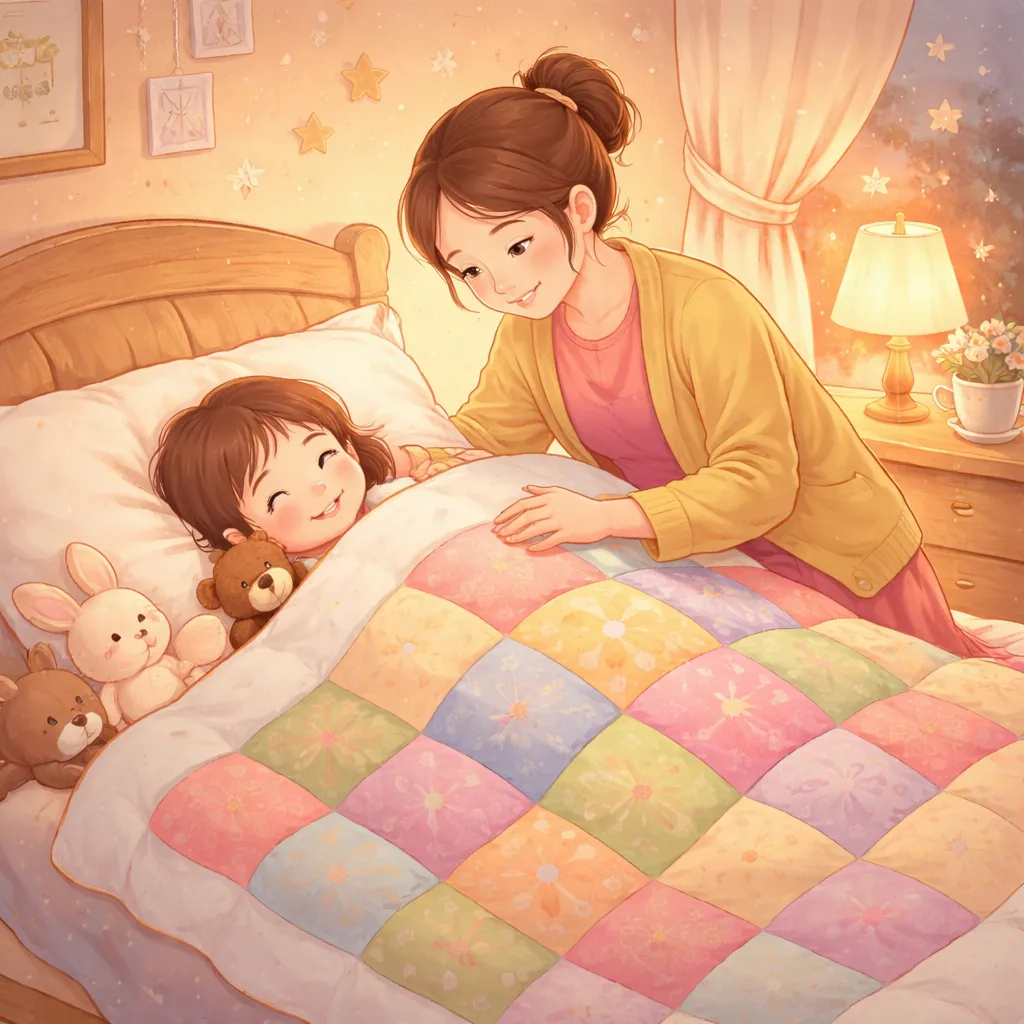

Some songs wrap around children like a warm blanket on a cold night. The Chinese Songs: Little Quilt (小被子) does exactly that. This gentle lullaby celebrates the little quilt that keeps children warm and safe through the night. For families learning English and Chinese together, this song offers a beautiful way to explore bedtime vocabulary, the feeling of being protected, and the simple joy of warmth. Let us discover what makes this traditional song so comforting for young learners.
What Is the Story Behind This Famous Song?
The Chinese Songs: Little Quilt (小被子) is a beloved lullaby from China. It describes a child's small quilt as a warm, loving companion that provides comfort and protection through the night. The song helps children feel safe as they drift off to sleep.
In Chinese culture, quilts hold special meaning. Traditional Chinese quilts are often handmade by family members, stitched with love and care. A quilt passed down through generations carries the warmth of ancestors. For a child, their quilt becomes a source of security.
The song personifies the little quilt as a gentle friend who hugs the child all night. It shields against cold, chases away bad dreams, and holds the child close until morning.
The melody is soft and warm, like being wrapped in cozy fabric. Children often pull their quilts closer while listening, feeling the love in every stitch.
Understanding this背景 helps families appreciate the song's connection to family love and the universal need for warmth and security. It opens conversations about gratitude, comfort, and the special objects that make us feel safe.
The Complete Lyrics of the Song
Reading the words helps us understand this warm embrace. Here are the lyrics to the Chinese Songs: Little Quilt (小被子) in Chinese characters, pinyin, and English.
小被子,小被子,盖在我身上 Xiǎo bèi zi, xiǎo bèi zi, gài zài wǒ shēn shàng Little quilt, little quilt, cover on my body
软软暖暖真舒服,陪我入梦乡 Ruǎn ruǎn nuǎn nuǎn zhēn shū fu, péi wǒ rù mèng xiāng Soft soft warm warm really comfortable, accompany me enter dreamland
小被子,小被子,轻轻抱着我 Xiǎo bèi zi, xiǎo bèi zi, qīng qīng bào zhe wǒ Little quilt, little quilt, gently hug me
冷风吹不进,恶梦都赶跑 Lěng fēng chuī bù jìn, è mèng dōu gǎn pǎo Cold wind blow not in, bad dreams all chase away
小被子,小被子,我的好宝贝 Xiǎo bèi zi, xiǎo bèi zi, wǒ de hǎo bǎo bèi Little quilt, little quilt, my good treasure
每天早上叠整齐,谢谢你陪我 Měi tiān zǎo shàng dié zhěng qí, xiè xiè nǐ péi wǒ Every day morning fold neatly, thank you accompany me
Learning New Words from the Song
The Chinese Songs: Little Quilt (小被子) introduces many useful words. Let us explore them in both Chinese and English.
First, "小被子" (xiǎo bèi zi) means little quilt. "被" (bèi) means quilt or blanket. "子" (zi) is a common noun suffix.
"盖在我身上" (gài zài wǒ shēn shàng) means cover on my body. "盖" (gài) means cover. "身上" (shēn shàng) means on the body.
"软软暖暖真舒服" (ruǎn ruǎn nuǎn nuǎn zhēn shū fu) means soft soft warm warm really comfortable. Repeating "软" (ruǎn) and "暖" (nuǎn) emphasizes these cozy qualities. "舒服" (shū fu) means comfortable.
"陪我入梦乡" (péi wǒ rù mèng xiāng) means accompany me enter dreamland. "入" (rù) means enter. "梦乡" (mèng xiāng) is a poetic word for dreamland.
"轻轻抱着我" (qīng qīng bào zhe wǒ) means gently hug me. "抱" (bào) means hug. Repeating "轻" (qīng) makes the action softer.
"冷风吹不进" (lěng fēng chuī bù jìn) means cold wind blow not in. The quilt blocks the cold.
"恶梦都赶跑" (è mèng dōu gǎn pǎo) means bad dreams all chase away. "恶梦" (è mèng) means nightmare. "赶跑" (gǎn pǎo) means chase away.
"好宝贝" (hǎo bǎo bèi) means good treasure. This term of endearment shows love for the quilt.
"每天早上叠整齐" (měi tiān zǎo shàng dié zhěng qí) means every day morning fold neatly. Making the bed shows respect.
"谢谢你陪我" (xiè xiè nǐ péi wǒ) means thank you accompany me. Gratitude is expressed daily.
Exploring Pronunciation and Rhythm
The Chinese Songs: Little Quilt (小被子) offers wonderful practice with Mandarin tones and rhythm. The warm melody wraps around listeners like a cozy blanket.
Listen to "Xiǎo bèi zi" repeated. The tones go: xiǎo (third tone, falling then rising), bèi (fourth tone, falling), zi (neutral). The falling tone on "bèi" feels like a blanket settling down.
The phrase "ruǎn ruǎn nuǎn nuǎn zhēn shū fu" uses third tone for "ruǎn" (falling then rising), repeated, third tone for "nuǎn" (falling then rising), repeated, first tone for "zhēn" (high level), first tone for "shū" (high level), and neutral for "fu". The repeated third tones feel soft and warm.
"Lěng fēng chuī bù jìn" uses third tone for "lěng" (falling then rising), first tone for "fēng" (high level), first tone for "chuī" (high level), fourth tone for "bù" (falling), and fourth tone for "jìn" (falling). The falling tones show the wind being blocked.
Finding Grammar Patterns in the Lyrics
The Chinese Songs: Little Quilt (小被子) offers useful grammar examples for Chinese learners. One pattern appears with the verb "盖" (gài) meaning cover. "盖在身上" shows covering onto the body.
The song uses the particle "着" (zhe) in "抱着" (bào zhe) to show ongoing action. The quilt continuously hugs throughout the night.
Another pattern appears with the potential complement "不进" (bù jìn) meaning cannot enter. "吹不进" shows the wind cannot blow in. This structure teaches ability and inability.
The phrase "都赶跑" (dōu gǎn pǎo) uses "都" (dōu) meaning all and the resultative complement "跑" (pǎo) meaning away. All bad dreams are chased away.
"每天早上" (měi tiān zǎo shàng) combines "每" (every) with time words to mean "every morning".
The gratitude expression "谢谢你陪我" (xiè xiè nǐ péi wǒ) shows the pattern for thanking someone for an action.
Fun Learning Activities for the Whole Family
Listening to the Chinese Songs: Little Quilt (小被子) can inspire many family activities. Here are some ideas to try together.
First, have a quilt appreciation talk. Look at the quilts and blankets in your home. Talk about which ones are favorites and why. Use Chinese to describe them. "这条被子很软" (this quilt is very soft), "我最喜欢蓝色的被子" (I like blue quilt best). This builds descriptive vocabulary.
Second, practice making the bed together. Each morning, fold or straighten quilts. Use Chinese phrases. "叠被子" (fold quilt), "铺整齐" (spread neatly), "谢谢被子" (thank you quilt). This turns a chore into language practice.
Third, create a gratitude ritual. Before sleep, thank the quilt in Chinese. "谢谢小被子陪我" (thank you little quilt for accompanying me). This builds gratitude and language habits.
Creating Printable Materials at Home
Families can make simple learning tools based on the Chinese Songs: Little Quilt (小被子). These activities help reinforce new ideas.
Create bilingual comfort flashcards. On one side, write the Chinese character and pinyin for comfort words. Quilt, 被子. Warm, 暖. Soft, 软. Comfortable, 舒服. Hug, 抱. On the other side, draw a picture and write the English word. Review these cards during cozy moments.
Make a dream catcher drawing page. Draw a picture of the bed with quilt, and add drawings of good dreams being kept close while bad dreams are chased away. Label in Chinese. "好梦" (good dreams), "恶梦" (bad dreams). This builds imagination and vocabulary.
Create a fill-in-the-blank page using song lyrics in pinyin. Remove key words like "bèi zi", "shēn shàng", "nuǎn", "shū fu", "mèng", and "bào". Leave blanks where those words belong. Listen to the song together and fill in the missing words. This builds listening and character recognition.
Connecting the Song to Daily Life
The Chinese Songs: Little Quilt (小被子) connects to daily life through warmth and love. Every child knows the feeling of being wrapped in a cozy blanket on a cold night.
Talk with your children about times they felt especially warm and safe. Maybe after a bath, or when snuggling with family. Use Chinese to share. "被子让我温暖" (quilt makes me warm), "我喜欢被抱着" (I like being hugged). This builds emotional vocabulary.
The song also teaches about protection. The quilt blocks cold wind and chases bad dreams. In life, parents and family provide protection. Use Chinese to talk about this. "爸爸妈妈保护我" (mom and dad protect me), "家让我安全" (home makes me safe).
Parents can model gratitude for everyday objects. When tucking children in, say "谢谢小被子" (thank you little quilt). This teaches appreciation for the things that serve us.
Educational Games to Play Together
Games make learning with the Chinese Songs: Little Quilt (小被子) exciting. Here are some simple games to try.
Play the blanket fort game. Use quilts and blankets to build a cozy fort. Inside, practice Chinese words for comfort. "温暖" (warm), "舒服" (comfortable), "安全" (safe). This builds vocabulary through physical experience.
Try the temperature game. Touch different objects and describe how they feel in Chinese. "被子很暖" (quilt is warm), "地板很冷" (floor is cold). This builds sensory vocabulary.
Play the dream catcher game. One person describes a good dream. Another describes a bad dream being chased away. Use Chinese. "好梦来了" (good dream comes), "恶梦快跑" (bad dream run away). This builds narrative skills.
Why This Song Helps Language Learning
The Chinese Songs: Little Quilt (小被子) helps learners in special ways. The warm, gentle tempo makes words easy to hear. Each phrase is clear and comforting. This helps children absorb vocabulary without stress.
The bedtime theme connects to daily routine. Children hear these words every night. Repetition in real life reinforces learning.
The protection theme creates positive associations. Children feel safe and loved when thinking about their quilt. This emotional connection deepens learning.
The gratitude practice builds character along with language. Children learn to appreciate what they have.
Making Music Part of Your Routine
Families can make songs a regular part of bilingual learning. Choose one song each week to explore together. Listen during bedtime routines or quiet moments.
The Chinese Songs: Little Quilt (小被子) works perfectly for bedtime. Play it while tucking children in. Let the music wrap around them like a warm quilt.
Remember that language learning thrives in cozy moments. When children associate Chinese with warm quilts and loving protection, they learn naturally. They understand that words can be as comforting as a soft blanket.
Keep singing, keep warm, and keep loving together. In the cozy night of bilingual learning, every new word is like a soft quilt, wrapping your child in warmth and safety.