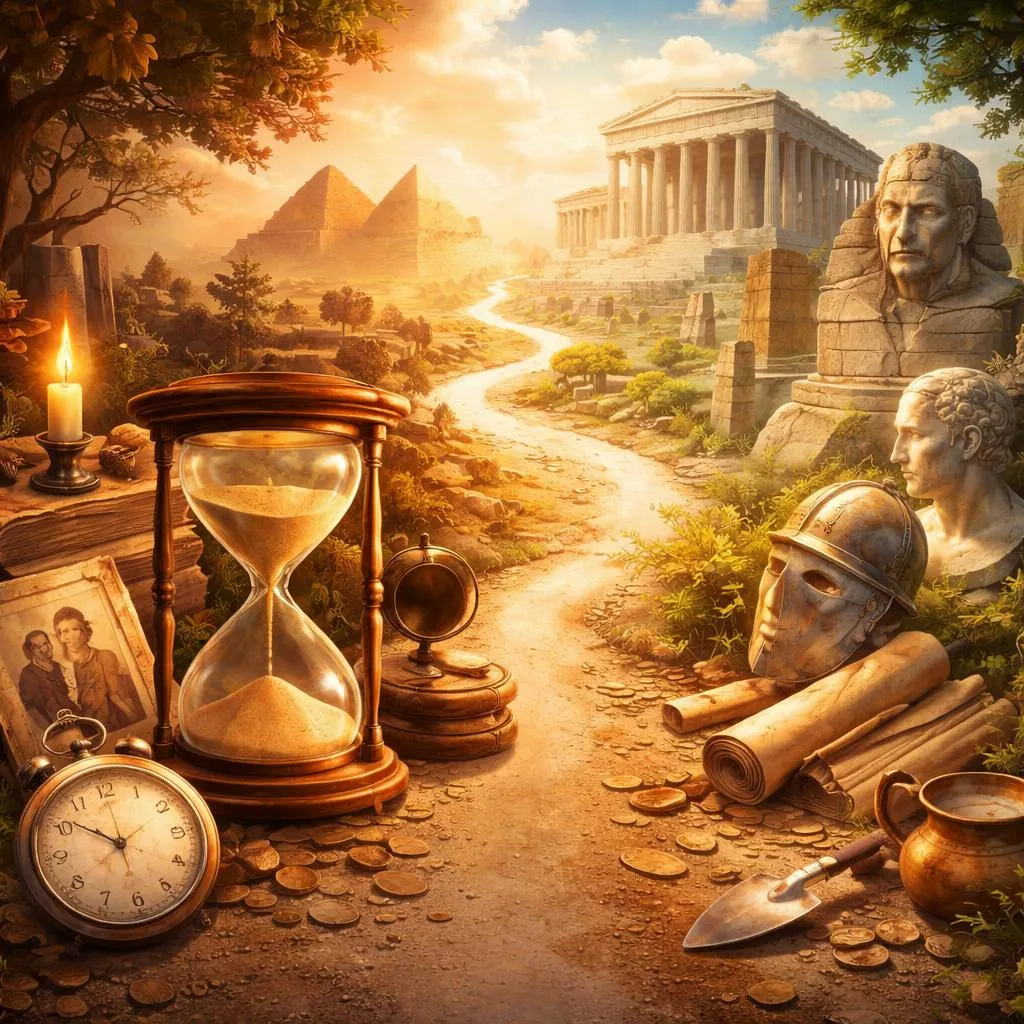

Hello, time detective! Your last birthday party is in the past. The story of dinosaurs is ancient history. Both talk about time gone by. But are they talking about the same "before time"? They are two words for yesterday. One is like your personal photo album. One is like a huge museum. Let's discover their secret! Today, we explore the time-before word pair "past" and "history". Knowing the difference makes you a time word expert. Let's begin.
First, let's be Language Listeners. Listen at home. Here are two sentences. "I visited my grandma in the past." "We learned about ancient history in class." Both talk about before now. A visit. Ancient times. Do they sound the same? One sounds personal, like a memory. One sounds big and important, like a lesson. Can you sense the difference? Great listening! Now, let's explore deeper.
Adventure! Into the World of Time Gone By
Welcome to understanding yesterday. "Past" and "history" are both about time before now. But their size and feel are different. Think of the "past" as your personal photo album. It is all the time that has already happened. It includes your own memories and stories. Think of "history" as a huge museum. It is the recorded story of important past events. It is about big events and famous people. Both look back. But one is the "photo album" of your life. One is the "museum" of the world. Let's learn about each one.
A Photo Album vs. A Huge Museum Think about the word "past". The "past" is all time before now. It is personal. It includes everything from a minute ago to long ago. I ate lunch in the recent past. Now, think about "history". "History" is the study or record of past events. It is about important, known things. We read about Roman history. Your last holiday is in the past. The pyramids are part of history. "Past" is the photo album. "History" is the museum.
Personal Stories vs. Big Events Let's compare what they hold. The "past" holds all personal memories and events. My past includes my first bike ride. "History" holds important, recorded events. The moon landing is history. You remember your past. You study history. One is your own story. One is the world's big story.
Their Special Word Partners and Language Friends Words have best friends. "Past" often partners with personal and general time. In the past. My past. A long time in the past. "History" often partners with study, books, and importance. World history. History book. Make history. Note: The past is personal. History is often written down. "Past" connects to memory. "History" connects to facts and lessons.
Let's visit a school scene. Last year's school play is in the past. This is a personal memory. We have a test on ancient history. The word "past" fits the personal memory of the play. The word "history" fits the subject about ancient civilizations. One is a memory. One is a school subject.
Now, let's go to the playground. My best jump last summer is in the past. This is a personal achievement. The invention of the skateboard is sports history. The word "past" fits the personal memory of a good jump. The word "history" fits the important, recorded fact about the skateboard. One is personal. One is important for everyone.
Our Little Discovery So, what did we find? The "past" and "history" are both about time before now. But the "past" is all time that has happened. It is personal, like your own story. "History" is the study or record of important past events. It is like a big book for everyone. Your last tooth falling out is in the past. The discovery of America is history. "Past" is your personal photo album. "History" is the world's huge museum.
Challenge! Become a Time-Word Champion
Ready for a nature test? Let's try your new skills!
"The Best Choice" Challenge Let's imagine a nature scene. The old, fallen tree is part of the forest's past. It was once alive, and that time is gone. The extinction of dinosaurs is natural history. The word "past" is the champion for the tree's own gone-by life. The word "history" is the best choice for the big, important, and studied event of dinosaur extinction. One is a personal story. One is a world-changing event.
"My Sentence Show" Your turn to create! Here is your scene: Talking about an old family story. Can you make two sentences? Use "past" in one. Use "history" in one. Try it! Here is an example: "My mom's childhood stories are about her past." This is about her personal memories. "Our town's founding story is local history." This is about the important, recorded event of the town. Your sentences will show a personal memory versus an important record!
"Eagle Eyes" Search Look at this sentence. Can you find the word that could be better? Let's check a home context. "The history of my breakfast this morning is that I ate pancakes." Hmm. Your breakfast is a recent, personal event. It is not an important, recorded event for everyone. The word for personal, recent time is "past", not "history". A better sentence is: "My breakfast this morning is in the past." Using "past" correctly describes the personal, recent event. "History" would fit for the invention of pancakes long ago. Did you spot it? Super thinking!
Harvest and Action! Turn Knowledge Into Your Superpower
Great exploring! We started thinking "past" and "history" were the same. Now we know they are different. The "past" is all time that has happened, especially your own memories and stories. "History" is the important, recorded story of past events that people study. You can now talk about time gone by with perfect clarity.
What you can learn from this article: You can now see that the "past" is all the time that has already happened. It includes everything from a minute ago to years ago, especially your own memories. You can now understand that "history" is the important, studied story of past events, like wars, discoveries, and famous people's lives. You know that your last birthday is in the past. Ancient Egypt is part of history. You learned to match the word to the idea: "past" for personal memories and all gone-by time; "history" for important, recorded events we learn about.
Life practice application: Try your new skill today! Be a time word detective. Listen for the word past—this is for your own memories and any time before now, like what you did yesterday or last year. Listen for the word history—this is for big, important events you read about in books or learn in class, like stories about kings, explorers, or inventions. Remember, past is your personal photo album, history is the world's museum. Use "past" when talking about your own story. Use "history" when talking about the world's big story. You will understand stories and lessons much better!