
A Friendly Hello and First Impressions
Hola! (OH-lah). This is the warm, common "Hello" in Spanish. Gracias! (GRAH-see-ahs). This is a sincere "Thank you". People say it with a smile. Learning reading about Chile starts with these friendly, musical words.
Chile is a long, narrow country. It is on the western edge of South America. Imagine a giant, skinny ribbon. The ribbon runs down the Pacific coast. The Andes Mountains are its spine. The Pacific Ocean is its neighbor to the west. Argentina and Peru share its borders. The country is over 4,300 kilometers long. But it is only about 175 kilometers wide on average.
People call it the "Land of Poets". Two Nobel Prize-winning poets came from Chile. They are Gabriela Mistral and Pablo Neruda. Their words are loved worldwide. Another nickname is the "End of the World". The southern tip is close to Antarctica. It feels like the edge of the map. What poems are written in the wind of the southern ice?
Deep Dive into Culture and Stories
Echoes of History
A hero of independence is Bernardo O'Higgins. He is called the "Father of the Nation". He led the fight against Spanish rule. The decisive battle was at Maip迆 in 1818. Chile won its freedom. O'Higgins became the first leader of the new republic. He worked to build schools and roads. His story is a key part of learning reading about Chile.
A more recent and difficult history was a military dictatorship. It lasted from 1973 to 1990. The country is now a stable democracy. The people remember this time. They value peace and human rights. This history teaches the importance of freedom.
A World of Discoveries
Chile gave the world a window to the stars. The Atacama Desert is the driest place on Earth. The sky is clear almost every night. This makes it perfect for astronomy. Giant telescopes are there. They look deep into the universe. Scientists from all over the world work here. They discover new planets and stars. This is a gift of knowledge to humanity.
A Land of Extreme Beauty
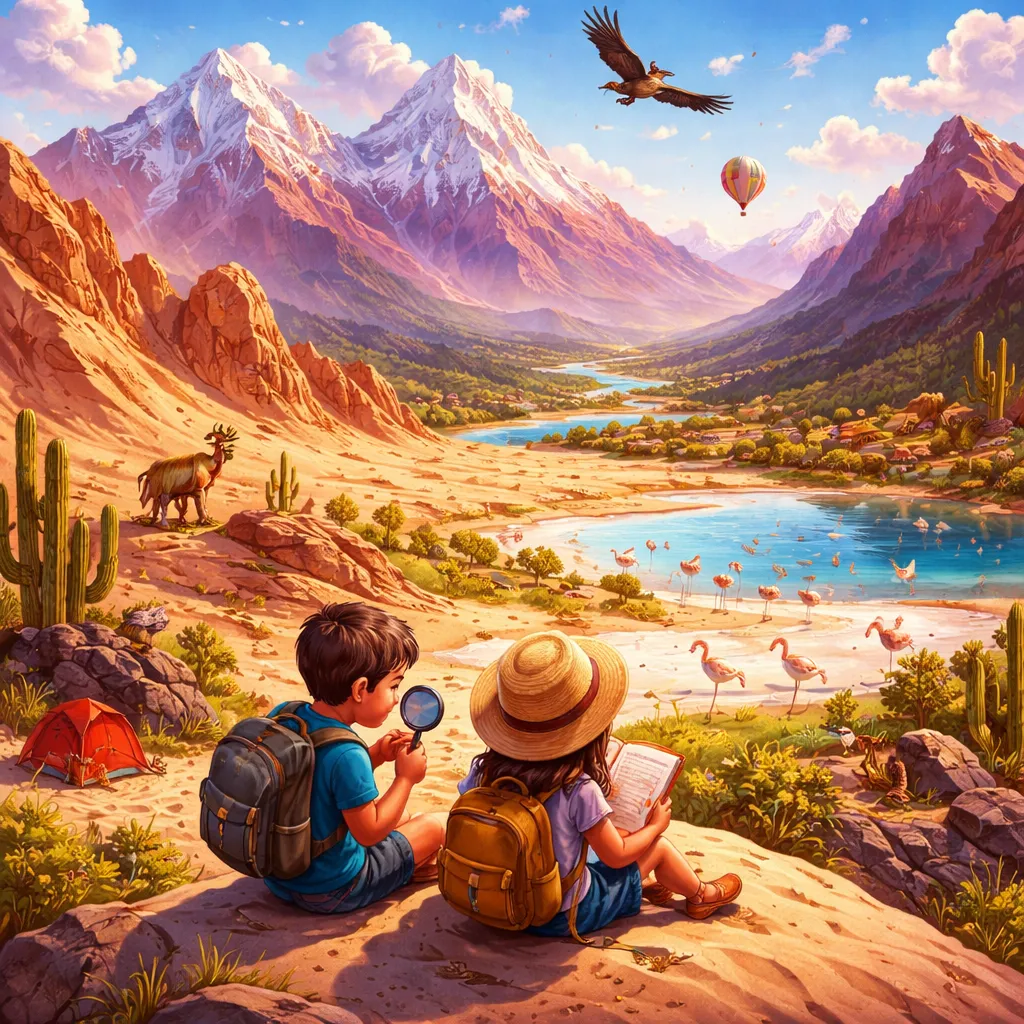
Chile's geography is incredibly diverse. The north has the Atacama Desert. It is a land of salt flats and sand. The center has a fertile valley. This is where most people live. The south has green forests, lakes, and glaciers. Patagonia is at the very south. It is wild and windy. The Andes Mountains run the entire length. The coast is rugged with fjords.
The climate changes as you travel south. The north is hot and dry. The center has a Mediterranean climate. The south is cold and wet. This affects how people live. In the desert, houses are made of adobe to stay cool. In the central valley, people grow grapes for wine. The south is for fishing and raising sheep. The main exports are copper, fruit, and wine.
A special animal is the pud迆. It is the world's smallest deer. It is shy and lives in the southern forests. The national bird is the Andean condor. It is huge and soars over the mountains. The national flower is the copihue. It is a red, bell-shaped flower. It grows in the southern forests. The monkey puzzle tree is an ancient, spiky tree. It looks like it is from dinosaur times.
Landmarks of Stone and Sky
Visit Easter Island. Its local name is Rapa Nui. It is a remote island in the Pacific. It is famous for the moai. These are giant stone statues. They have large heads and long ears. The Rapa Nui people carved them centuries ago. No one knows exactly how they moved them. A legend says the statues walked to their places. The island is a mysterious, open-air museum.
See the Torres del Paine. They are in Patagonia. They are three giant granite towers. They rise sharply into the sky. The park has blue lakes, glaciers, and mountains. It is a hiker's paradise. The wind is very strong. A fun story says the towers are the petrified remains of giants. They were turned to stone by the sun.
Another wonder is the Valle de la Luna. It means "Valley of the Moon". It is in the Atacama Desert. The landscape looks like the moon's surface. The ground is cracked and dry. Salt formations sparkle in the sun. At sunset, the colors change from gold to purple. It feels like you are on another planet.
Festivals of Independence and Faith
The biggest holiday is Fiestas Patrias. It celebrates independence. It happens around September 18th. The celebration lasts for days. People fly the national flag everywhere. They dance the cueca, the national dance. Dancers wave white handkerchiefs.
Families and friends have "asados". These are big barbecues. They eat empanadas and drink chicha. Chicha is a sweet, fermented grape drink. There are rodeos and kite-flying competitions. The mood is joyful and patriotic. It is a celebration of Chilean identity.
Another important festival is La Tirana. It is a religious festival in the north. It honors the Virgin of Carmen. Dancers wear incredible devil masks and costumes. They dance for days without stopping. The festival mixes Catholic and indigenous traditions. It is colorful and full of energy.
Food and Flavors
The national dish is the empanada. The most famous is the "empanada de pino". It is a baked pastry. The filling has minced beef, onion, olive, and a hard-boiled egg. It is golden and crispy. Families eat it for Fiestas Patrias. A hot empanada is savory, juicy, and delicious. It tastes like a celebration.
You must try Pastel de Choclo. It is a corn casserole. The bottom layer has minced beef, chicken, and olives. The top layer is a sweet corn paste. It is baked until golden. People eat it in summer when corn is fresh. The taste is a mix of sweet and savory. It is like a warm, comforting hug.
A Culture of Poetry and Green Energy
Chile is a nation of poets. Gabriela Mistral wrote about children and nature. Pablo Neruda wrote about love and the sea. His house in Valpara赤so is a museum. It is full of strange and wonderful things. This love for words is a beautiful part of learning reading about Chile.
The country is a leader in renewable energy. The north has the world's best solar radiation. The south has strong winds. Chile uses solar and wind power. It is also a leader in electric buses. The capital, Santiago, has many. This helps clean the air. It is a smart way to use natural resources.
Tips for Young Explorers
Cultural Manners Matter
Chileans are generally warm and polite. Greetings are important. Women often kiss on the right cheek. Men shake hands with other men. Men may kiss a woman's cheek. Say "Hola, ?c車mo est芍s?" (Hello, how are you?). This is friendly.
Punctuality is relaxed. Being 15-30 minutes late is common. This is called "hora chilena". But for business meetings, try to be on time. For social events, it is okay to be a little late.
At the dinner table, keep your hands visible. Do not put your elbows on the table. Wait for the host to invite you to eat. Always say "gracias" after the meal. Compliment the food.
A Note on Staying Safe
Chile is a very safe country. But be smart in cities. Watch for pickpockets in crowded places. Keep your backpack in front of you. Do not walk alone at night in empty areas.
Earthquakes can happen. Chile is in a seismic zone. Learn the safety drill. If the ground shakes, get under a sturdy table. Stay away from windows. Always know the emergency exits. This is very important.
A Tasty Stop
Look for a "completo" stand. It is a Chilean hot dog. The bun is filled with a wiener. Then it is topped with chopped tomatoes, avocado, and mayonnaise. Sometimes it has sauerkraut. It is messy and delicious. Eat it with your hands. The combination of flavors is amazing.
Healthy and Happy Travels
Tap water is safe to drink in most cities. But in rural areas, ask if it is okay. If unsure, drink bottled water. It is widely available.
The sun is very strong. The ozone layer is thin over Chile. Use a high SPF sunscreen. Wear a hat and sunglasses. Reapply sunscreen often. This protects your skin.
If you go to high altitudes, take it easy. You might feel dizzy or get a headache. Drink lots of water. Avoid heavy activity on the first day. This helps your body adjust.
Your Invitation to Explore
Start your journey with poetry. Read a short poem by Pablo Neruda. "Ode to the Sea" is beautiful. Or, listen to cueca music. Hear the guitar and the rhythm. Try to dance a few steps. This is a wonderful way of learning reading about Chile.
Visit a local market. Look for a Chilean avocado. They are very big and green. Make a simple avocado toast. Taste the rich, creamy flavor. Imagine the sunny central valley. You can also look at the night sky. Find the Southern Cross constellation. It is on the Chilean flag.
The world is a big, open book. Each country is a different chapter. Chile's chapter is about deserts, poets, and the southern sky. Open it with curiosity. Read about its mountains, moai, and music. Your curiosity is your guide.
Chilean families gather for an asado on Fiestas Patrias. Friends share a bottle of wine. Children fly kites in the September wind. We all know these feelings. We love sharing meals with family. We enjoy music and dance. We look at the stars with wonder. Learning about Chile shows us this. Our global family shares the same simple joys. Keep exploring, one page, one country, at a time. Your adventure has just begun.