
A Friendly Hello and First Impressions
?Hola! (OH-lah). This is the warm, musical "Hello" in Spanish. ?Gracias! (GRAH-see-ahs). This is a sincere "Thank you". People say it with a smile. Learning reading about Ecuador starts with these friendly, welcoming words.
Ecuador is on the northwest coast of South America. Its shape looks like a tilted, lumpy hat. The hat sits on the top of the continent. The Pacific Ocean is to the west. Colombia and Peru are its neighbors. The country is not very large. But it is incredibly diverse. The name "Ecuador" means "Equator" in Spanish. The equator runs right through the country.
People call it the "Country of the Four Worlds". Why? It has four unique regions. The Andes Mountains are the highlands. The Amazon Rainforest is the jungle. The Pacific Coast is the beaches. The Gal芍pagos Islands are the archipelago. Another nickname is the "Middle of the World". The equator is the middle of the planet. Are you ready to stand with one foot in each hemisphere?
Deep Dive into Culture and Stories
Echoes of History
A great liberator is important here. His name was Sim車n Bol赤var. He was born in Venezuela. But he helped free Ecuador from Spain. The decisive battle was at Pichincha in 1822. Ecuador won its independence. Bol赤var dreamed of a united South America. People call him "El Libertador". His story is a proud part of learning reading about Ecuador. It is a story of freedom.
Long before Bol赤var, the Inca Empire ruled the highlands. They built temples and roads. Then the Spanish arrived. They conquered the Inca. This mix of cultures created modern Ecuador. The indigenous heritage is very strong. It is visible in the markets, clothes, and languages.
A Fashionable World Gift
Ecuador gave the world a famous hat. It is the Panama hat. This is funny. The hat is from Ecuador, not Panama! It is made from the toquilla palm. Weavers in Ecuador make it by hand. The best hats come from Montecristi. They are very fine and flexible. The hat became famous during the Panama Canal construction. People thought it was from Panama. The name stuck. This hat is a gift of skilled craftsmanship.
A Land of Incredible Variety
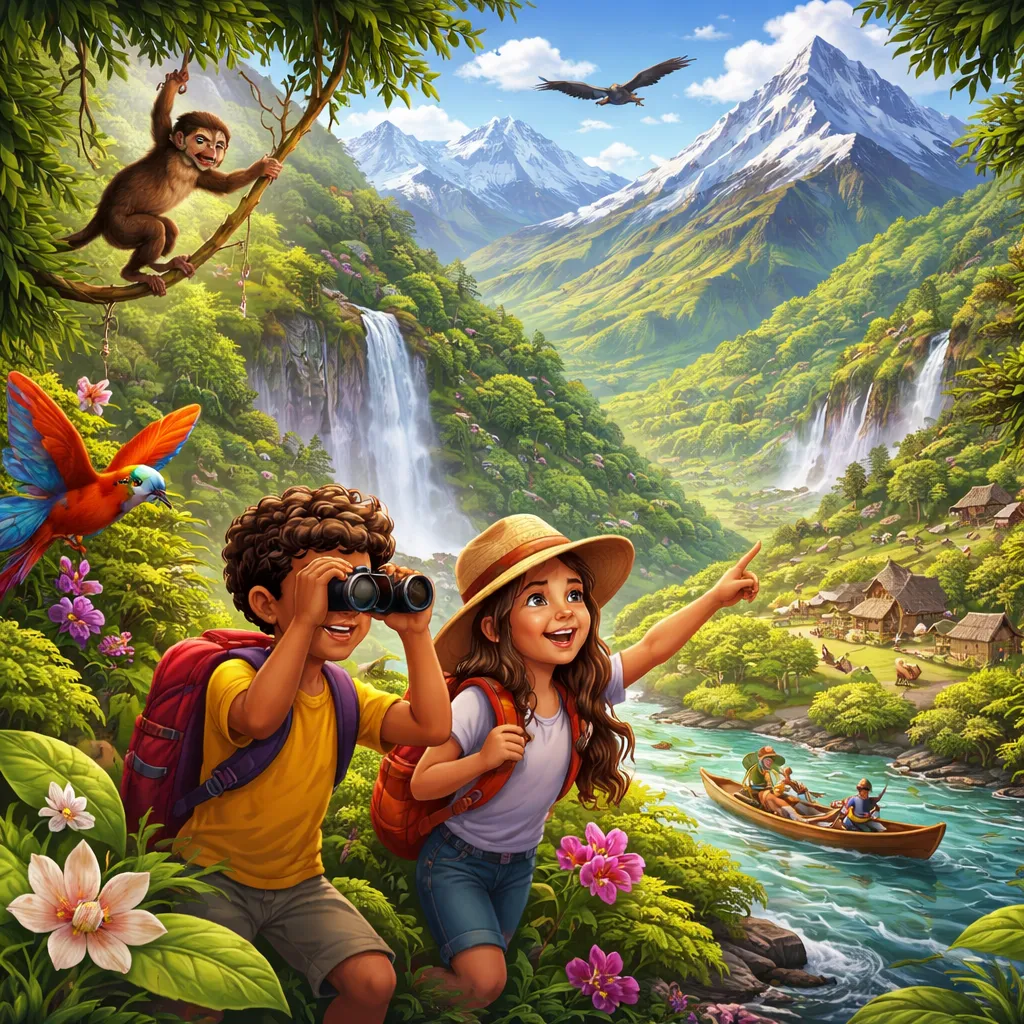
Ecuador's four regions are amazing. The Andes Mountains run north-south. They have high volcanoes and green valleys. The Amazon is in the east. It is part of the huge rainforest. The Coast has beaches, farmland, and ports. The Gal芍pagos are volcanic islands far in the ocean. The landscape changes from snowy peaks to steamy jungle.
The climate changes with altitude. The coast is hot and humid. The highlands are cool. The Amazon is warm and wet. This affects how people live. In the highlands, people grow potatoes, corn, and quinoa. On the coast, people grow bananas, cacao, and coffee. Houses in the Andes are often made of adobe. They have red-tiled roofs. The main exports are oil, bananas, and flowers.
A special animal is the Gal芍pagos giant tortoise. It lives for over 100 years. It is huge and moves very slowly. The national bird is the Andean condor. It is one of the world's largest flying birds. The national flower is the rose. Ecuador is a top rose exporter. The cinchona tree gave the world quinine. This medicine fights malaria.
Landmarks of the Middle and Magic
Visit Mitad del Mundo. This means "Middle of the World". It is a monument on the equator. A yellow line is painted on the ground. You can stand with one foot in the northern hemisphere. Your other foot is in the southern hemisphere. The monument is a museum. A fun experiment happens here. Water drains straight down on the line. It does not swirl. The site is a celebration of geography.
See the Gal芍pagos Islands. They are a UNESCO World Heritage site. The animals are not afraid of people. You can see blue-footed boobies and marine iguanas. Charles Darwin visited in 1835. His observations here helped his theory of evolution. The islands are a living laboratory. A legend says the islands are the tips of giant underwater mountains. The islands are magical and unique.
Another wonder is the Historic Center of Quito. Quito is the capital. It is the world's second highest capital city. The old town has beautiful colonial churches. The Compa?赤a Church is covered in gold leaf. The streets are narrow and cobblestoned. The city sits in a valley between volcanoes. It is a breathtaking sight.
Festivals of Sun and Corn
The biggest indigenous festival is Inti Rayma. It is the Festival of the Sun. It happens around June 21st. This is the winter solstice. Indigenous communities give thanks to the sun god, Inti. They ask for a good harvest. The celebrations are in the towns of Otavalo and Cotacachi.
People wear bright traditional clothes. They play flutes and drums. They dance in circles for hours. The festival lasts for days. Special food includes corn, potatoes, and roast pig. The festival is colorful, spiritual, and full of community.
Another important day is Independence Day. It is on August 10th. It marks the first call for independence in 1809. There are parades and concerts. People fly the national flag. The colors are yellow, blue, and red. The coat of arms has a condor. The day is full of national pride.
Food and Flavors
The national dish is Ceviche. It is different from Peruvian ceviche. Ecuadorian ceviche is a soup. It has shrimp or fish. It is cooked in a tomato and citrus broth. It is served with popcorn and plantain chips. People eat it for lunch. It is fresh, tangy, and delicious. It tastes like the coast.
You must try Llapingachos. They are potato patties. The potatoes are mixed with cheese. They are fried until golden. They are served with a peanut sauce, sausage, and a fried egg. People eat them as a snack or side dish. A good llapingacho is crispy outside, soft inside. It is savory, cheesy, and satisfying.
A Culture of Music and Green Thinking
Music is important. The national instrument is the "rondador". It is a pan flute. Andean music is peaceful and melodic. People play it in the highlands. This love for music is a joyful part of learning reading about Ecuador.
Ecuador is a world leader in environmental rights. Its constitution gives rights to nature. This is unique. The country must protect its forests and rivers. Ecuador also tries to keep oil in the ground in the Yasuni park. This shows a deep respect for the planet. It is a modern and important idea.
Tips for Young Explorers
Cultural Manners Matter
Ecuadorians are generally polite and formal. Greetings are important. A handshake is common. Say "Buenos d赤as" (Good morning). Use "usted" for "you" with adults. This is formal and respectful. Wait for the other person to invite you to use "t迆".
Punctuality is flexible. Being 15-30 minutes late is normal. This is called "la hora ecuatoriana". But try to be on time for tours. For social events, it is fine to be late.
Always say "buen provecho" before eating. It means "enjoy your meal". It is a nice custom. Compliment the food. The cook will be very happy.
A Note on Staying Safe
Ecuador is generally safe. But be smart in big cities. Do not show expensive phones or jewelry. Keep your bag close in crowds. Use official taxis. Ask your hotel for safe areas.
The altitude in the Andes can affect you. You might feel dizzy. Drink lots of water. Avoid heavy food on the first day. Rest. This helps your body adjust. It is called "soroche".
A Tasty Stop
Look for a "humita" stand. A humita is a steamed corn cake. The dough is made from fresh corn. It is wrapped in a corn husk. It is steamed until soft. Eat it hot. The humita is sweet, soft, and delicious. It is a traditional snack.
Healthy and Happy Travels
Drink bottled water. Tap water is not for drinking. Use it only for brushing teeth. This simple habit keeps you healthy. Bottled water is cheap and easy to find.
The sun is very strong, especially on the equator. Use a high SPF sunscreen. Wear a hat. The sun can burn you quickly. Protect your skin.
Use insect repellent in the Amazon. Mosquitoes can carry diseases. Wear long sleeves in the evening. Your lodge may have a mosquito net. Use it.
Your Invitation to Explore
Start your journey with a map. Find the equator line. See Ecuador, straddling the middle of the world. Then, watch a documentary about the Gal芍pagos. See the amazing animals. This is a wonderful way of learning reading about Ecuador.
Visit a local market. Look for Ecuadorian chocolate or a Panama hat. Taste the rich chocolate. Feel the fine weave of the hat. Imagine the places they came from. You can also try making a simple ceviche with cooked shrimp. Taste the fresh, citrusy flavor.
The world is a big, open book. Each country is a different chapter. Ecuador's chapter is about the equator, evolution, and environmental rights. Open it with curiosity. Read about its volcanoes, valleys, and vibrant cultures. Your curiosity is your guide.
Ecuadorian families share a bowl of ceviche. Friends climb a volcano on the weekend. Children learn about the jungle in school. We all know these scenes. We love sharing meals. We enjoy nature adventures. We want to protect our planet. Learning about Ecuador shows us this beautiful connection. Our global family shares the same home. Keep exploring, one page, one country, at a time. Your adventure has just begun.