
A Friendly Hello and First Impressions
Bok! (bok). This is a casual, friendly "Hello" in Croatian. Hvala! (HVAH-lah). This is a warm "Thank you". People say it with a smile. Learning reading about Croatia starts with these short, kind words.
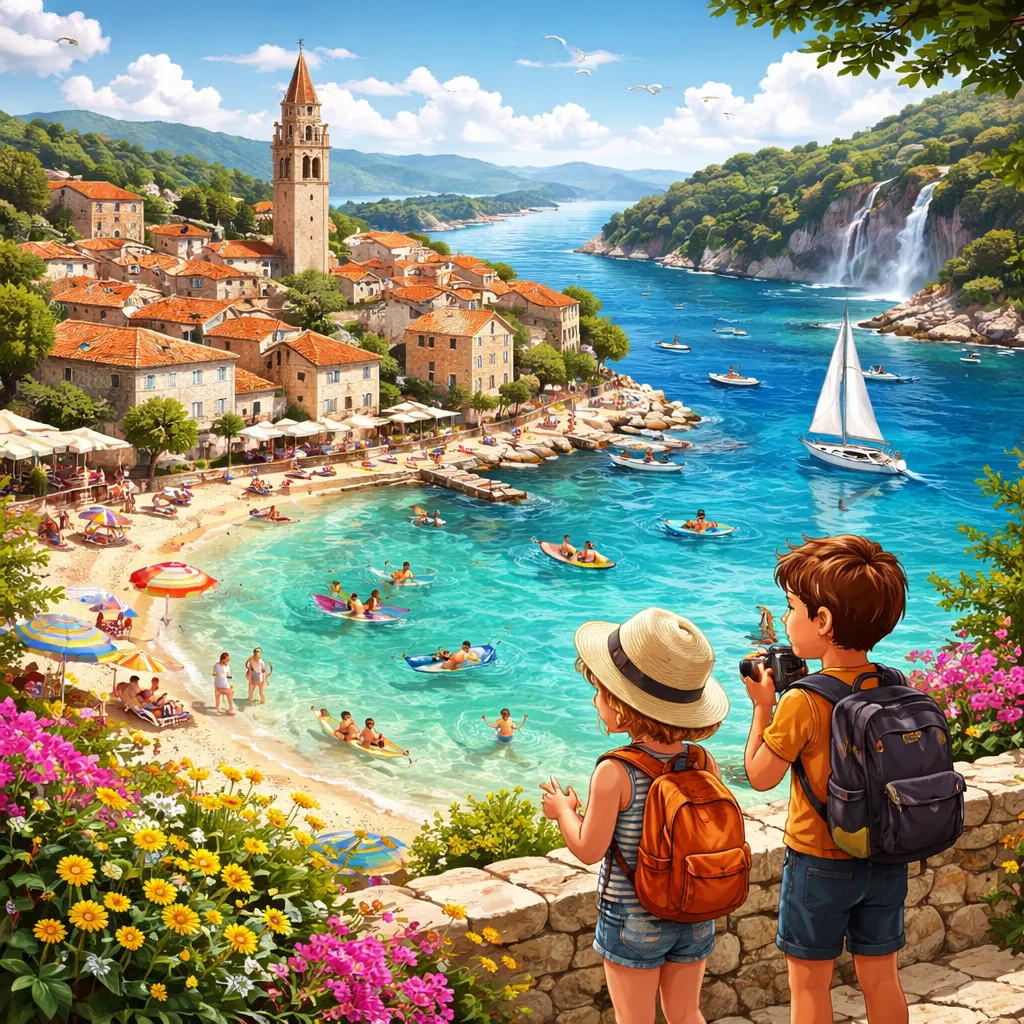
Croatia is in Southeast Europe. Its shape looks like a crescent moon. The moon hugs the northeastern coast of the Adriatic Sea. The country is on the Balkan Peninsula. Slovenia, Hungary, and Bosnia are its neighbors. The Adriatic Sea is its beautiful backyard. The land is a mix of coast, mountains, and plains.
People call it the "Land of a Thousand Islands". Croatia has 1,244 islands! Only about 50 have people living on them. Another nickname is the "Pearl of the Adriatic". The old city of Dubrovnik is often called this. Its beauty shines like a jewel. Are you ready to explore ancient walled cities?
Deep Dive into Culture and Stories
Echoes of History
A long time ago, a powerful republic existed. It was the Republic of Ragusa. Today we call it Dubrovnik. It was a small, independent city-state. It was a wealthy trading port. Its motto was "Liberty". The republic was clever and diplomatic. It used treaties, not war, to stay free. This history of freedom is a key part of learning reading about Croatia.
Another important king was Tomislav. He was the first king of Croatia. He ruled in 925 AD. He united the Croatian tribes. He created a strong kingdom. His story is a source of national pride. It reminds people of their ancient statehood.
A Fashionable World Gift
Croatia gave the world a fashion item. It is the necktie. In the 17th century, Croatian mercenaries served in France. They wore colorful cloths around their necks. The French called this style "cravate". This means "Croat". The fashion spread across Europe. Today, people wear ties for formal events. This is a fun gift from Croatian history.
A Land of Sea and Mountains
Croatia's geography is diverse. The coast has a long, rugged shoreline. Many islands sit in the clear blue sea. The Dinaric Alps run along the coast. They are tall and rocky. The interior has flat plains. The north has rolling hills. The land changes from sandy beaches to green valleys.
The climate varies too. The coast has a Mediterranean climate. Summers are hot and dry. Winters are mild. The interior has a continental climate. Summers are warm. Winters are cold and snowy. This affects how people live. On the coast, people fish and grow olives. In the interior, people grow wheat and corn. Houses on the coast are often made of stone. They have red-tiled roofs. This style keeps houses cool in summer.
A special animal is the Dalmatian pelican. It is a huge, white bird. It has a big orange pouch under its beak. It lives in wetlands. The national animal is the pine marten. It is a small, cute forest creature. The national flower is the iris. It is purple and beautiful. The olive tree is a symbol of peace and the coast.
Landmarks of Stone and Water
Visit the Old City of Dubrovnik. It is a UNESCO World Heritage site. A giant stone wall surrounds the city. The wall is 2 kilometers long. You can walk on top of it. The view of orange rooftops and the sea is amazing. Inside, the streets are made of shiny marble. A legend says the city was saved by Saint Blaise. He is the patron saint. The city is like a living museum.
See Plitvice Lakes National Park. It is a chain of 16 turquoise lakes. The lakes are connected by waterfalls. Wooden walkways let you walk over the water. The water changes color from blue to green. The park is full of forests and wildlife. It feels like a fairy tale. A fun story says the lakes were created by the Black Queen. She cried tears of joy. Her tears became the lakes.
Another wonder is Diocletian's Palace in Split. A Roman emperor built it for his retirement. He lived there in 305 AD. Today, the palace is the heart of the city. People live, shop, and eat inside its old walls. You can even see the emperor's sarcophagus. The palace is a living piece of Roman history.
Festivals of Tradition and Summer
The biggest festival is the Dubrovnik Summer Festival. It happens every July and August. The old city becomes a stage. Actors perform plays in squares. Musicians play in palaces. Dancers perform on the streets. The festival is 70 years old. It celebrates art and history. The atmosphere is magical.
Another important day is Statehood Day. It is on June 25th. It marks independence from Yugoslavia in 1991. There are official ceremonies. The national flag is everywhere. The colors are red, white, and blue. A shield with a red and white checkerboard is in the center. People celebrate with concerts and family time. The day is about freedom and pride.
Food and Flavors
The national dish is a slow-cooked meal. It is called "pa?ticada". It is beef stewed in a sweet and sour sauce. The sauce has prunes, tomatoes, and herbs. It is served with homemade pasta or gnocchi. Families eat it for big Sunday lunches. It tastes rich, complex, and delicious. It is a dish of patience and love.
You must try "Crni ri?ot". This is black risotto. The rice is black from cuttlefish ink. It has pieces of seafood. The dish is from the Dalmatian coast. People eat it in restaurants by the sea. The risotto is creamy, salty, and tastes like the ocean. It is a unique and tasty adventure.
A Culture of Sport and Innovation
Soccer is the national sport. The national team is called "Vatreni". This means "The Blazers". They wear red and white checkered jerseys. The team has had great success. The whole country watches their games. The joy is incredible when they win. This love for soccer is a fun part of learning reading about Croatia.
Croatia is a leader in innovation. A famous inventor was Nikola Tesla. He was born in a Croatian village. He invented the alternating current (AC) motor. This changed how we use electricity. Another modern success is the necktie. Croatia also produces excellent wines and olive oil. The country mixes old traditions with new ideas.
Tips for Young Explorers
Cultural Manners Matter
Croatians are generally formal and polite. Greet people with a firm handshake. Say "Dobar dan" (Good day). Use titles like "Gospodin" (Mr.) or "Gospo?a" (Mrs.) with the last name. This is polite. Wait for the other person to invite you to use first names.
Punctuality is appreciated. Try to be on time for meetings. Being late is considered rude. Call if you are running late. This shows respect.
When visiting a home, bring a small gift. Flowers, chocolates, or wine are good. Give an odd number of flowers. Even numbers are for funerals. This is very important. Take off your shoes at the door.
A Note on Staying Safe
Croatia is a very safe country. But be careful in cities. Watch for pickpockets in crowded tourist areas. Keep your bag closed. Do not leave your things alone on the beach.
The sun on the coast is very strong. Use sunscreen. The sea can have strong currents. Only swim where it is safe. Obey warning flags. Never swim alone.
A Tasty Stop
Look for a "burek" stand. Burek is a flaky pastry. It is filled with meat, cheese, or spinach. It is baked until golden. People eat it for a quick meal. A hot burek is crispy, savory, and delicious. Eat it with a cup of yogurt. It is the perfect snack.
Healthy and Happy Travels
Tap water is safe to drink everywhere. It is clean and fresh. Carry a refillable water bottle. This saves plastic. It keeps you hydrated while exploring.
Wear comfortable walking shoes. The old towns have stone streets. The stones are smooth and slippery. Good shoes make exploring easier. You can walk for hours without sore feet.
Be respectful at historical sites. Do not touch ancient walls or artifacts. Follow the rules. This helps preserve the sites for the future.
Your Invitation to Explore
Start your journey with a map. Find Croatia on the Adriatic coast. See its long coastline and many islands. Then, watch a video of the Plitvice Lakes. See the beautiful blue water. This is a wonderful way of learning reading about Croatia.
Visit a local market. Look for Croatian olive oil or truffle paste. Taste the rich flavors. Imagine the sunny coast and the Istrian forests. You can also try drawing a checkerboard pattern. It is the national symbol.
The world is a big, wonderful book. Each country is a different chapter. Croatia's chapter is about sea, stone, and soccer passion. Open it with curiosity. Read about its islands, inventions, and independence. Your curiosity is your guide.
Croatian families gather for a big Sunday lunch. Friends play soccer in the park. Children explore ancient city walls. We all know these scenes. We love sharing meals. We enjoy sports and games. We are curious about history. Learning about Croatia shows us this. Our global family shares a love for beauty and tradition. Keep exploring, one page, one country, at a time. Your adventure has just begun.