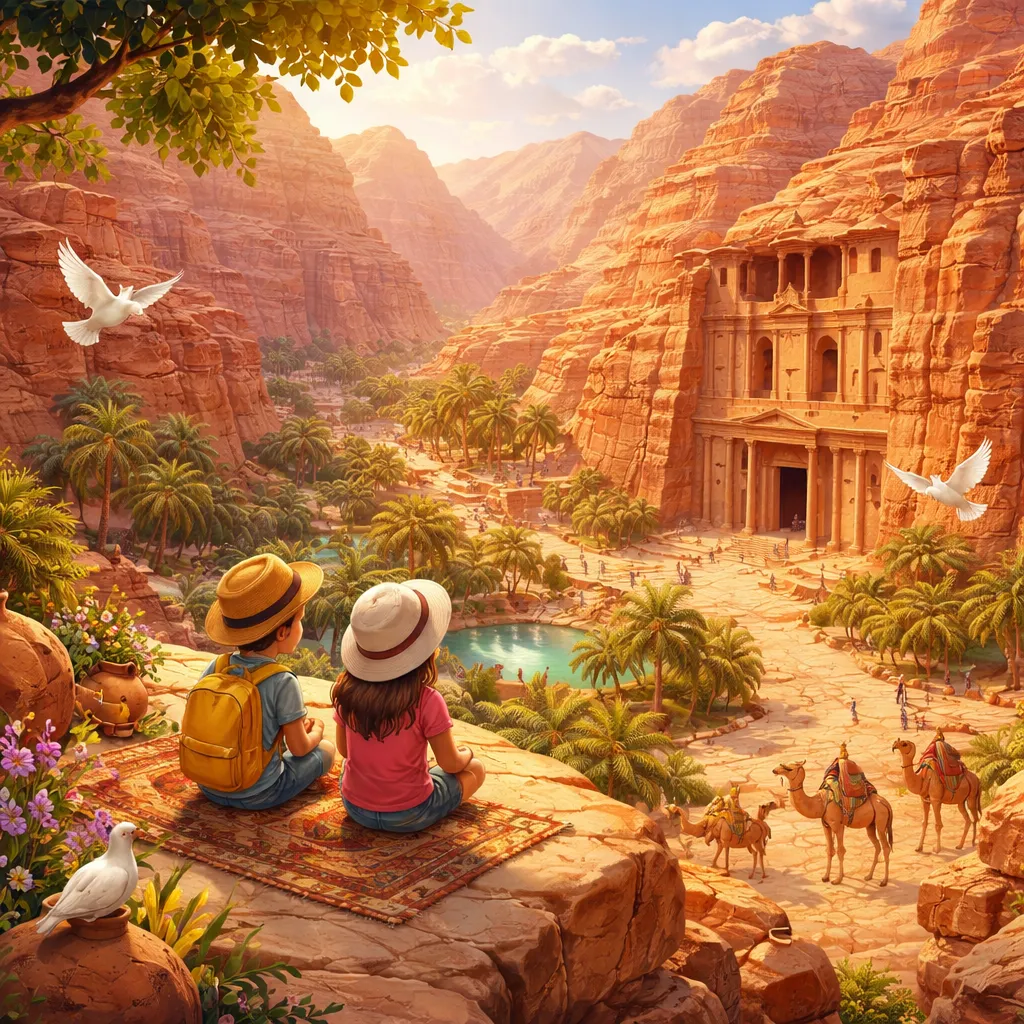

A Friendly Hello and First Impressions
Marhaba! (mar-HAH-bah). This is a warm "Hello" in Arabic. Shukran! (SHOOK-rahn). This is a sincere "Thank you". People say it with kindness. Learning reading about Jordan starts with these traditional, welcoming words.
Jordan is a kingdom in the Middle East. Its shape looks like a short, sturdy rectangle. The rectangle sits at the crossroads of Asia and Africa. The country is in Western Asia. Saudi Arabia, Iraq, and Israel are its neighbors. The Dead Sea is to the west. The land is mostly desert with beautiful canyons. It is a country of ancient history and warm hospitality.
People call it the "Hashemite Kingdom of Jordan". This is its official name. Another nickname is the "Land of Hospitality". Jordanian people are famous for welcoming guests. Are you ready to walk through a rose-red city half as old as time?
Deep Dive into Culture and Stories
Echoes of History
A powerful ancient people lived here. They were the Nabataeans. They were master traders and engineers. They built the city of Petra. They carved it from pink sandstone cliffs. Their kingdom controlled trade routes. It was rich and powerful. Their story is a key part of learning reading about Jordan. It is a story of ingenuity and wealth.
Another important modern figure is King Hussein. He ruled Jordan for 46 years. He was a peacemaker in a troubled region. He worked for stability and dialogue. His legacy is one of moderation and wisdom. This history is vital for learning reading about Jordan today.
A World of Mosaics and Ideas
Jordan gives the world a treasure of ancient art. Byzantine mosaics are found in Madaba. The Madaba Map is the oldest map of the Holy Land. It is made of two million stone pieces. Jordan also contributes to global peacekeeping. Its army often serves in United Nations missions. This commitment to art and peace is a key part of learning reading about Jordan.
A Land of Desert and Sea
Jordan's geography is dramatic. The west has the Jordan Rift Valley. The Dead Sea is here. It is the lowest point on Earth. The east is the vast Arabian Desert. The landscape changes from a fertile valley to stony deserts.
The climate is mostly arid. It is hot and dry. Summers are very hot. Winters are cool. The environment shapes life. People grow tomatoes, cucumbers, and citrus fruits. They also raise sheep and goats. Houses are often made of stone or concrete. They are designed to stay cool. The main exports are clothing, potash, and phosphates.
A special animal is the Arabian oryx. It was once extinct in the wild. It was reintroduced in Jordan. The national animal is the Arabian oryx. The national bird is the Sinai rosefinch. The national flower is the black iris. It is dark and beautiful. The olive tree is a national symbol of peace.
Landmarks of Stone and Salt
Visit Petra. It is the "Rose-Red City". It was carved by the Nabataeans 2,000 years ago. You enter through a narrow, tall canyon. The canyon is called the Siq. At the end, you see the Treasury. It is a giant, beautiful tomb. A fun legend says an Egyptian pharaoh hid treasure here. The site is a UNESCO wonder. It is breathtaking.
See the Dead Sea. It is a salt lake. The water is so salty you float easily. The mud is rich in minerals. People cover themselves in the black mud. A local story says Cleopatra loved the mud. The sea is a unique, fun experience.
Another wonder is the Roman Theater in Amman. It is carved into a hillside. It was built in the 2nd century. It could seat 6,000 people. You can climb to the top rows. The view of the old city is great. The theater is a reminder of Roman rule.
Festivals of Culture and Light
The biggest cultural festival is the Jerash Festival. It happens in July. It is in the ancient Roman city of Jerash. There are musical and theatrical performances. Dancers perform traditional dances. Poets recite their work.
The festival celebrates Arab culture and arts. The ancient ruins provide a magical setting. The festival is about joy, heritage, and creativity. The feeling is festive and proud.
Another important day is Independence Day. It is on May 25th. It marks freedom from Britain in 1946. There is a military parade in Amman. The king gives a speech. People display the national flag. The colors are black, white, green, and red. A seven-pointed star is in the center. The day is about national pride and history.
Food and Flavors
The national dish is Mansaf. It is a large platter of rice. It has lamb cooked in a dried yogurt sauce. The dish is garnished with pine nuts. People eat it with their right hand. They gather around the platter. Families eat it for big celebrations. It is savory, rich, and delicious. It is the ultimate dish of hospitality.
You must try Falafel. It is a popular street food. It is made from ground chickpeas and herbs. It is deep-fried into balls or patties. It is served in pita bread with salad. A good falafel is crispy outside, soft inside. It is tasty, healthy, and cheap.
A Culture of Coffee and Welcome
Hospitality is a sacred duty. The phrase is "Ahlan wa Sahlan". It means "You are family, and the path is easy". Guests are treated with great honor. The coffee ceremony is important. The host serves bitter Arabic coffee in small cups. This tradition is a beautiful part of learning reading about Jordan. It shows the value of community.
Jordan is a leader in education in the region. It has a high literacy rate. It also hosts one of the world's largest refugee populations. The country shows great generosity. This spirit of helping others is commendable.
Tips for Young Explorers
Cultural Manners Matter
Jordanians are extremely polite and hospitable. Greetings are warm. A handshake is common. Say "Marhaba" or "As-salamu alaykum". The reply is "Wa alaykum as-salam". Ask about the person's health and family. This is good manners. Do not rush the greeting.
Always use your right hand. Give gifts, eat food, and shake hands with your right hand. The left hand is considered unclean. This rule is very important. Wash your hands before and after eating.
Dress modestly. This is respectful. Women should cover their shoulders and knees. Loose-fitting clothing is best. Men should avoid very short shorts. This shows respect for local customs.
A Note on Staying Safe
Jordan is a very safe and stable country. But be aware of regional tensions. Avoid areas near the borders. Follow travel advice. In cities, use common sense. Do not walk alone at night in quiet areas. Your safety is generally not a concern.
The desert sun is extremely strong. Use a high SPF sunscreen. Wear a hat and sunglasses. Drink lots of bottled water. Dehydration and sunstroke are real risks. Protect yourself from the sun.
Be careful at the Dead Sea. Do not get the water in your eyes. It stings! Do not shave right before going in. The salt will irritate your skin. Rinse off with fresh water after.
A Tasty Stop
Look for "Kunafa" in a sweet shop. It is a famous dessert. It is made of shredded pastry. It is soaked in sweet syrup. It is layered with cheese or cream. It is served hot. The kunafa is sweet, cheesy, and delicious. It is a must-try treat.
Healthy and Happy Travels
Drink only bottled water. This is the most important rule. Do not drink tap water. Avoid ice in drinks. Brush your teeth with bottled water. This keeps your stomach healthy.
Wash your hands often. Carry hand sanitizer. This helps prevent getting sick. Be careful with street food. Eat at busy, clean-looking places.
Wear comfortable, sturdy shoes. The archaeological sites have uneven stone paths. The desert can be rocky. Good shoes protect your feet and help you explore.
Your Invitation to Explore
Start your journey with a map. Look at the Madaba Map online. See the ancient view of the Holy Land. Or, read about the Nabataeans and their hidden city. Imagine the caravans of camels. This is a wonderful way of learning reading about Jordan.
Visit a museum with Roman or Byzantine artifacts. Look for a mosaic. See the tiny stones creating a picture. Imagine the artist at work. You can also try drawing a desert landscape. Use warm colors like pink, orange, and yellow. Imagine the vast, quiet desert.
The world is a big, ancient book. Each country is a different chapter. Jordan's chapter is about carved cities, desert hospitality, and a quest for peace. Open it with respect. Read about its history, generosity, and ancient wonders. Your curiosity is your guide.
Jordanian families gather around a huge platter of mansaf. Friends share countless cups of bitter coffee. Children play football in dusty lots. We all know these scenes. We love sharing feasts. We enjoy long talks with friends. We play simple games. Learning about Jordan shows us this. Our global family shares the same values of welcome and community. Keep exploring, one page, one country, at a time. Your adventure has just begun.