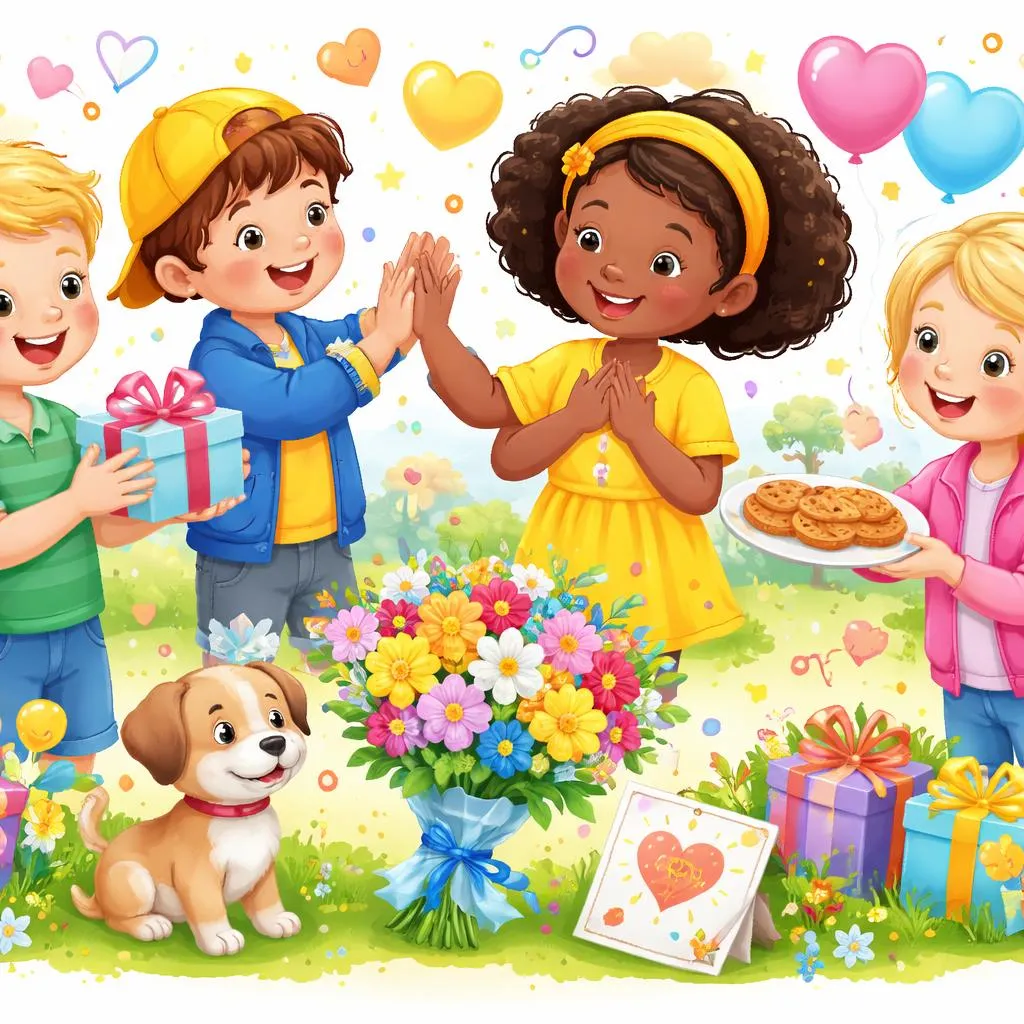

What is thanks in English?
Hello, super polite friends. Today, we are going to learn all about a very important word. The word is "thanks." Saying thanks in English is one of the first and best things you can learn. It is a simple way to show someone you are happy because of them.
"Thanks" is a shorter, friendlier way to say "thank you." Think of it as the casual cousin of "thank you." You use it with friends, family, and people you know well. It is quick, easy, and always makes people smile. Learning different ways to say thanks in English helps you express your feelings perfectly. You can say a little "thanks" or a big "thanks a million." Let's learn how.
Meaning and explanation
So, what does saying "thanks" really mean. It is an expression of gratitude. Gratitude is the warm, happy feeling you get when someone is kind to you. When you say thanks, you are sharing that happy feeling. You are telling the other person, "I see what you did. I like it. It made me feel good."
The word "thanks" is a plural noun. Long ago, it came from the idea of giving someone your thoughts of thankfulness. Even though it is short, it carries a lot of meaning. It is a powerful little word that builds friendship and shows good manners. Using thanks in English correctly is a sign that you are a thoughtful and kind person.
Categories or lists
There are so many wonderful ways to say thanks in English. Let's put them into groups, from simple to super enthusiastic.
The Simple & Standard Group: These are the most common ways. They work in almost any situation. Thanks. This is the basic, friendly version. Quick and easy.
Thank you. This is the full, polite version. Always a good choice.
Thank you very much. This adds a little more emphasis. It means you are quite grateful.
The Enthusiastic & Energetic Group: Use these when you are very, very happy or grateful. They show big feelings. Thanks a lot! A very common and casual way to show strong thanks.
Thanks so much! This is full of warm feeling.
Thanks a million! This is a fun, exaggerated way to say you are extremely thankful.
Thanks a bunch! Another fun and friendly way to say a big thank you.
The Formal & Appreciative Group: These are great for more serious moments or when writing. I appreciate it. This is a warmer, more personal way to thank someone for their effort or time.
Many thanks. This sounds a bit more formal and is often used in writing notes or emails.
I'm very grateful. This shows a deep feeling of thankfulness.
Daily life examples
You can practice all these ways to say thanks in English every day. Let's look at three simple times.
During Breakfast or Family Time: Your sister passes you the cereal box. A quick "Thanks!" is perfect. Your dad makes your favorite pancakes. A bigger "Thanks a lot, Dad!" shows your happiness. Your grandma reads you a story. A sincere "Thank you, Grandma. I appreciate it" makes her feel special. Using the right phrase for the right moment is easy.
On the Playground or with Friends: Your friend lets you have a turn on the swing. "Thanks!" you say as you hop on. Your teammate passes you the ball and you score a goal. "Thanks a million!" you shout with a big smile. A friend shares their cookies with you. "Thanks a bunch! These are delicious." These phrases are perfect for fun, casual moments.
At School with Teachers: Your teacher helps you tie your shoe. A polite "Thank you" is great. Your teacher stays for one extra minute to explain a math problem. "Thank you very much for your help" is a respectful choice. You can write "Many thanks" at the end of a note to your teacher. Using slightly more formal thanks in English with teachers shows good respect.
Printable flashcards
Printable flashcards are a super tool for learning different ways to say thanks in English. You can create a "Thanks-O-Meter" set.
Make cards that show a "level of thanks." One card has a picture of a small gift, like a single sticker. The phrase on the back is "Thanks." Another card shows a medium gift, like a book. The phrase is "Thank you very much." A third card shows a huge, exciting gift. The phrase is "Thanks a million!" This helps kids match the size of their thanks to the action.
Another fun idea is "Situation Match" cards. On one set of cards, draw simple scenes. A friend lending a pencil. A parent cooking dinner. A grandparent giving a hug. On another set, write the thank you phrases. Kids have to match the scene to the most appropriate phrase. Does a hug get a "Thanks" or a "Thank you so much"? This builds their understanding of context.
You can also make a "Gratitude Spinner." Print a circle divided into sections. In each section, write a different phrase: Thanks, Thank you, Thanks a lot, etc. Attach a paper clip spinner. Kids spin it and must say the phrase it lands on, then give an example of when they would use it. "It landed on 'I appreciate it'! I would use that when my mom helps me with a hard project."
Learning activities or games
Let's play some games to practice saying thanks in English. First, play "Thanks Bingo." Create bingo cards with different thank you phrases in the squares. The caller reads out a simple scenario. "Your friend shares their toy car with you." Players must find a phrase on their card that would fit and mark it. The first to get a line shouts "Bingo!" and must say a full sentence using that phrase correctly. "Thanks for sharing your toy car!"
Try the "Kindness Role-Play" game. Set up a few quick scenarios with props. Scenario 1: Two kids and one cookie. One must share. The other must say thanks. Scenario 2: A "waiter" (a child) brings "food" (a toy plate) to a "customer." The customer must say thanks. Scenario 3: Someone helps pick up dropped crayons. The helper gets thanked. Kids take turns playing the roles and using different phrases. This builds confidence in using thanks in real conversations.
Create a "Thankful Chain" in the classroom. Cut strips of colorful paper. Each day, a child takes a strip and writes or draws something they are thankful for. They must also write a thank you phrase on it. "I am thankful for my dog. Thanks for being my friend, Spot!" Then, they loop the strip and staple it to the last link in a chain. Hang the growing chain in the room. It is a visual, collaborative reminder of gratitude and a daily practice of writing thanks in English.