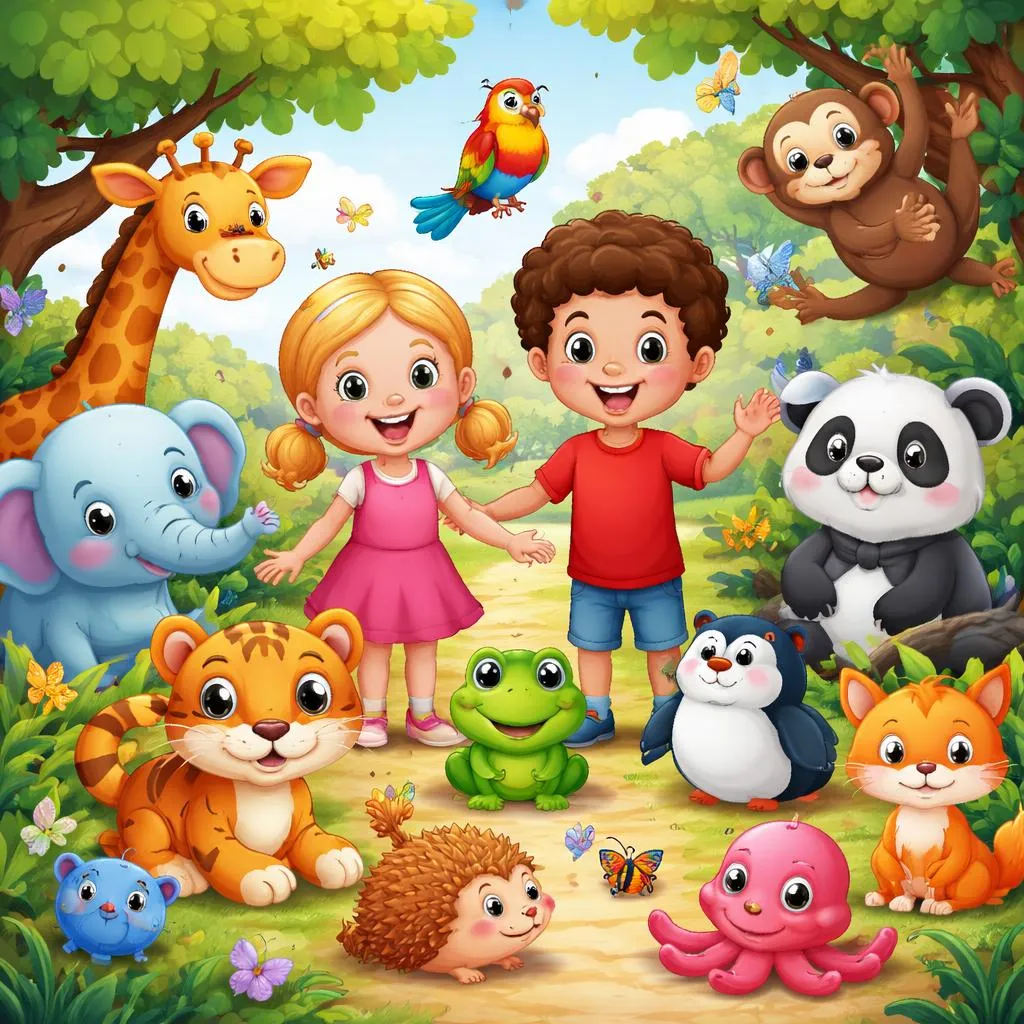

What is animal with name?
Hello, animal adventurers. Today, we are going on a wonderful journey to meet amazing creatures. We are going to learn about animals with names. What does that mean. It means every single animal, big or small, has a special word we use to call it. That word is its name.
Think about your pet or your favorite animal. It has a name. Your dog might be named Max. Your cat might be named Luna. But even if an animal does not have a personal name like Max, it has a group name. All dogs are called "dogs." All cats are called "cats." Learning the names of animals is like learning the names of your friends. It helps you talk about them, learn about them, and tell stories about them. Knowing animals with names is the first step to loving and understanding the animal kingdom.
Meaning and explanation
So, why is it important to know animals with names. A name is more than just a sound. It is a key that unlocks information. When you know an animal's name, you can ask questions about it. You can read books about it. You can watch shows about it. The name helps us organize our world.
For example, if you say "I saw a lion," everyone knows you mean a big, golden cat with a mane that lives in Africa. The name "lion" carries all that information. If you just say "I saw a big animal," no one knows exactly what you mean. Knowing animals with names helps us share our experiences clearly. It also helps scientists study and protect animals. When we know their names, we can care about them better. Every animal with a name is a part of our world's big, beautiful story.
Categories or lists
Let's meet some fantastic animals with names. We will put them into groups to make them easier to remember.
Furry Friends: Pets and Common Mammals. These are animals we often see around us. They are usually warm and have fur. Pets: Dog, Cat, Rabbit, Hamster, Guinea Pig, Parrot, Goldfish.
Farm Animals: Cow, Pig, Sheep, Goat, Horse, Chicken, Duck.
Forest Animals: Bear, Fox, Deer, Squirrel, Raccoon, Wolf, Owl.
Amazing Animals from Around the World. These animals live in special places like jungles, oceans, and deserts. Jungle Animals: Tiger, Monkey, Elephant, Giraffe, Zebra, Parrot, Snake.
Ocean Animals: Dolphin, Shark, Whale, Octopus, Jellyfish, Seahorse, Crab.
Cold Place Animals: Penguin, Polar Bear, Seal, Walrus, Arctic Fox.
Desert Animals: Camel, Scorpion, Lizard, Rattlesnake, Fennec Fox.
Small and Crawly Creatures. These animals might be tiny, but they are very important. Insects: Butterfly, Bee, Ant, Ladybug, Grasshopper, Dragonfly.
Birds: Eagle, Robin, Hummingbird, Flamingo, Penguin, Owl.
Reptiles and Amphibians: Frog, Toad, Turtle, Snake, Lizard, Crocodile.
Daily life examples
You can find and talk about animals with names every day. Here are two fun places to practice.
In Your Own Home and Neighborhood: Look around. Do you have a pet. That is an animal with a name right in your house. "My dog's name is Buddy." "I have a goldfish named Bubbles." Look out the window. You might see a squirrel running up a tree. You can say, "Look, a squirrel." You might hear a bird singing. You can say, "I hear a bird." On a walk, you might see a caterpillar. You can say, "I found a caterpillar." Naming the animals you see turns a simple walk into a discovery mission.
On a Trip to the Zoo, Aquarium, or Farm: This is the best place to see many animals with names. Read the signs next to each animal's home. The sign will tell you the animal's name and a fun fact. "This is a meerkat. It loves to stand up and look around." "This is a stingray. It glides through the water like a bird in the sky." Point to the animal and say its name out loud. "I see the giraffe. Its neck is so long." "Look at the penguins. They are swimming." Learning their names helps you remember your exciting visit.
Printable flashcards
Printable flashcards are a super way to learn animals with names. You can create your own animal zoo on paper.
Make "Animal and Habitat" matching cards. On one card, have a picture of an animal. On another card, have a picture of its home. A picture of a fish matches with the ocean. A picture of a camel matches with the desert. A picture of a polar bear matches with the Arctic ice. Kids can match the animal with where it lives. This teaches the name and something important about the animal.
Create "Baby Animal" flashcards. Many baby animals have special names. On one side of the card, show an adult animal labeled "Dog." On the other side, show a puppy labeled "Puppy." Do the same for Cat/Kitten, Cow/Calf, Horse/Foal, Duck/Duckling. This expands vocabulary in a fun way.
Design "Sound Match" cards. On one set of cards, draw animals. On another set, write the sound they make. "Dog" card matches with "Bark!" "Cat" card matches with "Meow!" "Cow" card matches with "Moo!" This is great for younger children, connecting the animal's name to its unique sound.
Learning activities or games
Let's play some active games to learn animals with names. First, play "Animal Charades." Write the names of different animals on small pieces of paper. Put them in a hat. Players take turns picking a paper and acting out the animal without making any sounds. Can the others guess "elephant" from the trunk motion. Can they guess "butterfly" from the flapping arms. This game gets everyone laughing and using the animal names.
Try the "Animal Alphabet" game. Sit in a circle. The first player says, "I'm going to the zoo and I see an alligator." The next player says, "I'm going to the zoo and I see an alligator and a bear." The game continues through the alphabet, each player repeating the list and adding a new animal that starts with the next letter. It is a fantastic memory game and vocabulary builder for animals with names.
Create a "Habitat Diorama" project. Choose a habitat like the ocean, rainforest, or savanna. Using a shoebox, craft paper, clay, and toy animals, create a scene. Label each animal in the diorama with its name on a small sign. "This is a shark. This is a sea turtle." As you build and play, you naturally repeat and learn the animals with names that belong in that environment. This combines art, science, and language learning in one fun, hands-on activity.