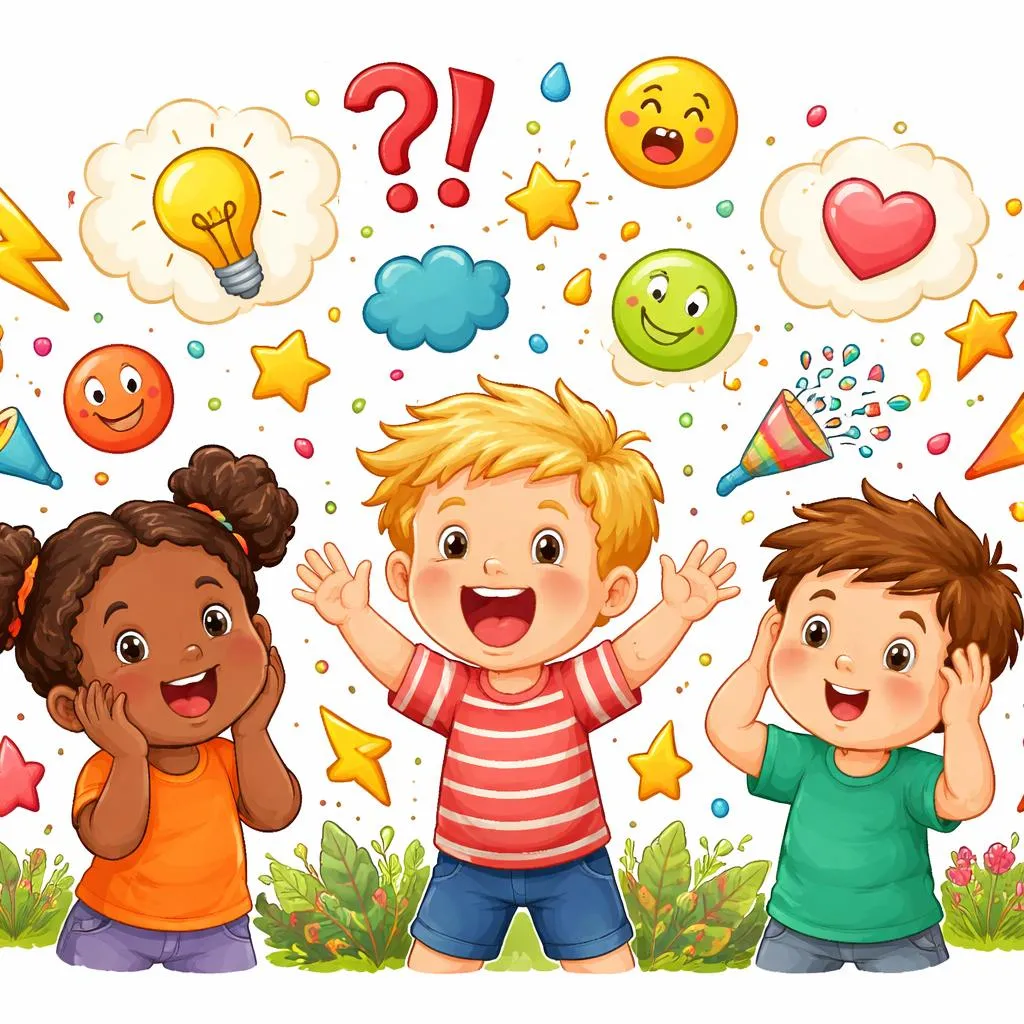

Interjections are words that express strong feelings or sudden emotions. They are often followed by an exclamation mark. Words like Wow!, Oops!, Yay!, and Oh! are all interjections. For a six-year-old, interjections add color and emotion to language. They help children express surprise, joy, disappointment, and pain in an instant. Learning the 70 most common interjections for a 6-year-old gives children the tools to share their feelings quickly and naturally. These words make conversations more lively and expressive.
What Are Interjections? Interjections are words or phrases that express sudden feelings or emotions. They are often used by themselves and are not grammatically connected to the rest of the sentence. They stand alone to show how someone feels.
Think about moments in your child's day. When they see a birthday present, they might say " Wow!" When they drop their ice cream, they might say " Uh-oh!" When they get a hug, they might say " Aww!" Each of these words is an interjection that shows a feeling instantly.
Interjections can express many different emotions.
Surprise and excitement interjections show wonder or joy. Wow!, Yay!, Hurray!, Whoa!, Oh!
Pain and discomfort interjections show that something hurts. Ouch!, Ow!, Eek!, Yikes!
Disappointment and frustration show when things go wrong. Uh-oh!, Oh no!, Darn!, Boo!
Thinking and hesitation show that someone is pausing to think. Um, Uh, Hmm, Well
Greetings and farewells show politeness and social interaction. Hi!, Bye!, Hello!, Goodbye!
Attention-getting interjections call someone to look or listen. Hey!, Look!, Listen!, Psst!
When we talk about the 70 most common interjections for a 6-year-old, we mean the emotion words that children use and encounter most often in their daily lives and in the books and shows they enjoy.
Meaning and Explanation of Interjections Interjections are unique because they can stand alone. They do not need to be part of a full sentence. They carry meaning all by themselves.
Wow! shows surprise or admiration. When a child sees something amazing, this word comes out naturally. " Wow! Look at that big truck!"
Yay! shows happiness and celebration. When something good happens, children shout this word. " Yay! We are going to the park!"
Uh-oh! shows that something is wrong or a problem has occurred. " Uh-oh! I spilled my milk."
Ouch! shows pain. When a child gets a minor hurt, this word expresses the feeling instantly. " Ouch! I bumped my knee."
Aww! shows tenderness or sympathy. When a child sees something cute or feels sorry for someone, they use this word. " Aww! Look at the baby kitten!"
Hey! gets attention or shows surprise. " Hey! Wait for me!"
Hmm shows that someone is thinking. " Hmm , I am not sure which color to choose."
Oh shows many different feelings depending on how you say it. It can show surprise, understanding, or disappointment. " Oh , I see!" " Oh no!" " Oh , that is too bad."
Interjections often appear in comics and children's books. Pow!, Boom!, Zap! These sound words are also interjections that add excitement to stories.
For a six-year-old, learning interjections helps them express emotions more vividly and understand the feelings of characters in stories.
Categories or Lists: The 70 Most Common Interjections Here is a practical list of the 70 most common interjections for a 6-year-old. These are the emotion words children use and encounter most often in speaking, reading, and watching shows.
Surprise and Excitement (15 words)
Wow!
Yay!
Hurray!
Whoa!
Oh!
Ah!
Aha!
Gee!
Gosh!
My!
Oh my!
Goodness!
Heavens!
Wowzer!
Cool!
Pain and Discomfort (8 words) 16. Ouch! 17. Ow! 18. Yow! 19. Eek! 20. Yikes! 21. Ahh! 22. Oh no! 23. Oof!
Disappointment and Frustration (10 words) 24. Uh-oh! 25. Oh no! 26. Darn! 27. Rats! 28. Boo! 29. Aw! 30. Phooey! 31. Drat! 32. Shoot! 33. Bummer!
Thinking and Hesitation (8 words) 34. Um 35. Uh 36. Hmm 37. Well 38. Er 39. Ah 40. Like 41. You know
Greetings and Farewells (10 words) 42. Hi! 43. Hello! 44. Hey! 45. Bye! 46. Goodbye! 47. See ya! 48. Later! 49. Peace! 50. Ciao! 51. Adios!
Attention and Commands (8 words) 52. Hey! 53. Look! 54. Listen! 55. Watch out! 56. Careful! 57. Stop! 58. Wait! 59. Psst!
Sound Words and Onomatopoeia (11 words) 60. Bang! 61. Boom! 62. Zap! 63. Pow! 64. Splat! 65. Splash! 66. Crash! 67. Pop! 68. Buzz! 69. Zoom! 70. Achoo!
Daily Life Examples with Interjections The best way to teach interjections is to use them naturally in everyday conversations. Children learn these emotion words best when they hear them in real situations.
Morning routine: " Good morning! Time to wake up. Yay , you got dressed all by yourself! Uh-oh , your sock has a hole in it. Wow , you brushed your teeth so nicely!"
At breakfast: " Mmm , these pancakes are delicious! Hey , don't drink all the juice. Oops , I spilled a little. Yum , this is my favorite cereal."
Getting dressed: " Oh , where did your other shoe go? Aha , found it under the bed! Ouch , that zipper pinched me. Ta-da ! You look so handsome!"
At the park: " Whee ! Going down the slide is fun. Whoa , that was a fast swing! Look , a squirrel! Wow , you climbed so high!"
During play: " Boom ! My tower fell down. Ha ha , that was funny. Hey , that's mine! Sorry , I didn't mean to knock it over."
At the store: " Ooh , look at all the toys! Cool , a new game! Oh no , we forgot the milk. Phew , we found it."
At bedtime: " Aww , you look so cozy. Shh , the baby is sleeping. Good night , sweet dreams. Love you !"
Printable Flashcards for Interjections Flashcards are a wonderful tool for learning interjections. You can make them together, which makes the learning even more meaningful.
To make interjection flashcards, you will need index cards or thick paper, markers, and crayons. On one side of the card, write the interjection with an exclamation mark. On the other side, draw a simple face or scene that shows the emotion.
For example:
"Wow!" with a surprised face and big eyes
"Yay!" with a jumping happy person
"Uh-oh!" with a worried face and hands on cheeks
"Ouch!" with a person holding a bumped knee
"Hmm" with a thinking face and finger on chin
"Hey!" with a person waving to get attention
Here are some fun ways to use your flashcards:
Act it out: Pick a card and act out the emotion or situation. For "Wow!," look amazed at something. For "Ouch!," pretend to hurt your finger. For "Yay!," jump up happily. Your child guesses the interjection.
Match the feeling: Lay out several cards and describe a situation. "You just got a present. What do you say?" Your child finds the "Yay!" or "Wow!" card. "You hurt your knee. What do you say?" Your child finds the "Ouch!" card.
Story time with interjections: Read a simple story and have your child hold up the matching interjection card when the character would say that word. When the character gets a surprise, hold up "Wow!" When something goes wrong, hold up "Uh-oh!"
Sound effect game: Take turns picking a card and making the sound or saying the word. The other person guesses which card it is.
Learning Activities or Games Games make learning interjections fun and memorable. Here are some games you can play with your child to practice these expressive words.
The Emotion Charades Game: Take turns acting out an emotion or situation without words. The other person guesses the interjection that fits. Act out surprise for "Wow!" Act out pain for "Ouch!" Act out happiness for "Yay!" Act out thinking for "Hmm."
The Story Time Interjection Game: Read a story together and have your child add interjections at the right moments. "The bear saw a big cave. He said, ' Wow !' He went inside. Oops , he tripped on a rock. Ouch , he bumped his head. Phew , he was okay."
The What Would You Say? Game: Describe a situation and ask your child what interjection they would use. "You just got a new puppy. What do you say?" " Yay !" "You see a huge elephant at the zoo. What do you say?" " Wow !" "You drop your ice cream on the ground. What do you say?" " Uh-oh !"
The Comic Strip Game: Look at comic strips together and point out the interjections in the speech bubbles. Pow ! Boom ! Zap ! Talk about what is happening and why the character said that word.
The Interjection Hunt: Watch a short cartoon or show together with the sound on. Ask your child to listen for interjections and raise their hand when they hear one. Wow , whoa , hey , ouch . Talk about why the character used that word.
The Telephone Game with Emotions: Whisper an interjection with lots of feeling to your child. They whisper it to the next person or a stuffed animal. See if the feeling and word make it through the telephone line the same way.
The Emotion Match Game: Make two sets of cards. One set has interjections. The other set has pictures of situations. Match the interjection to the situation. "Wow!" matches a picture of a birthday present. "Uh-oh!" matches a picture of spilled milk. "Ouch!" matches a picture of a bumped knee.
The Singing Game: Many children's songs have interjections. Sing songs like "If You're Happy and You Know It" and add interjections. "If you're surprised and you know it, say Wow !" "If you're hurt and you know it, say Ouch !"
By using these examples, flashcards, and games, you are helping your child master the 70 most common interjections for a 6-year-old in a natural and enjoyable way. These emotion words will become a lively part of their language. They will use them to express feelings instantly, to react to the world around them, and to understand the emotions of characters in stories. Every conversation gives them more practice. Your child will gain confidence as they learn to share their feelings with words that pack a punch. The more they hear and use interjections, the more colorful and expressive their language will become. Soon they will be filling your days with Wows , Yays , and Uh-ohs , and you will hear their personality shining through every word.