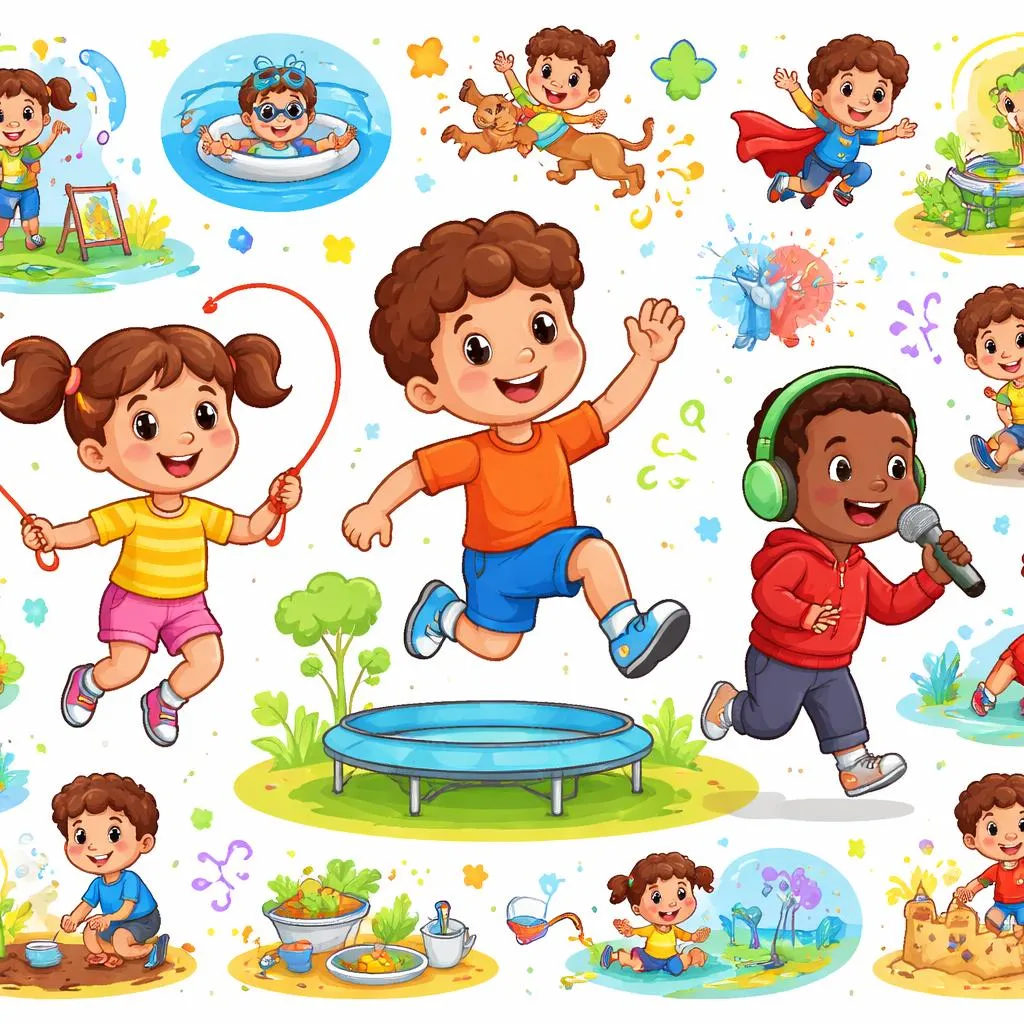

Hello, word mover! Do you know how to jump, run, and skip? Your body can do so many actions. Some words are like that too! They are the action words in your sentences. These word movers are called verbs. A verb is a word that shows an action or a state of being. It is the heart of every sentence. Today, we will play with eighty wonderful word movers. Our guide is Victor the Verb Squirrel. Victor is always moving! He loves verbs. He will show us verbs at home, the playground, school, and in the forest. Let's get moving!
What Is a Verb? A verb is your word mover. It is an action word or a being word. It tells us what someone or something does. It also tells us what someone or something is. At home, the word "cook" is a verb. It shows action. "Is" is also a verb. It shows a state of being. "Mom cooks. She is happy." At the playground, "run" and "laugh" are verbs. At school, "read" and "learn" are verbs. In nature, "grow" and "fly" are verbs. "Victor the Squirrel loves verbs. He collects nuts, runs up trees, and is very busy." Mastering these eighty must-master verbs gives your sentences life and energy.
Why Do We Need Word Movers? Verbs are your sentence power! They help your ears listen. You can picture exactly what is happening in a story. They help your mouth speak. You can tell people exactly what you did or what you want to do. "I want a cookie. I ate my lunch." They help your eyes read. Verbs make the story move forward. They help your hand write. You can write exciting stories full of action. Without a verb, a sentence is like a car without an engine. It just sits there! Knowing your word movers makes you a great storyteller.
What Kinds of Movers Do We Have? We have two main types of verbs. Action verbs and being verbs.
Action verbs show a clear action you can see or think. Run, jump, think, dream, build. Being verbs (like am, is, are, was, were) show a state. They tell us what someone or something is. They link the subject to more information.
We can also group verbs by time. Present tense verbs show now. "I play." Past tense verbs show before. "I played." Future tense verbs show later. "I will play."
For 7-year-olds, we will learn common action verbs, the key being verbs, and some helping verbs like can, will, have.
How Can You Spot a Word Mover? Spotting a verb is a fun game. Use these simple tricks.
First, ask: "What is happening?" The word that answers is often the verb. "The dog barks." What is happening? Barking. The verb is barks.
Second, ask: "Can I do this?" If you can physically or mentally do the word, it might be an action verb. You can run. You can dream. You can love.
Third, look for the "being" words: am, is, are, was, were, be, being, been. These are always verbs.
Look at Victor's day. "Victor hops on a branch. He is quick." What is happening? Hopping. The verb is hops. What is Victor? Quick. The linking verb is is. You found two verbs!
How Do We Use Our Word Movers? Using verbs is about putting them in the right place and time. The most common pattern is: Subject + Verb. "Birds fly." You can add more: Subject + Verb + Object. "I love you."
Verbs change form to show time. This is called tense. For now (present): I walk, he walks. For before (past): I walked, he walked. For later (future): I will walk, he will walk.
Victor shows us. "Yesterday, I climbed a tree. Today, I eat a nut. Tomorrow, I will hide my food."
Let's Fix Some Moving Mistakes. Sometimes our verbs get a little mixed up. Let's fix that.
A common mistake is forgetting the verb! "I happy" is not a sentence. You need a being verb: "I am happy."
Another is mixing up "am", "is", "are". "He are my friend" is wrong. Match the verb to the subject: "He is my friend. They are my friends."
Also, using the wrong past tense. "I runned fast" should be "I ran fast." Many verbs have special past forms.
Using two main verbs without a connection. "I like to swim" is right. "I like swim" is not quite right.
Can You Be a Mover Master? You are a great master! Let's play the "Find the Action" game. I will say a sentence. You tell me the verb. "The sun shines brightly." You say: "Shines!" "My cat is sleepy." You say: "Is!" "We can read this book." You say: "Can read!" or "read!" Great! Here is a harder challenge. Think of three things you did this morning. Say them with a verb. "I woke up. I brushed my teeth. I ate breakfast."
Your Mover List of 80 Must-Master Verbs. Ready to see all the movers? Here are eighty wonderful verbs. Victor the Squirrel uses them all. They are grouped by the scene. Each group has twenty verbs. We have action verbs, being verbs, and helpful helping verbs.
Home Movers (20). Cook, eat, drink, sleep, wake, hug, kiss, help, clean, wash, watch, listen, talk, laugh, cry, love, like, want, need, have. Examples: Mom cooks dinner. I eat an apple. We drink milk. I sleep in my bed. I wake up early. I hug my dad. She kisses my cheek. I help set the table. We clean our room. I wash my hands. I watch a show. I listen to music. We talk at dinner. We laugh at jokes. The baby cries. I love my family. I like games. I want a toy. I need a hug. I have a pet.
Playground Movers (20). Run, jump, hop, skip, climb, slide, swing, push, pull, throw, catch, kick, bounce, race, play, chase, hide, seek, laugh, shout. Examples: I run fast. I jump high. I hop on one foot. I skip rope. I climb the ladder. I slide down. I swing high. I push the swing. I pull the wagon. I throw the ball. I catch the frisbee. I kick the ball. I bounce on the trampoline. We race to the tree. We play tag. I chase my friend. I hide behind the tree. I seek my friends. We laugh together. We shout with joy.
School Movers (20). Read, write, draw, color, spell, count, add, learn, think, know, ask, answer, raise, listen, look, sit, stand, walk, line up, share. Examples: I read a book. I write my name. I draw a picture. I color inside the lines. I spell words. I count to one hundred. I add numbers. I learn new things. I think hard. I know the answer. I ask a question. I answer the teacher. I raise my hand. I listen carefully. I look at the board. I sit on the chair. I stand in line. I walk in the hall. We line up quietly. I share my crayons.
Nature and Animal Movers (20). Grow, bloom, fly, swim, crawl, walk, run, hunt, eat, drink, sleep, rest, shine, rain, snow, blow, fall, plant, water, protect. Examples: Flowers grow. Flowers bloom. Birds fly. Fish swim. Worms crawl. Bears walk. Deer run. Cats hunt. Rabbits eat grass. All animals drink water. Animals sleep. Animals rest. The sun shines. It rains. It snows. The wind blows. Leaves fall. I plant a seed. I water the garden. We protect nature.
Being and Helping Movers. These are super important too! They often work with other verbs. Being Verbs: am, is, are, was, were, be, being, been. Examples: I am happy. He is my friend. They are here. I was little. We were at the park. Helping Verbs: can, could, will, would, shall, should, may, might, must, have, has, had, do, does, did. Examples: I can jump. I will go. You may play. I must sleep. I have a ball. I do my work.
These eighty words are your must-master verbs. Practice them every day.
Making Your Sentences Move and Live. You did it! You are now a verb expert. You know a verb is a word mover that shows action or a state of being. You know about action verbs and being verbs. You can spot them by asking "What is happening?" or "What is the state?" Victor the Verb Squirrel is proud of your energy. Now you can make your sentences full of life and action. Your stories will jump off the page!
Here is what you can learn from our mover adventure. You will know what a verb is. You will understand the difference between action verbs and being verbs. You can identify the verb in a sentence. You can use verbs in the present, past, and future tense. You have a mover list of eighty must-master verbs.
Now, let's do some life practice! Your mission is today. Be a verb detective. For the next hour, listen to what people do. Catch three action verbs. Tell your grown-up: "I saw you cook. I heard a bird sing. I watched my sister run." Then, use a being verb. Say: "I am hungry." Keep your words moving every day. Have fun, little mover!