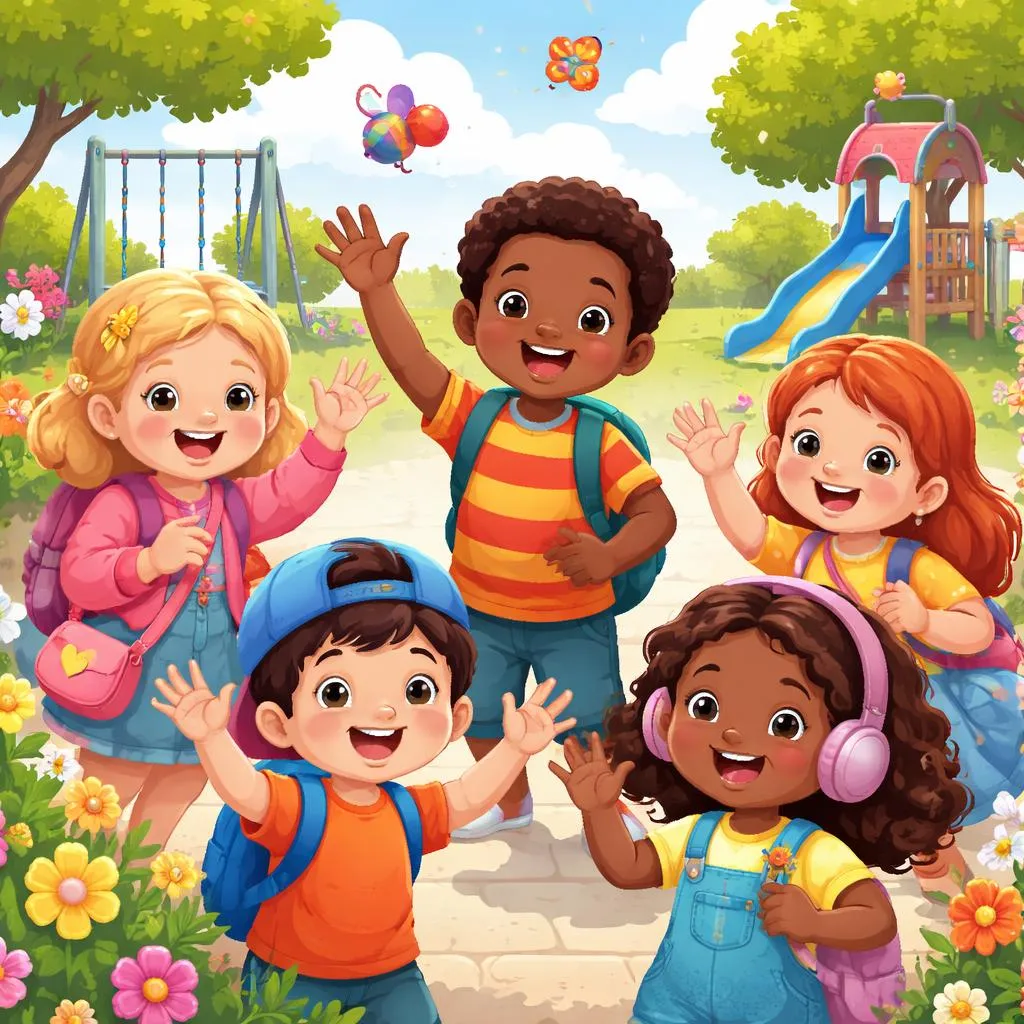

What is "say hi"?
Hello, friendly learners. Today we are going to talk about the first and most important step in any conversation. We are going to learn all about how to say hi. Saying hi is how we start a friendly chat. It is how we greet someone. It is a simple way to say, "I see you. Hello. Let's be friendly."
The word "hi" is a very casual and common greeting. It is perfect for friends and people you know well. But did you know there are many other ways to say hi in English? Some are for the morning. Some are for when you meet a teacher. Some are just for fun. Learning all these ways helps you start your conversations perfectly every time. Let's learn the wonderful world of greetings.
Meaning and explanation
Saying hi is more than just a word. It is a social action. It is a way to be polite and show you are friendly. When you greet someone, you are acknowledging their presence. You are opening the door to a possible conversation. It makes the other person feel seen and welcomed.
Different greetings set a different tone. A formal "Good morning, Mr. Lee" shows respect. A cheerful "Hey there!" shows you are happy to see a friend. A simple nod and "Hi" is quick and easy. The greeting you choose tells the other person about your relationship and the situation. Learning how to say hi in the right way is a key part of good communication and good manners.
Categories or lists
Let's organize the many ways to say hi into helpful groups. Think of them from very formal to very casual.
The Standard & Common Group: These greetings work in most situations. They are safe and polite. Hello. This is the standard, neutral greeting. It works anytime, anywhere.
Hi. This is the casual version of "Hello." It is friendly and very common.
Good morning / Good afternoon / Good evening. These are time-specific and slightly more formal. "Good night" is for saying goodbye, not hello.
The Very Casual & Friendly Group: Use these with friends, family, and people you know very well. Hey! This is super casual and friendly. "Hey" is for people you are comfortable with.
Hey there! / Hi there! These are warm and a little more personal than just "Hey" or "Hi."
What's up? This is a very casual way to say hi and ask how someone is. The common reply is "Not much" or "Hey."
The Fun & Silly Group: Kids love these playful greetings with friends. Howdy! A fun, cowboy-style greeting.
Yo! A very cool and casual greeting, often used between friends.
Hiya! A bouncy, energetic way to say hi.
Daily life examples
You can practice how to say hi in many situations every day. Let's look at three simple scenes.
In the Morning at Home: You wake up and see your family. You can say "Good morning, Mom" to your mother. You can say "Hi, Dad" to your father. You can say "Hey, sis" to your sister. When you walk into the kitchen, you might say "Morning!" to everyone. Using the right greeting for each person starts the day in a friendly way.
When You Arrive at School: You see your teacher at the door. A polite "Good morning, Mrs. Chen" is perfect. You walk into your classroom and see your best friend. A big wave and a loud "Hey! What's up?" is just right. You see a classmate you know a little. A simple "Hi" with a smile is friendly. Knowing how to say hi differently to a teacher and a friend shows social understanding.
On a Walk in Your Neighborhood: You see an older neighbor you know. A polite "Hello, Mr. Jones" is respectful. You see a friend from soccer practice riding their bike. A cheerful "Hey! Hi there!" is great. You see a friendly dog with its owner. You can smile and say "Hi" to the dog (and its human). Greeting people you see makes your neighborhood a friendlier place.
Printable flashcards
Printable flashcards are a fantastic tool for practicing how to say hi. You can create a "Greetings Match-Up" game.
Make cards with pictures of people on one side. A picture of a teacher. A picture of a grandparent. A picture of a best friend. A picture of a soccer coach. On another set of cards, write the greetings: "Good morning," "Hello," "Hey there," "Hi." Kids have to match the person card with the most appropriate greeting card. Does the teacher get a "Hey!" or a "Good morning"? This builds context skills.
Another fun idea is a "Greetings Spinner." Print a circle divided into sections. In each section, write a different greeting: Hi, Hello, Hey, Howdy, Good morning, What's up? Attach a paper clip spinner. Kids spin it and must greet the person next to them using that exact phrase. "It landed on 'Howdy!' Howdy, partner!" This makes practice random and fun.
You can also make a "My Day of Greetings" chart. The chart has columns for Time, Person I See, and My Greeting. Kids can draw or write. "Time: 8 am, Person: Mom, Greeting: Good morning!" "Time: 3 pm, Person: Friend Leo, Greeting: What's up?" Filling this out helps them think about greetings throughout their own day.
Learning activities or games
Let's play some active games to practice how to say hi. First, play "Greetings Freeze Tag." Choose one or two players to be "It." When "It" tags you, you must freeze. To be unfrozen, another player must run up to you, make eye contact, and say a correct greeting like "Hello!" or "Hi there!" Then you can run again. This game gets everyone moving and shouting friendly greetings.
Try the "Role-Play Circle." Set up a circle of chairs. On each chair, place a picture or a sign showing a person (e.g., a teacher's desk, a grandma's rocking chair, a soccer field). One by one, kids walk around the circle. When the music stops, they sit in a chair. They must then greet the "person" associated with that chair using an appropriate phrase. "Oh, I'm in the teacher's chair. Good afternoon, class!"
Create a "Greetings from Around the World" activity. While the focus is English, it's fun to connect. Teach kids how to say "Hello" in a few other languages: "Hola" (Spanish), "Bonjour" (French), "Ciao" (Italian). Then, have a "Greetings Parade." Play music from different countries. When the Spanish music plays, everyone greets each other with "¡Hola!" When the French music plays, they say "Bonjour!" This combines music, movement, and the global idea of greeting, while still focusing on the core concept of how to say hi in your own language.