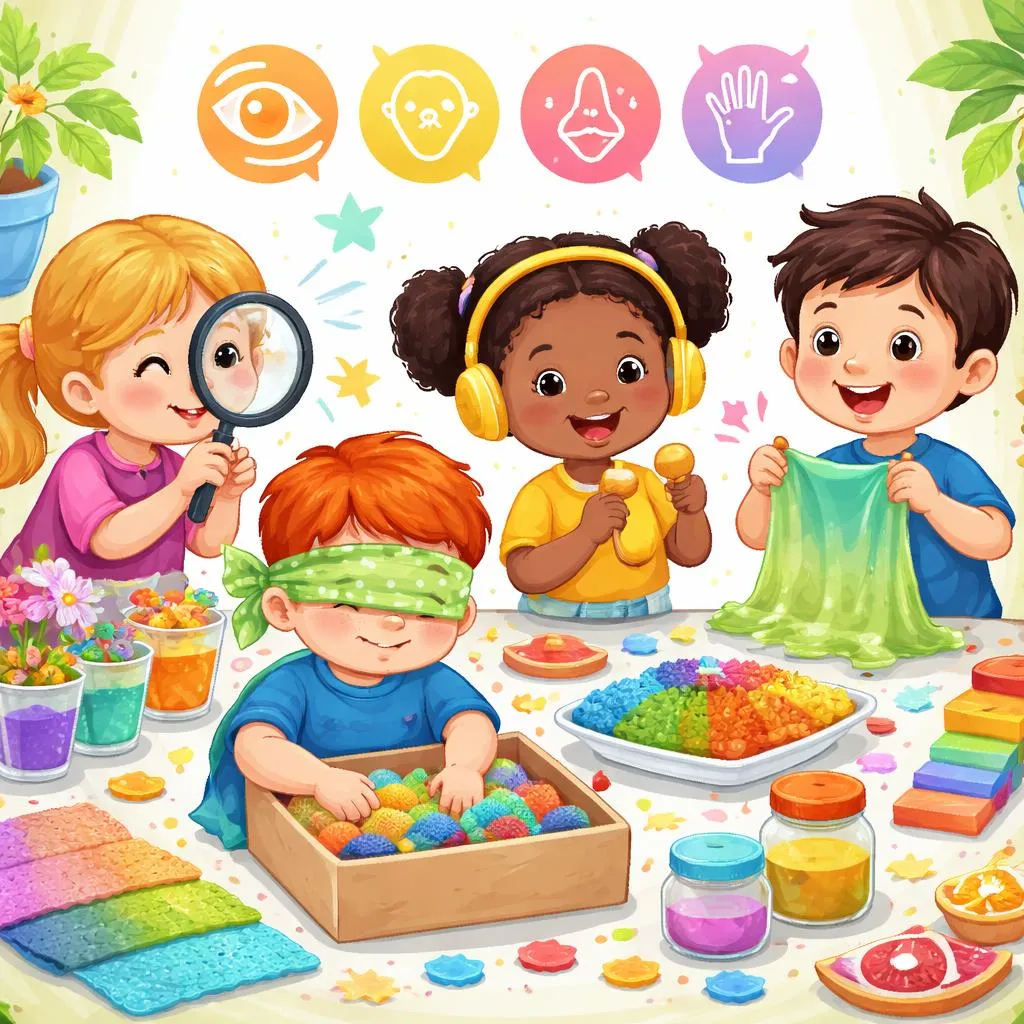

Hello, curious teachers and creative young learners! Today we explore something amazing. Our bodies have special ways to learn about the world. We use our eyes to see. We use our ears to hear. We use our nose to smell. We use our tongue to taste. We use our hands to touch. These are the five senses. Creating five senses crafts for preschoolers helps them understand how they experience the world. Crafts make learning hands-on and memorable. Let us discover wonderful craft ideas for each sense. Let us explore seeing, hearing, smelling, tasting, and touching through art.
What Are the Five Senses? The five senses are how we experience the world around us. Each sense uses a different part of the body. Together, they give us information about everything.
Sight uses our eyes. We see colors, shapes, sizes, and movement. Our eyes help us find things and know where we are.
Hearing uses our ears. We hear sounds, music, voices, and noises. Our ears warn us about danger and help us communicate.
Smell uses our nose. We smell flowers, food, and many other things. Our nose can warn us about smoke or spoiled food.
Taste uses our tongue. We taste sweet, sour, salty, and bitter flavors. Our tongue helps us enjoy food and avoid things that might be bad.
Touch uses our skin. We feel texture, temperature, and pressure. Our skin helps us know if something is hot, cold, soft, or rough.
Understanding the five senses helps children notice the world more fully. They become more aware of their experiences.
Meaning and Explanation of Sense Crafts Crafts about the five senses serve many purposes. They teach about each sense through hands-on creation.
Sight crafts focus on colors, shapes, and visual patterns. Children use bright materials. They create things that are beautiful to look at. They learn about what their eyes can do.
Hearing crafts focus on sound. Children create instruments or sound-makers. They explore loud and soft, high and low. They learn about what their ears can do.
Smell crafts focus on scents. Children use materials with interesting smells. They create scented art or smell bottles. They learn about what their nose can do.
Taste crafts focus on flavors. Children explore different tastes through food art. They learn about sweet, sour, salty, and bitter. They learn about what their tongue can do.
Touch crafts focus on texture. Children use materials with different feels. Soft, rough, smooth, bumpy, fuzzy. They learn about what their skin can do.
Categories or Lists of Sense Crafts Here are craft ideas organized by each sense.
Sight Crafts:
Color Collage: Cut out pictures of different colors from magazines. Children sort them by color and glue them onto paper. This explores visual discrimination.
Rainbow Mobile: Create a mobile with paper strips in rainbow colors. Hang it where it can spin and catch the light. This explores color order and visual movement.
Eye Spy Bottle: Fill a clear plastic bottle with rice and small objects. Children shake it and find the hidden items. This explores visual searching.
Hearing Crafts:
Sound Shakers: Fill small containers with different materials. Rice, beans, bells, sand. Seal them tightly. Children shake them and compare the sounds. This explores sound discrimination.
Paper Plate Tambourine: Glue two paper plates together with beans or rice inside. Decorate the outside. Shake to make music. This explores rhythm and sound creation.
Listening Wand: Decorate a cardboard tube. Use it as a listening tool. Hold it to your ear and listen to quiet sounds. This focuses attention on hearing.
Smell Crafts:
Scented Play Dough: Make homemade play dough with different scents. Add vanilla, peppermint, or lemon extract. Children smell and play. This explores scent recognition.
Smell Bottles: Fill small containers with cotton balls. Add different scents to each. Vanilla, coffee, lemon, cinnamon. Children sniff and guess the scent. This builds olfactory awareness.
Scented Painting: Add flavored drink mix to finger paint. The paint will have a fruity smell. Children paint and smell at the same time. This combines senses.
Taste Crafts:
Taste Test Art: Provide small samples of different tastes. Sweet apple slices, sour lemon, salty pretzel, bitter dark chocolate. Children taste and draw what they experienced. This connects taste to expression.
Food Face Snacks: Use different foods to create faces on plates. Round crackers for faces. Raisins for eyes. Carrot sticks for smiles. Children build and then eat. This explores taste and creativity.
Flavor Collage: Cut out pictures of different foods from magazines. Sort them by taste. Sweet foods in one group. Salty foods in another. This builds taste vocabulary.
Touch Crafts:
Texture Collage: Gather materials with different textures. Felt, sandpaper, cotton balls, bubble wrap, aluminum foil. Children glue them onto paper. They feel each texture as they work.
Sensory Boards: Create boards with different textures attached. Soft fabric, rough sandpaper, smooth plastic, bumpy bubble wrap. Children touch and explore. This builds tactile awareness.
Finger Painting: Use finger paint on smooth paper. Children feel the cool, smooth texture as they create. This combines touch with art.
Daily Life Examples of Senses Senses are part of every moment. Pointing them out helps children notice.
At breakfast, talk about what senses are used. "The toast looks brown. It smells toasty. It tastes good. It feels warm. I can hear it crunch." This connects all five senses to one experience.
On a walk, use sense words. "Look at the red flowers. Hear the birds singing. Smell the fresh air. Feel the warm sun." This builds observation skills.
During play, describe the sensory experience. "The blocks feel smooth. The play dough is soft. The bells sound loud." Children learn to notice and describe.
Printable Flashcards for Five Senses Flashcards help children learn sense vocabulary. They provide clear images and words.
Sense Flashcards: Create cards for each sense. Eye for sight. Ear for hearing. Nose for smell. Tongue for taste. Hand for touch. Each card has a picture and the word.
Body Part Flashcards: Create cards showing each sense organ. Eyes, ears, nose, tongue, hands. Children match them to the correct sense.
Sensory Word Flashcards: Create cards with descriptive words. Bright, loud, sweet, rough, fragrant. Children match them to the correct sense.
Object Flashcards: Create cards showing objects associated with each sense. A flower for smell. A bell for hearing. A fruit for taste. Children sort them by which sense they use.
Learning Activities or Games for Five Senses Games make learning about senses fun and interactive.
Sense Sorting: Gather objects that relate to each sense. A bell for hearing, a flower for smell, a fruit for taste, a soft toy for touch, a bright picture for sight. Children sort them into five groups by which sense they use.
Sense Walk: Take a walk and focus on one sense at a time. First, walk in silence and listen to all the sounds. Then, look for colors and shapes. Then, feel different textures. This builds awareness.
Mystery Box Game: Place an object in a box with a hole for reaching in. Children feel the object without seeing it. They guess what it is using only touch. This isolates one sense.
Taste Test Game: Give children small samples of different foods with eyes closed. They guess what they are eating using only taste and smell. This makes tasting a fun challenge.
Sound Guessing Game: Make sounds behind a screen. Ring a bell, crinkle paper, pour water. Children guess what is making the sound using only hearing.
Printable Materials for Five Senses Printable resources support sense learning. They provide structure for activities.
Five Senses Chart: Create a chart with five columns, one for each sense. Children can draw or write things they experience with each sense.
Sense Matching Pages: Create pages where children match the sense word to the correct body part. Draw a line from "sight" to the eye.
Sense Coloring Pages: Create coloring pages for each sense. Children color the eye, ear, nose, tongue, and hand. They add things each sense can detect.
My Five Senses Book: Create a small booklet with a page for each sense. Children draw something they like to see, hear, smell, taste, and touch.
Educational Games for Five Senses Games extend sense learning in joyful ways.
Sense Scavenger Hunt: Give children a list of things to find using their senses. Find something soft. Find something that smells good. Find something red. This builds observation skills.
Sense Bingo: Create bingo cards with sensory experiences. A loud sound, something sweet, something rough. During the day, children mark off experiences as they happen. This builds awareness.
Sense Memory Game: Place objects related to senses in a tray. Children look at them, then close their eyes while one is removed. They guess what is missing using visual memory.
Sense Charades: Act out using a sense without speaking. Pretend to smell a flower. Pretend to taste something sour. Others guess which sense is being used.
Sense Sorting Pictures: Give children magazines and catalogs. They cut out pictures and sort them by which sense would be used most. A picture of a pizza goes with taste and smell. A picture of a rainbow goes with sight.
Through five senses crafts for preschoolers, children learn about their amazing bodies. They discover how they experience the world. Each craft reinforces understanding of a different sense. Children create, explore, and learn at the same time. The senses become more than words on a page. They become real experiences that children understand deeply.