
What is color in english?
Hello, young artists and word explorers. Today, we are going to learn about something that makes our world beautiful. We are going to learn about color in English. What is a color. A color is what we see when light hits an object. The sky is blue. Grass is green. A strawberry is red. Colors are everywhere.
In English, every color has a name. Learning the names for color in English helps you describe the world around you. You can say, "I have a yellow banana." or "I see a black cat." Knowing these words helps you talk about your drawings, your clothes, and everything you see. It is like getting a bigger box of crayons for your brain. Let's start our colorful adventure.
Meaning and explanation
So, what does it mean to know a color in English. It means you know the word that matches what your eyes see. When you look at a fire truck, your eyes see red. Your brain remembers the word "red." Then you can say, "The fire truck is red." The word "red" is the English name for that color.
Color in English is more than just a simple word. We can make colors stronger or softer. We can mix them to make new colors. We use color words as adjectives. Adjectives are describing words. They come before a noun. "A blue ball." "A green leaf." Learning to use color words correctly makes your sentences vivid and fun. It helps you share exactly what you are thinking and seeing.
Categories or lists
Let's learn the names of colors in English. We can put them into groups to make them easier to remember.
The Basic Rainbow Colors: These are the main colors you often see first. Red: The color of apples, fire trucks, and hearts.
Orange: The color of oranges, pumpkins, and carrots.
Yellow: The color of the sun, bananas, and school buses.
Green: The color of grass, leaves, and frogs.
Blue: The color of the sky, the ocean, and blueberries.
Purple: The color of grapes, violets, and some eggplants.
More Common Colors: Pink: A light, soft red. The color of cotton candy and flamingos.
Brown: The color of tree trunks, chocolate, and bears.
Black: The color of the night sky, crows, and tires. White: The color of snow, milk, and clouds.
Gray (or Grey): The color of elephants, rocks, and rainy skies.
Mixing and Special Colors: Light Blue / Dark Blue: We add "light" or "dark" to describe the shade.
Turquoise: A mix of blue and green, like tropical water.
Gold: A shiny, metallic yellow.
Silver: A shiny, metallic gray.
Daily life examples
You can practice color in English all day long. Here are two fun ways.
During Breakfast or a Meal: Look at your food. What colors do you see. You can say, "I am eating yellow cornflakes with white milk." "This is a red apple." "My juice is orange." Your plate is a palette of colors. Naming them turns mealtime into a vocabulary game. You can also help set the table. "Please pass the blue cup." This is a perfect daily example of using color in English.
Getting Dressed or Cleaning Up Toys: When you pick your clothes, think about colors. "Today I will wear a green shirt and black pants." When you are asked to tidy your toys, you can sort them by color. "I will put all the red blocks in this box." "All the yellow cars go here." This helps you learn the words and makes cleaning a fun, organized game. You are using color in English to give and follow instructions.
Printable flashcards
Printable flashcards are a super way to learn colors. You can create simple "Color and Word" cards.
Make cards that have a big splash of color on one side. On the other side, write the color's name in English. For younger kids, make the word in the same color (write "RED" in red ink). For older kids, challenge them by writing all words in black ink. They must remember the word without the color clue. This builds strong word recognition.
Another fun printable is a "Color Scavenger Hunt" checklist. Create a worksheet with a list of colors and a blank box next to each one. The child's mission is to find an object in the house that matches each color, draw it in the box, and write its name. "Color: Green. Object: Leaf." This connects the color word to real-world objects.
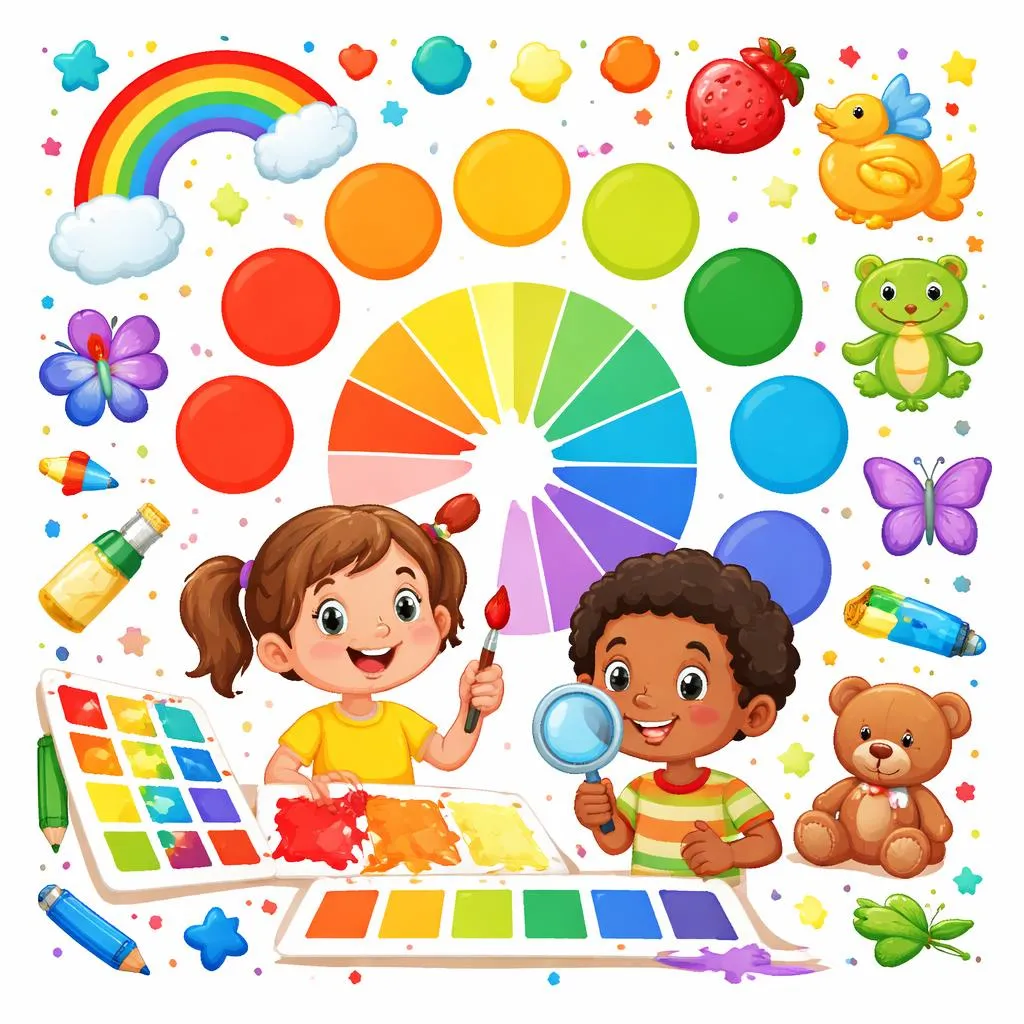
You can also make a "Color Mixing" wheel. Print a circle divided into sections like a pie. In some sections, color them with primary colors (Red, Yellow, Blue). Label the sections between them with the color you get when you mix. Between red and yellow, write "Orange." This is a great visual for learning how colors work together.
Learning activities or games
Let's play "I Spy Colors." This classic game is perfect. One player says, "I spy with my little eye, something that is... blue!" The other players look around and guess. "Is it the book?" "Is it your shirt?" The first to guess correctly gets to be the next spy. This game sharpens observation skills and reinforces color vocabulary.
Try "Color Bingo." Create bingo cards with squares of different colors instead of numbers. The caller holds up an object or a colored card and says its name. "I have something... purple!" Players look for the purple square on their card and mark it. The first to get a line shouts "Color Bingo!" This is a great listening and recognition game.
Create a "Classroom Color Rainbow" project. Give each child or small group a different color of the rainbow. Their task is to create a collage. They must find pictures in magazines, use colored paper, or draw things that are primarily their assigned color. They then glue these onto a large strip of paper. Assemble all the strips in rainbow order (Red, Orange, Yellow, Green, Blue, Purple) to create a giant rainbow on the wall. Label each strip with the color name. This collaborative art project makes learning about color in English a beautiful, shared, and visual experience. It shows the power of all the colors working together.