
What is the romance languages?
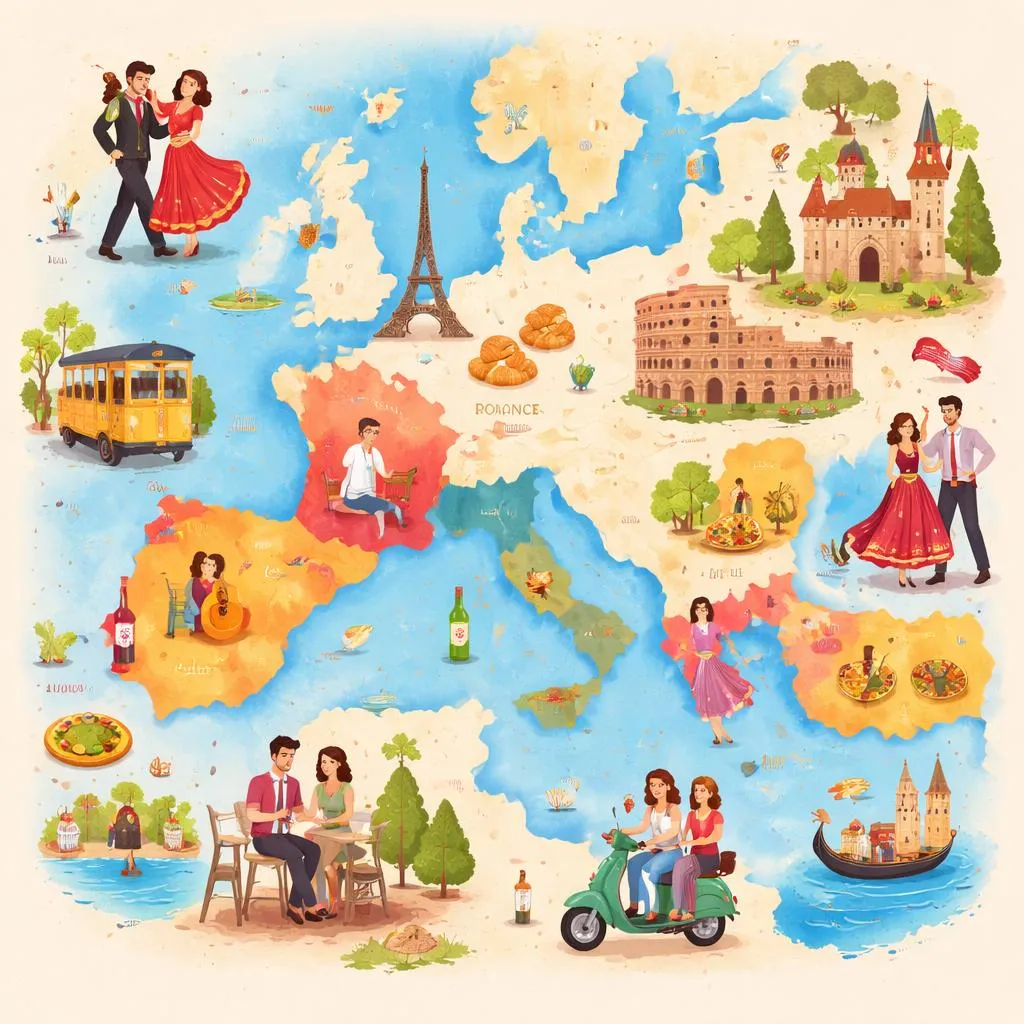
Hello, language explorers. Today we are going on a trip to discover a special family of languages. This family is called the Romance languages. Now, this name might sound like it is about love stories. But it is actually about history. The name "Romance" comes from "Rome."
Long, long ago, the Roman Empire was very big and powerful. The people in Rome spoke a language called Latin. As the Roman soldiers and traders traveled to new lands, they took their Latin language with them. Over hundreds and hundreds of years, that Latin language changed. It mixed with local ways of speaking. In different places, it changed in different ways. These new languages that grew from Latin are the Romance languages. They are like cousins in a big language family.
Meaning and explanation
So, what are the Romance languages exactly. They are a group of languages that all started from one parent language: Latin. Think of Latin as a grand old tree. The Romance languages are the main branches that grew from that tree. They share a lot of the same roots.
Because they come from the same place, these languages have many things in common. Many words look or sound similar. The grammar rules, or how sentences are built, are often similar too. If you learn one Romance language, it can be a little easier to learn another one because they are family. They are not exactly the same, but you can see the family resemblance, just like cousins might have the same color eyes or smile.
Categories or lists
Let's meet the main members of the Romance language family. These are the most spoken languages that grew from Latin.
The Big Five: Major Romance Languages These are the most famous and widely spoken Romance languages in the world today. Spanish: This is spoken by the most people. It is the main language in Spain and almost all of South and Central America. Words like "gracias" (thank you) and "amigo" (friend) come from Spanish.
Portuguese: This is the language of Portugal and the huge country of Brazil. It sounds a bit like Spanish but has its own special music. "Obrigado" means thank you.
French: Many people think French is a very beautiful language. It is spoken in France, parts of Canada, and many countries in Africa. "Merci" is how you say thank you in French.
Italian: This is the language of Italy. It is often said to sound like singing. Italian gave us words like "pizza" and "piano." "Grazie" means thank you.
Romanian: This language is spoken in Romania and Moldova. It is a very interesting Romance language because it is in Eastern Europe, surrounded by countries that do not speak Romance languages. "Mulțumesc" means thank you.
Other Romance Languages: There are other, smaller languages in the family. They are mostly spoken in certain regions of Europe. Catalan: Spoken in parts of Spain (like Catalonia) and a small part of France.
Galician: Spoken in a region of Spain called Galicia.
Sardinian: Spoken on the Italian island of Sardinia.
Daily life examples
You can find the Romance languages in your everyday life. Here are two fun places to look.
On a Menu at a Restaurant: Look at the names of foods. Do you see words like "taco," "burrito," or "quesadilla"? Those are Spanish words. Do you see "pasta," "pizza," or "gelato"? Those are Italian. What about "croissant," "baguette," or "crêpe"? Those are French. The next time you eat out, you can be a detective and guess which Romance language your food name comes from.
In Music, Movies, and Books: Listen to a popular song. You might hear some Spanish lyrics. Watch a cartoon. You might hear characters speaking French or Italian. Many famous children's books are translated from these languages. "The Little Prince" was written in French. "Pinocchio" is an Italian story. Hearing and seeing these languages helps you recognize their different sounds.
Printable flashcards
Printable flashcards can make learning about the Romance language family a fun game. You can create a "Language Family Tree."
Print a big picture of a tree with strong roots. The roots are labeled "Latin." Then, print five large leaves or apples. On each leaf, draw a flag and write the name of a major Romance language: Spanish, Portuguese, French, Italian, Romanian. Kids can color the leaves and glue them to the branches of the tree. This gives a clear, visual picture of how these languages grow from the same source.
Another great printable is a "Cognate Match-Up" game. Cognates are words that look alike and mean the same thing in different languages. Print cards with words. One card says "NATION" in English. The matching cards say "NACIÓN" (Spanish), "NAÇÃO" (Portuguese), "NATION" (French), "NAZIONE" (Italian). Kids can work in groups to match all the cousin words. This shows how the Romance languages are connected through vocabulary.
Learning activities or games
Let's play a game called "Romance Language Detective." Prepare a list of simple, common words in all five major Romance languages. For example, the word for "mother." Write them on the board or on cards: Madre (Spanish), Mãe (Portuguese), Mère (French), Madre (Italian), Mamă (Romanian). Ask the kids to be detectives. What do they notice? Many start with 'M'. They look similar. This activity trains their eyes to see the patterns and family connections.
Try the "Greetings from Around the World" activity. Teach kids how to say "Hello" and "Thank you" in each of the five main Romance languages. Hello: Hola (Spanish), Olá (Portuguese), Bonjour (French), Ciao (Italian), Bună (Romanian).
Thank you: Gracias, Obrigado/a, Merci, Grazie, Mulțumesc.
Practice them together. Then, have a simple role-play. One student is a tourist in France. They must greet a friend (another student) with "Bonjour" and say "Merci" for a pretend croissant. Switch countries and languages. This gets them speaking and connecting the language to a place.
Finally, create a "Passport to the Romance World." Print a small booklet for each child that looks like a passport. Each page is for a different language country. It has the country name, flag, and space to write the two phrases they learned (Hello and Thank you). As they "visit" each country in the activity and learn the phrases, they get a stamp or sticker on that page. This makes learning a tangible, goal-oriented adventure across the family of Romance languages.