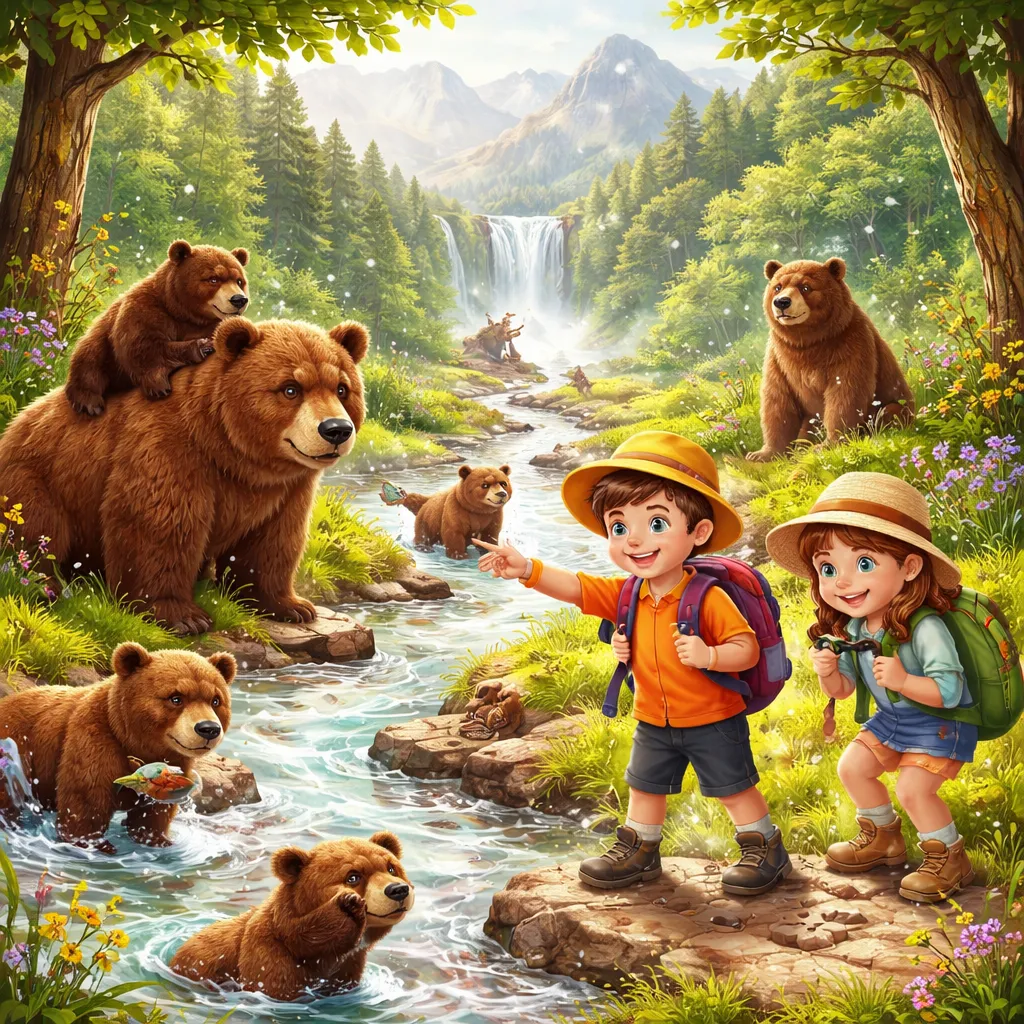

Have you ever seen a big, furry bear in a storybook or at the zoo? Maybe a brown bear, a black bear, or even a white polar bear! Bears are strong, smart, and live in wild places all over the world. Learning about bears takes us on an adventure to deep forests, snowy lands, and high mountains. Let’s get ready to discover the mighty world of the bear!
English Language Learning
Vocabulary and Spelling The word for this powerful animal is bear. The word "bear" is a noun. A noun names a person, place, or thing. So, a bear is a thing—a large, wild animal. Spelling "bear" is short and strong: B-E-A-R. The 'B' stands big and bold at the beginning. The 'E' and 'A' are in the middle, and the 'R' stands strong at the end. B-E-A-R spells bear. Remember, it sounds like "bare" but means a furry animal!
Sound and Pronunciation Let’s say the word correctly. It sounds like this: /ber/. We can say it in one clear part. First, say the sound "b". It’s the sound at the start of "big" or "ball". Next, say "air". It’s the same as the word for the air we breathe. Now, put it together! "B" "air". Bear! Great! The word "bear" has just one beat, or one syllable. Clap your hands once: Bear! It’s a strong, solid-sounding word.
Related Words Learning about bears is more fun with new words! Here are some important ones. Body Parts: A bear’s strong, curved nails are called claws. They use them for digging and climbing. A bear’s winter sleep is called hibernation. Home: A bear’s wild home is often a deep forest, but some live in the Arctic where it is very cold. Baby: A baby bear is called a cub.
A Famous Saying There is a very famous piece of advice: "Don’t poke the bear." This means you should not bother or annoy someone (or a bear!) who is big, strong, and could get angry. It’s a funny way to say, "Leave it alone and be safe!" It reminds us to be respectful and not look for trouble. Say the saying with me: "Don’t poke the bear." It’s good advice for both people and animals!
Now you know the word "bear"! Are you ready to learn about their powerful lives in the wild? Let’s walk from words to wonderful forest facts!
Animal Knowledge
Who Are They? – Family and Group What kind of animal is a bear? Bears are mammals. They have thick fur, are warm-blooded, and mother bears feed their babies milk. They are in their own special family called Ursidae. This is the bear family! There are many different kinds, like brown bears, black bears, polar bears, and panda bears.
What Do They Look Like? – Amazing Bodies Bears are big and powerful! They can be as small as a big dog or as huge as a small car. They usually have thick fur in colors like brown, black, or white. Their most famous tools are their strong claws and powerful legs. They use their claws for digging up roots, tearing open logs to find bugs, and climbing trees. They have a great sense of smell. Bears have special adaptations. Their thick fur and a layer of fat under their skin, called blubber, keep them warm in cold places. Polar bears have fur that looks white but is actually clear, and it helps them hide in the snow.
Where Do They Live and How? – Home and Habits Bears live in many places around the world. Their homes are forests, mountains, and even the icy Arctic. They need lots of space to find food. Bears are omnivores. This means they eat both plants and animals. They eat berries, nuts, roots, fish, insects, and sometimes small mammals. They are great at finding food! Most bears are solitary, which means they like to live alone. They are very good at walking and can be active during the day or night. A group of bears is sometimes called a sleuth of bears.
A Bear’s Life Story – Growing Up A baby bear is called a cub. Bears are mammals, so cubs are born live from their mother. They are born in the winter while the mother is hibernating, and they are very, very tiny. The mother bear takes excellent care of her cubs all by herself. She feeds them milk in the den and then teaches them how to find food and stay safe when they leave the den in spring. Cubs grow up with their mother for about one to two years. They play-fight a lot to learn skills. They start off very small but grow quickly into big, strong bears.
How Do They "Talk"? – Communication Bears talk in different ways. They can make sounds like huffs, woofs, growls, and sometimes loud roars. They also use their bodies. Standing on two legs might mean they are curious and trying to see or smell better. They leave scratches on trees and use their scent to mark their territory. Their best and most amazing sense is their sense of smell. A bear’s nose is incredibly powerful! It can smell food from miles away. Their hearing is also very good.
Are They Okay? – Taking Care of Them Some bears, like polar bears, are in big trouble and are vulnerable or threatened. This is because the sea ice they need is melting. Other bears face different problems. The main threats are people taking their forest homes and climate change. Sometimes, bears and people have trouble when they live too close together. You can be a bear helper! You can learn about them and tell others. You can help by saving energy and recycling to fight climate change. You can also support groups that protect wild forests and national parks where bears live.
Life Connections and Inspiration
How to Be With Them – Safety and Love Bears are magnificent and powerful wild animals. We must always show them respect and keep a very safe distance. The most important rules are: Observe from far away and never feed a bear. We watch them in nature documentaries or at good zoos with large, natural habitats. We never, ever try to get close to a wild bear. If you see one in the wild, you stay calm, stay with an adult, and back away slowly. We must keep our food locked up when camping so bears don’t learn to look for human food. We show our love by wanting them to live wild and free, with plenty of forest and clean, healthy land to call home.
Super Qualities We Learn from Them Bears teach us powerful lessons. One super quality is strength and preparedness. Bears eat a lot in the fall to get ready for their long winter sleep. This teaches us to be strong, to plan ahead, and to work hard to get ready for big things. Another quality is being a protective family member. Mother bears are incredibly protective and caring of their cubs. They teach us to look out for and take good care of our own family and friends. Think about it: How can you be strong and prepared for something, like a test or a game? How can you be a protective and caring friend or sibling?
Take Action! – Your "Bear Explorer" Project Let’s do a fun activity! Your project is to create a bear den diorama. Find a shoebox, some brown paper, cotton balls, and toy trees or twigs. Turn the shoebox on its side. Crumple brown paper to make the walls of a cave or den. Use cotton balls to make snow if it’s a polar bear den, or leaves for a forest den. Draw or find a picture of a bear and her cubs. Place them safely inside the den. Now, tell a story about their year. What do they do in spring? Summer? Fall? How do they get ready for winter? Use your diorama to show their safe home.
Closing Learning about bear wonders is a powerful adventure! We learned the word "bear" and how to say its strong, one-syllable name. We discovered amazing facts about their super-strong claws, their incredible sense of smell, and their winter habits. We know that bears are strong, smart animals who need big, wild spaces to live. You can use your new words to share stories about these mighty mammals. You can use your knowledge to make choices that help protect forests and fight climate change. The wild world is full of strong and gentle giants. Always remember to respect wildlife from a safe distance and be a guardian of nature. Keep exploring, be strong and prepared, and care for your family and our planet. Your curiosity and responsible actions help ensure these magnificent creatures thrive for generations to come.