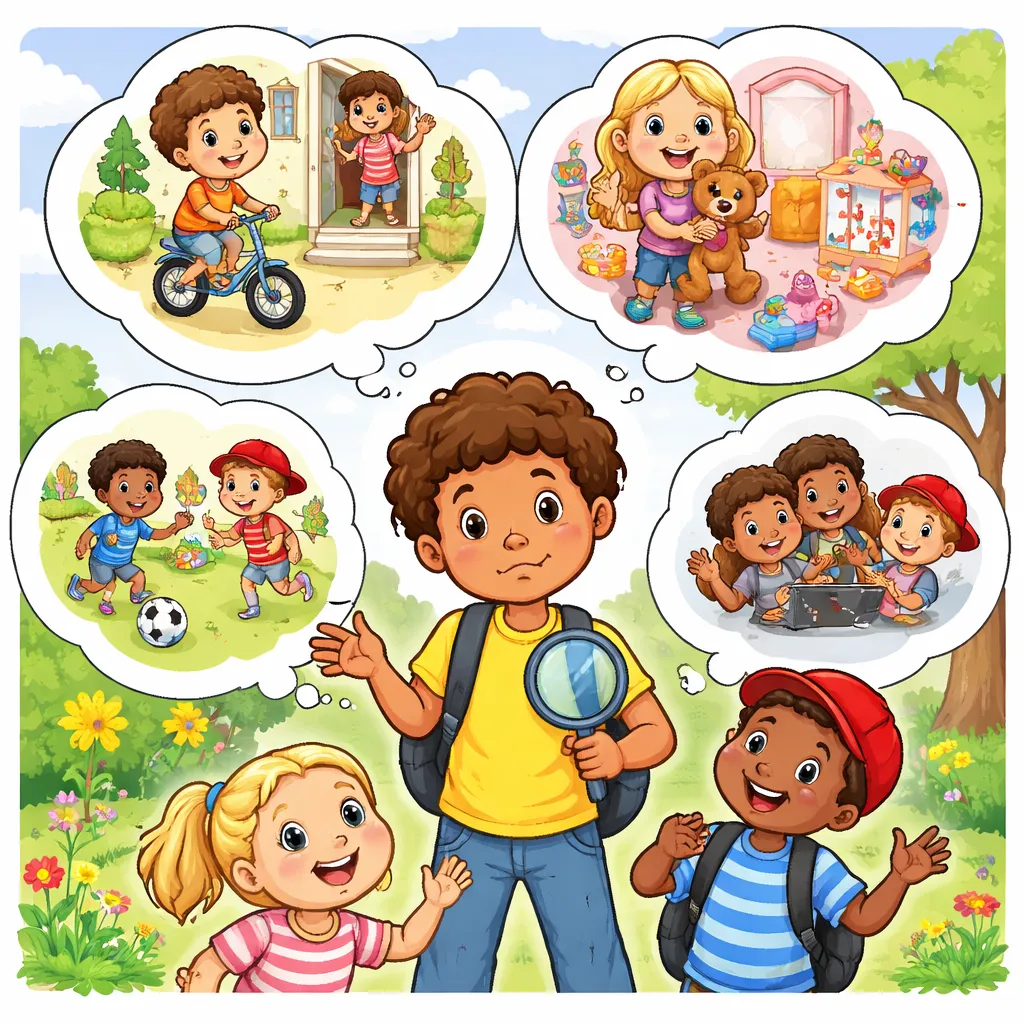

Think of your brain as a time machine. It can remember things you did again and again in the past. But you don't do them now. How do you tell that story? You use 'used to'. It is your "Memory Machine" for past habits. It shows actions that were regular then, but are not now. Let's learn how to use this cool tool.
What Is the 'Memory Machine'?
'Used to' is a special phrase. It talks about past habits or states. These actions happened many times. They were true for a long time. But they are not true now. There is a change. At home, you might say, "I used to drink milk every night." It was a habit. Now you don't. At the playground: "We used to play on the old swings." The old swings are gone. In school: "She used to sit in the front row." She sits somewhere else now. In nature: "This field used to be a forest." The field changed. The Memory Machine shows the past clearly.
Why Is This Memory Machine So Valuable?
Knowing 'used to' makes you a great storyteller of your own life. It helps your ears, your voice, your reading eyes, and your writing hand.
First, it helps your listening. Your grandpa says, "I used to walk five miles to school." You understand his childhood habit. You hear the difference from his life now. In a history show, the narrator says, "People used to write letters." You know they don't do that as much now. You catch the key idea of change over time.
Next, it makes your speaking personal and nostalgic. You can share your own growth. "I used to be afraid of the dark." This tells a story about you. You can compare then and now. "I used to hate broccoli, but now I like it." Your conversations become more interesting. People learn about your past.
Then, it gives you a reading superpower. You read a biography. It says, "The inventor used to work in a small garage." You picture the early days. You understand the journey from the past to now. This helps you understand character development in stories. You see how people and places change.
Finally, it makes your writing vivid and reflective. Your journal entries can show change. "I used to collect toy cars. Now I collect rocks." Your stories about the past are accurate. Your school projects about history are clear. Your writing shows you understand time.
How the Memory Machine Works
Let's learn the structure of 'used to'. It has three forms: affirmative, negative, and question.
First, the Affirmative Form. This says what you did in the past. The formula is: Subject + used to + base verb. Look at these examples. At home: "I used to watch cartoons every Saturday." At the playground: "He used to be the best climber." In school: "We used to have a class pet." In nature: "Dinosaurs used to live here."
Now, the Negative Form. This says what you did not do in the past. The formula is: Subject + didn't use to + base verb. It is more common than 'used not to'. Look at these examples. At home: "I didn't use to like coffee." At the playground: "She didn't use to play soccer." In school: "They didn't use to have computers." In nature: "This river didn't use to be so polluted."
Next, the Question Form. This asks about a past habit. The formula is: Did + subject + use to + base verb? Look at these examples. At home: "Did you use to have a blanket?" At the playground: "Did he use to come here often?" In school: "Did your teacher use to give a lot of homework?" In nature: "Did lions use to live in this region?"
Remember, after 'used to', we always use the base form of the verb (the infinitive without 'to').
Your Detective Tool: How to Spot It
Finding 'used to' is simple. Look for the phrase 'used to' followed by a base verb. Ask yourself: "Is this sentence about a repeated action or state in the past that is different now?" If yes, it's the Memory Machine. The pattern is: Subject + used to + base verb. In questions and negatives, look for 'did...use to'.
How to Use Your Memory Machine Correctly
Using 'used to' is about time. Use it for actions that were regular in the past. Use it for past states that were true for a time. The key is that the situation is now different. Do not use it for single past events. For that, use the simple past. The formula is: [Past Habit/State] + [Used to] + [Base Verb]. For example: "I used to visit my grandma every summer." (A habit over many summers). "I visited my grandma last summer." (One event).
Oops! Let's Fix Common Mistakes
Everyone makes mistakes. Let's fix the most common ones. The biggest mistake is spelling in the negative and question. A child might write, "I didn't used to like math." This is wrong. In negatives and questions, we use 'use to', not 'used to'. The correct way is, "I didn't use to like math." and "Did you use to like math?"
Another mistake is using 'used to' for present habits. Do not say, "I use to play piano every day." if you still do. For present habits, use the simple present. Say, "I play piano every day." Use 'used to' only for past habits that stopped.
A third mistake is confusing it with 'be used to' or 'get used to'. These are different! 'Used to' (past habit) is followed by a base verb. 'Be used to' (be accustomed to) is followed by a noun or gerund. "I am used to the noise." (Not a past habit). "I used to live in a noisy city." (A past habit).
Are You Ready for a Memory Challenge?
Test your skills. Think of three things you did regularly when you were younger but don't do now. Write sentences with 'used to'. Now, think of a place that has changed. Describe it with 'used to'. Ask a family member a question about their past using 'Did you use to...?'. Finally, write a short paragraph about "My Life Five Years Ago." Use 'used to' at least three times. Be a time traveler!
You Are Now a Memory Machine Operator
You have learned all about 'used to'. You know it is your Memory Machine for past habits and states. You can form affirmative, negative, and question sentences. You have the formula. You can spot it and use it correctly. You can even fix common spelling and usage errors. You can now share stories about the past with clarity.
You can learn many things from this article. You now know that 'used to' is used to talk about past habits and states that are no longer true. You understand how to form affirmative sentences ('I used to play'), negative sentences ('I didn't use to play'), and questions ('Did you use to play?'). You learned that 'used to' is followed by the base form of the verb. You saw the importance of showing a change between the past and the present. You also know how to avoid confusing it with other expressions like 'be used to'.
Now, try using your new knowledge in real life. Here are two fun ideas. First, play the "I Used To" game with your family. At dinner, everyone shares one thing they used to do. For example, "I used to hate vegetables." Second, be a "Family Historian." Interview an older relative. Ask them two questions using "Did you use to...?" about their childhood. Write down their answers. Share the stories. Have fun traveling back in time with your words!