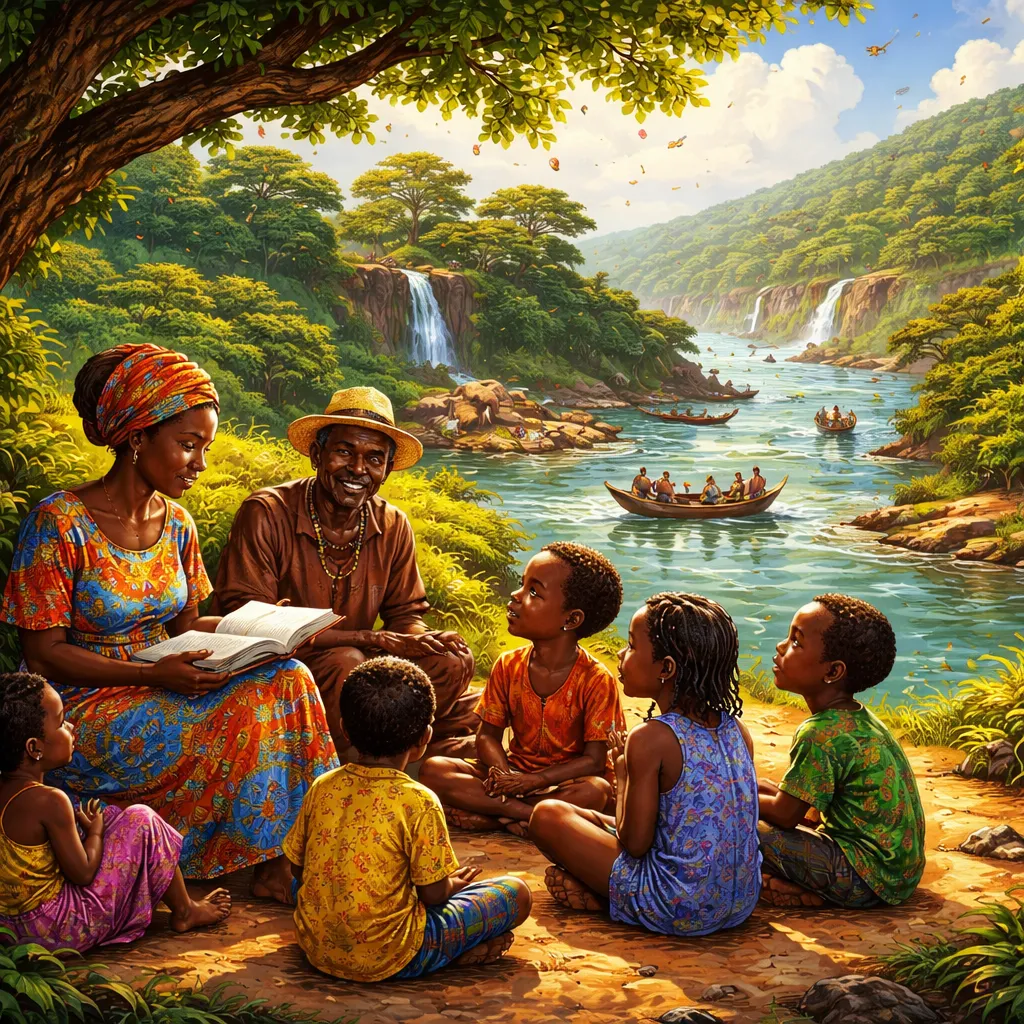

A Friendly Hello and First Impressions
Jambo! (JAHM-boh). This is a friendly "Hello" in Swahili. Merci! (mehr-SEE). This is "Thank you" in French. People use many languages here. Learning reading about Congo (Democratic Republic of the) starts with these two common words.
The Democratic Republic of the Congo is a huge country. It sits in the heart of Africa. Its shape looks like a giant, tilted bowl. The bowl holds the great Congo River. The country is in Central Africa. It has nine neighboring countries! A tiny strip touches the Atlantic Ocean. The land is full of unimaginable riches and beauty.
People call it the "Heart of Africa". This is because of its location and size. Another nickname is the "World's Geological Scandal". This is an old saying. It means the land has too many minerals. It has cobalt, copper, and diamonds. Are you ready for an adventure in the giant green heart?
Deep Dive into Culture and Stories
Echoes of History
A modern hero is Patrice Lumumba. He was the first prime minister. He led the country to independence in 1960. He believed in a united, strong Congo. His leadership was short but powerful. He is a symbol of the fight for true freedom. His story is a key part of learning reading about Congo (Democratic Republic of the). It is a story of courage and hope.
Long before that, powerful kingdoms ruled. The Kingdom of Kongo was large and organized. The Luba and Lunda kingdoms were also great. Then came a very dark time. King Leopold II of Belgium took the land as his personal property. He called it the Congo Free State. This time caused great suffering. The country later became a Belgian colony.
A Sanctuary for Our Closest Cousins
The DRC gives the world a sanctuary for great apes. It is home to the eastern lowland gorilla. It is the world's largest primate. The country also has chimpanzees and bonobos. These are our closest animal relatives. National parks protect them. This is a gift of biodiversity. It reminds us to protect all living creatures.
A Land of River and Rainforest
The geography is dominated by two things. The Congo River Basin is the second largest rainforest on Earth. The river itself is the deepest in the world. The east has the Great Rift Valley. This area has active volcanoes and tall mountains. The land varies from dense jungle to high mountains.
The climate is hot and wet. It is equatorial. Rain is frequent. The environment shapes everything. The river is a highway for boats. People fish in it. The forest provides wood, medicine, and food. People grow cassava, maize, and coffee. Houses in villages are often made of mud bricks and thatch. In cities, buildings are crowded.
A special animal is the okapi. It looks like a mix of a zebra and a giraffe. It is very shy. It lives only in the DRC rainforest. The national animal is the okapi. The national bird is the Congo peafowl. It is a beautiful, blue bird. The national flower is the orchid. Many rare types grow in the forest.
Landmarks of Fire and Water
Visit the Nyiragongo Volcano. It is in the east near Goma. It is an active volcano. It has the world's largest lava lake. The lava glows red at night. You can hike to the rim. The view is like looking into the Earth's fire. A local legend says the volcano is a sleeping giant. The giant's breath is the smoke. It is a powerful and awe-inspiring sight.
See the Congo River. It is the second longest river in Africa. It is also the deepest. It carries more water than any river except the Amazon. The river has many rapids and waterfalls. The Boyoma Falls are the longest series of waterfalls on Earth. The river is a source of life, transport, and stories. It is the country's mighty heart.
Another wonder is Virunga National Park. It is Africa's oldest national park. It is a UNESCO World Heritage site. It has glaciers, volcanoes, and plains. You can see mountain gorillas, elephants, and hippos. The park faces many dangers but rangers protect it bravely. It is a place of incredible natural beauty.
Festivals of Rhythm and Independence
The biggest national holiday is Independence Day. It is on June 30th. It marks freedom from Belgium in 1960. There is a large parade in the capital, Kinshasa. The military and dance groups perform. People wear clothes made of colorful "liputa" fabric. The national flag is everywhere. The colors are blue, red, and yellow. A yellow star represents hope.
A unique cultural event is the music scene. Kinshasa is the music capital of Africa. A music style called "Soukous" was born here. It is fast, guitar-based dance music. People dance in clubs and streets. Music is not a single day festival. It is a daily celebration of life. It brings joy even in hard times.
Food and Flavors
The national dish is Fufu and Pondu. Fufu is a stiff dough. It is made from cassava or plantain flour. Pondu is a stew of cassava leaves. The leaves are cooked with palm oil and fish. The meal is hearty and filling. People eat it with their hands. It tastes earthy, savory, and like home.
You must try Moambe Chicken. It is chicken in a rich, red sauce. The sauce is from palm nuts. It is cooked with spices. It is served with rice or fufu. Families eat it on special days. The taste is rich, nutty, and a little sweet. It is a beloved celebration dish.
A Culture of Resilience and Rhythm
Music is the soul of the DRC. Artists like Papa Wemba and Koffi Olomide are legends. Their music makes everyone dance. The guitar rhythms are complex and happy. This love for music is a central part of learning reading about Congo (Democratic Republic of the). It shows the unbreakable spirit of the people.
The country is a guardian of the "second lung of the world". The Congo Basin rainforest is vital. It absorbs carbon dioxide. It affects global weather patterns. Protecting it is a huge task. Rangers and communities work hard for this. This role is a crucial lesson for the planet.
Tips for Young Explorers
Cultural Manners Matter
Greetings are very important. Always greet people with respect. Shake hands with your right hand. A common greeting is "Jambo, habari?" (Hello, what's the news?). Ask about the person's health and family. This shows you care.
Elders are highly respected. Always greet the oldest person first. Listen when they speak. Stand up when an elder enters. Offer them your seat. This is good manners.
When eating, use your right hand. The left hand is considered unclean. Wash your hands before and after. If food is shared, take from the part near you. Always try the food offered. Compliment the cook.
A Note on Staying Safe
The DRC has areas of conflict and instability. Safety is a serious concern. Many governments advise against travel to large parts. It is very important to check official travel advisories. Travel, if it happens, requires careful planning with experts.
In secure areas, still be cautious. Do not walk alone at night. Keep valuables hidden. Do not show expensive items. Be aware of your surroundings. Always travel with a trusted guide.
A Tasty Stop
Look for "Mandazi" on the street. It is a sweet, fried doughnut. It is made from flour, sugar, and coconut milk. It is light and fluffy. People eat it for breakfast with tea. It is cheap and delicious. Eat it hot. It is soft, sweet, and satisfying.
Healthy and Happy Travels
Drink only bottled or boiled water. This is the most important rule. Do not drink tap water. Avoid ice in drinks. Brush teeth with bottled water. This keeps you healthy.
Malaria is a big risk. Take anti-malaria medicine if your doctor says. Use strong insect repellent. Wear long sleeves in the evening. Sleep under a mosquito net. This prevents bites.
The sun is very strong. Wear a hat and use sunscreen. The tropical climate is humid. Drink lots of water to stay hydrated. Wear light, breathable clothing.
Your Invitation to Explore
Start your journey with sound. Listen to Congolese soukous music. Feel the joyful, complex guitar rhythms. Try to move to the beat. Or, research the okapi. See pictures of this unique, striped animal. This is a wonderful way of learning reading about Congo (Democratic Republic of the).
Visit a natural history museum. Look for animals of the Congo Basin. See a model of a gorilla or an okapi. Imagine the dense, green rainforest. You can also listen to a speech by Patrice Lumumba. Hear his powerful words about freedom and unity.
The world is a vast, living library. Each country is a different book. The DRC's book is about a mighty river, resilient people, and ancient forests. Open it with respect. Read about its rhythms, riches, and remarkable wildlife. Your curiosity is your guide.
Families share a pot of fufu and pondu. Musicians play guitar on a Kinshasa street. Rangers protect gorillas in the misty mountains. We all recognize these acts. We love sharing meals. We find joy in music. We care for our natural world. Learning about the DRC shows us this profound connection. Our global family shares the same planet and hopes. Keep exploring, one chapter, one country, at a time. Your adventure has just begun.