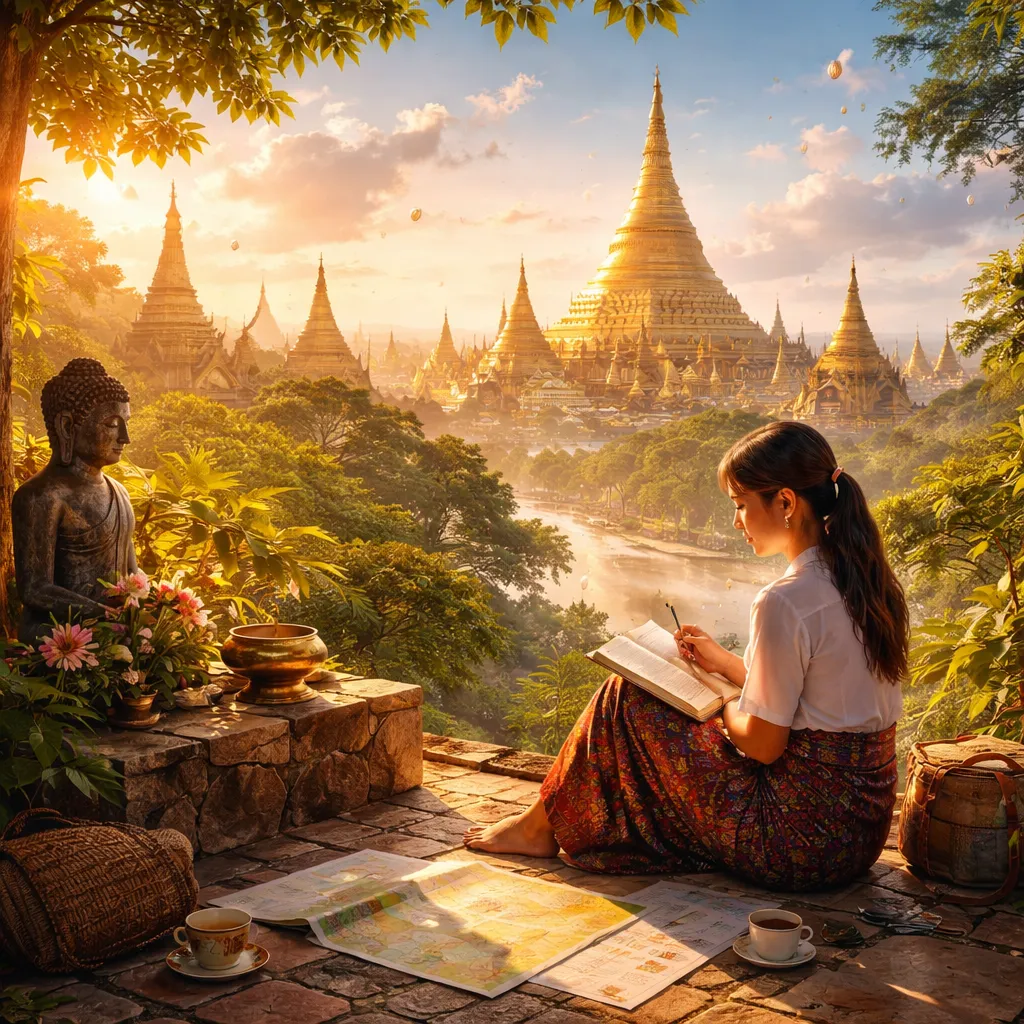

Introduction to Myanmar (Burma)
Language learning transports us to a land of golden pagodas and mighty rivers. Today we explore a Southeast Asian nation once known as Burma. This country holds thousands of ancient temples scattered across a central plain. Children will discover a land where Buddhism shapes daily life. They will learn about a river that serves as a lifeline for millions. Exploring Myanmar builds reading skills while revealing a culture of deep spirituality and natural beauty. Every fact uncovers a new wonder. Every word invites young readers to imagine this golden land.
Where Is Myanmar (Burma)?
Myanmar sits in Southeast Asia, west of Thailand and Laos. It shares borders with Bangladesh and India to the west, China to the north, and Thailand and Laos to the east. The Bay of Bengal and the Andaman Sea form its southern coastline. The capital city is Naypyidaw. The largest city is Yangon, formerly called Rangoon. The country covers over two hundred sixty thousand square miles. It ranks as the largest country in mainland Southeast Asia. The Irrawaddy River flows from north to south through the center. This great river empties into the Andaman Sea. Finding Myanmar on a map shows a large country connecting South Asia, Southeast Asia, and the Indian Ocean.
Interesting Facts About Myanmar (Burma)
Myanmar offers countless fascinating facts for young learners. It holds over two thousand ancient temples in Bagan. This vast archaeological site spreads across a plain beside the Irrawaddy River. Pilgrims and travelers have visited these temples for nearly one thousand years. Another interesting fact involves the country's name. The military government changed the name from Burma to Myanmar in 1989. Many countries and people still use both names.
Myanmar also has a unique landmark. The Shwedagon Pagoda in Yangon rises over three hundred feet. Gold leaf covers the main stupa. The tip holds diamonds and other precious gems. People believe this pagoda has stood for over two thousand years. Another fun fact involves the Irrawaddy River. This river flows over one thousand three hundred miles through the country. It serves as a highway for boats, a source of food, and a spiritual symbol.
The country also has a unique traditional art form. Puppetry with marionettes has entertained audiences for centuries. Puppeteers skillfully manipulate strings to make characters dance. Another interesting fact involves longyi. Men and women wear this traditional garment. It is a long piece of cloth wrapped around the waist. These facts show children a country of ancient temples, spiritual traditions, and rich cultural practices.
Key Vocabulary About Myanmar (Burma)
Let us build vocabulary for this Southeast Asian nation. These words help children describe what they learn.
Pagoda: a tiered tower or temple in Asian architecture.
Stupa: a dome-shaped structure containing Buddhist relics.
Monsoon: a seasonal wind bringing heavy rains.
Marionette: a puppet controlled by strings.
Longyi: a traditional wraparound skirt worn in Myanmar.
Irrawaddy: the great river flowing through Myanmar.
Pilgrim: a person who travels to a sacred place. Introduce these words with pictures and stories. Show the Shwedagon Pagoda covered in gold. Show a marionette puppet with strings. Let children say each word aloud. These vocabulary words give children the language to explore Myanmar's spiritual and cultural landscape.
Simple Sentences for Reading Practice
Short sentences help new readers build confidence. Use these sentences about Myanmar for practice.
Myanmar is a country in Southeast Asia.
The capital city is Naypyidaw.
The Irrawaddy River flows through the country.
Thousands of ancient temples stand in Bagan.
The Shwedagon Pagoda is covered in gold.
People wear longyi, a traditional garment.
Buddhism is the main religion. Read each sentence together. Let children point to the words. Encourage them to repeat after you. Use pictures to show each fact. These simple sentences prepare young readers for longer passages.
Short Reading Passage About Myanmar (Burma)
Here is a short passage for children to read together.
“Myanmar sits in Southeast Asia, bordered by India, China, Thailand, and the Bay of Bengal. The Irrawaddy River flows from the northern mountains down to the sea. It carries boats filled with people and goods. Along the river, the ancient city of Bagan spreads across the plain. Over two thousand temples rise from the earth. Some stand tall with golden spires. Others hide in the shade of old trees. Pilgrims walk among these sacred buildings. In Yangon, the Shwedagon Pagoda dominates the skyline. Gold covers its massive stupa. Diamonds and rubies sparkle at the very top. People come to pray, meditate, and enjoy the peaceful grounds. Many people wear longyi, the traditional wraparound skirt. Men and women alike wear this garment. In the evenings, families watch puppet shows. Skilled puppeteers make marionettes dance and tell stories. Myanmar holds ancient traditions in its temples, rivers, and daily life.”
Read this passage slowly together. Pause to talk about each idea. Ask children to find vocabulary words in the text. This activity builds reading fluency and deepens understanding.
Fun Questions About Myanmar (Burma)
Questions make reading interactive and engaging. Use these to start conversations with young learners.
What countries border Myanmar?
What is the capital city of Myanmar?
What river flows through the center of the country?
How many ancient temples stand in Bagan?
What is the Shwedagon Pagoda covered in?
What traditional garment do people wear in Myanmar? Let children answer in complete sentences. Encourage them to use new vocabulary. Ask them to imagine walking among the temples of Bagan. What would they see and feel? Creative questions make the topic personal and exciting.
Tips for Learning English with This Topic
Use Myanmar to create rich English learning experiences. Start with a map activity. Let children find Myanmar in Southeast Asia. Point out its neighbors and the long coastline. Discuss how the Irrawaddy River connects the country from north to south.
Next, introduce the vocabulary through a hands-on activity. Let children build a simple pagoda using blocks, clay, or paper cups. Cover it with gold or yellow paper to mimic the Shwedagon Pagoda. For puppetry, make simple marionettes using string and paper. Let children create puppet shows and tell stories.
Read the passage aloud with reverence and wonder. Let your voice reflect the ancient beauty of Bagan and the gold of Shwedagon. After reading, let children draw a scene from Myanmar. One child might draw the temples of Bagan with the Irrawaddy River nearby. Another might draw the Shwedagon Pagoda shining in gold. Let them label their drawings with vocabulary words.
Incorporate a cultural connection. Talk about Buddhism as the main religion and what pilgrimage means. Discuss how people in Myanmar show respect at pagodas. Ask children about places of peace or worship in their own community. Compare traditions.
Use music and movement to enhance the experience. Listen to traditional Burmese music with bamboo xylophones and drums. Let children move like marionettes with strings. Pretend to float down the Irrawaddy River on a boat. Physical activity reinforces learning in joyful ways.
Encourage children to share their knowledge. Let them tell a family member about the thousands of temples in Bagan. They can explain why the Shwedagon Pagoda is covered in gold. Teaching others builds confidence and deepens understanding.
Connect Myanmar to your child's world. Ask, “What special buildings have we visited?” Compare them to pagodas. Ask about rivers near you. Compare them to the Irrawaddy. These connections help children see that language learning reading is about understanding different places and spiritual traditions. By exploring Myanmar together, you give children a rich experience. They learn new words, discover a land of golden temples, and grow their love for reading. This Southeast Asian nation becomes a cherished part of their learning journey.