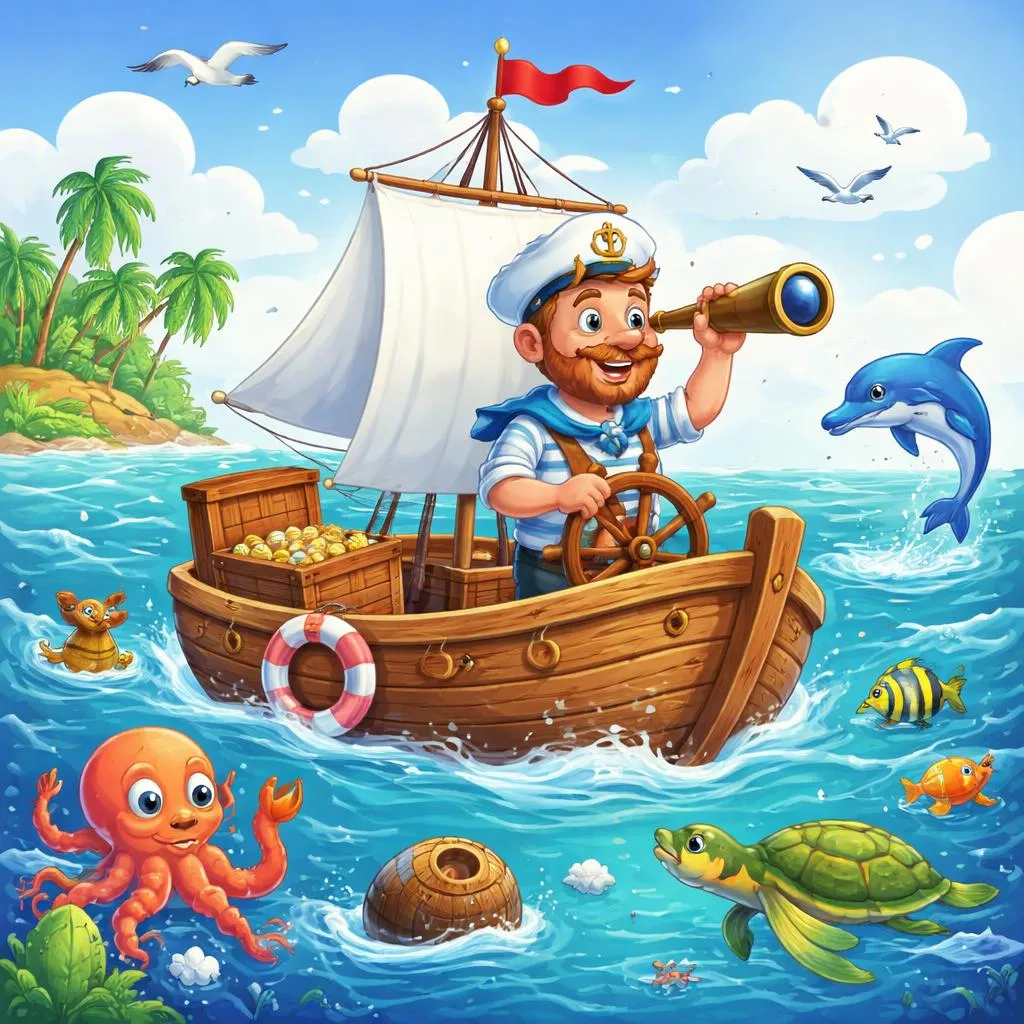

Hello, young adventurers and wonderful teachers! Today we set sail on a language journey. We will follow a brave sailor. He goes to sea. He wants to see what he can see. But what does he find? The song "A Sailor Went to Sea" is a delightful nursery rhyme. Children love its repetitive pattern. They love the clapping game that goes with it. The song teaches sea vocabulary. It builds rhythm and coordination. It sparks imagination about ocean adventures. Let us climb aboard our language ship. Let us discover this fun song together.
What Is the A Sailor Went to Sea Rhyme? "A Sailor Went to Sea" is a traditional children's song and clapping game. It tells the story of a sailor who goes to sea. He hopes to see things underwater. But each time, all he sees is the bottom of the deep blue sea. The song plays with words. It repeats "sea" and "see" which sound the same but have different meanings.
The song likely started as a sea shanty. Sailors sang while working on ships. Children adapted it into a playground clapping game. Now it is popular in classrooms everywhere. The song has a bouncy, cheerful rhythm. Children love to clap along. They love the tongue-twisting repetition.
The song teaches an important language concept. Homophones are words that sound the same but mean different things. "Sea" means the ocean. "See" means to look. The song plays with this cleverly. Children learn this concept without formal lessons. They just enjoy the wordplay.
The Lyrics of the Nursery Rhyme Let us look at the complete lyrics of "A Sailor Went to Sea."
A sailor went to sea, sea, sea, To see what he could see, see, see. But all that he could see, see, see, Was the bottom of the deep blue sea, sea, sea.
A sailor went to knee, knee, knee, To see what he could knee, knee, knee. But all that he could knee, knee, knee, Was the bottom of his deep blue knee, knee, knee.
A sailor went to chop, chop, chop, To see what he could chop, chop, chop. But all that he could chop, chop, chop, Was the bottom of the deep blue chop, chop, chop.
Some versions continue with more verses. They might use "toe" or "clap" or "spin." Each verse changes the action word. Children invent new verses themselves. This keeps the song fresh and creative.
Vocabulary Learning from the Song This playful song teaches many useful words. Let us explore them together.
Sea words: The song introduces ocean vocabulary. Sea, sailor, bottom, deep, blue. These words help children talk about the ocean. They can describe water and boats. They learn that the sea is deep and blue.
Homophones: The song teaches a important concept. "Sea" and "see" sound the same. But they mean different things. This is a fun discovery for children. They learn that English has these word pairs. They become more aware of word meanings.
Body parts: Some verses introduce body parts. Knee, toe, hand, head. Children learn these words through the song and actions. The physical connection helps memory.
Action words: The song includes action verbs. Went, see, chop, clap, spin. These are common words children use every day. Learning them in a song makes them stick.
Descriptive words: The song uses describing words. Deep, blue. These add detail to language. Children learn to describe the world around them.
Phonics Points in the Rhyme The song offers wonderful phonics practice. Let us look at some important sounds.
Listen to the long "e" sound. It appears in "sea" and "see" and "deep." The long "e" says its name. It sounds like "ee." Practice together. "S-ee." "D-ee-p." This sound appears in many words. Learning it through the song makes it memorable.
Listen to the "s" sound. It appears in "sailor" and "sea" and "see." The "s" sound is a soft, hissing sound. Practice together. "S-s-sailor." "S-s-sea." This sound appears at the beginning of many important words.
The repetition of sounds reinforces learning. Children hear the same sounds many times. They practice them through singing. This builds strong phonemic awareness. It prepares them for reading.
Grammar Patterns in the Song The song contains useful grammar patterns for young learners.
Past tense verbs: The song uses past tense throughout. "A sailor went to sea." "He could see." This tells a story about something that already happened. Children learn to use past tense naturally through the song.
Modal verbs: The song uses "could" to show ability. "He could see." This modal verb expresses possibility. Children learn to talk about what someone was able to do.
Prepositional phrases: The song uses phrases like "to sea" and "of the deep blue sea." These show direction and description. Children learn to add detail to their sentences.
Repetitive patterns: Each verse follows the same pattern. This structure helps children understand sentence construction. They can create new verses using the same grammar. "A sailor went to jump, jump, jump." This builds language creativity.
Learning Activities for the Song The song lends itself to many activities. Here are some ideas to extend learning.
Clapping Game: Teach the clapping pattern that goes with the song. Partners face each other. They clap their own hands. They clap right hands together. They clap their own hands. They clap left hands together. The pattern repeats through the song. This builds coordination and social skills. It makes the song a physical activity.
Sea Collage: Create an ocean scene. Use blue paper for the sea. Add green paper for seaweed. Draw fish and boats. Add the sailor. As children create, they use the vocabulary. "This is the deep blue sea." "Here is the sailor." This reinforces words through art.
Homophone Hunt: After learning the song, look for other homophones. Find pairs like "sun" and "son." Find "bear" and "bare." Create cards for each pair. Talk about how they sound the same but mean different things. This extends learning from the song.
New Verse Creation: Challenge children to create new verses. They choose an action word. "A sailor went to jump, jump, jump." They act it out. This builds creativity and language skills. Children feel proud of their original verses.
Printable Materials for the Song Printable resources support learning from the song. They provide visual reinforcement.
Lyrics Poster: Create a colorful poster with the full lyrics. Add simple pictures for key words. A sailor, the sea, a knee, a chopping motion. Display the poster during singing time. This supports reading development. Children begin to connect written words to the song they know.
Vocabulary Cards: Create flashcards for key vocabulary. Sailor, sea, bottom, deep, blue, knee, chop. Each card has a picture and the word. Use these for review games. Hold up a card and children do the action. Hold up a card and children sing that verse.
Homophone Cards: Create cards showing homophone pairs. One card shows the sea with the word "sea." Another card shows eyes with the word "see." Match the pairs. Talk about how they sound the same. This builds vocabulary awareness.
Coloring Pages: Create coloring pages showing scenes from the song. A sailor on a ship looking into the sea. The bottom of the sea with fish and shells. Coloring reinforces the vocabulary quietly. It gives children time to think about the song's meaning.
Educational Games for the Song Games make learning from the song even more fun.
What Can You See?: Play a guessing game. One child says, "I went to sea to see what I could see." They think of something in the ocean. Others ask questions to guess. "Is it alive?" "Is it big?" "Can you eat it?" This builds questioning skills and ocean vocabulary.
Sailor Says: Play a version of Simon Says. "Sailor says touch your knee." "Sailor says chop your hands." "Sailor says spin around." This practices following directions. It uses words from the song.
Sea Creature Hunt: Hide pictures of sea creatures around the room. Children go on a hunt to find them. When they find one, they name it. "I found a fish!" "I found a starfish!" This builds vocabulary and observation skills.
Rhyme Matching: Create cards with words from the song. Sea, see, knee, me, tree, bee. Children find words that rhyme. They make rhyming pairs. This builds phonemic awareness. It prepares children for reading.
Through this playful song, children learn about the ocean. They discover homophones. They practice rhythm and coordination. They clap and sing with friends. A sailor went to sea becomes more than a song. It becomes a language adventure. Every verse builds vocabulary and grammar. Every clap builds social connection. The song carries children away on waves of language and fun.