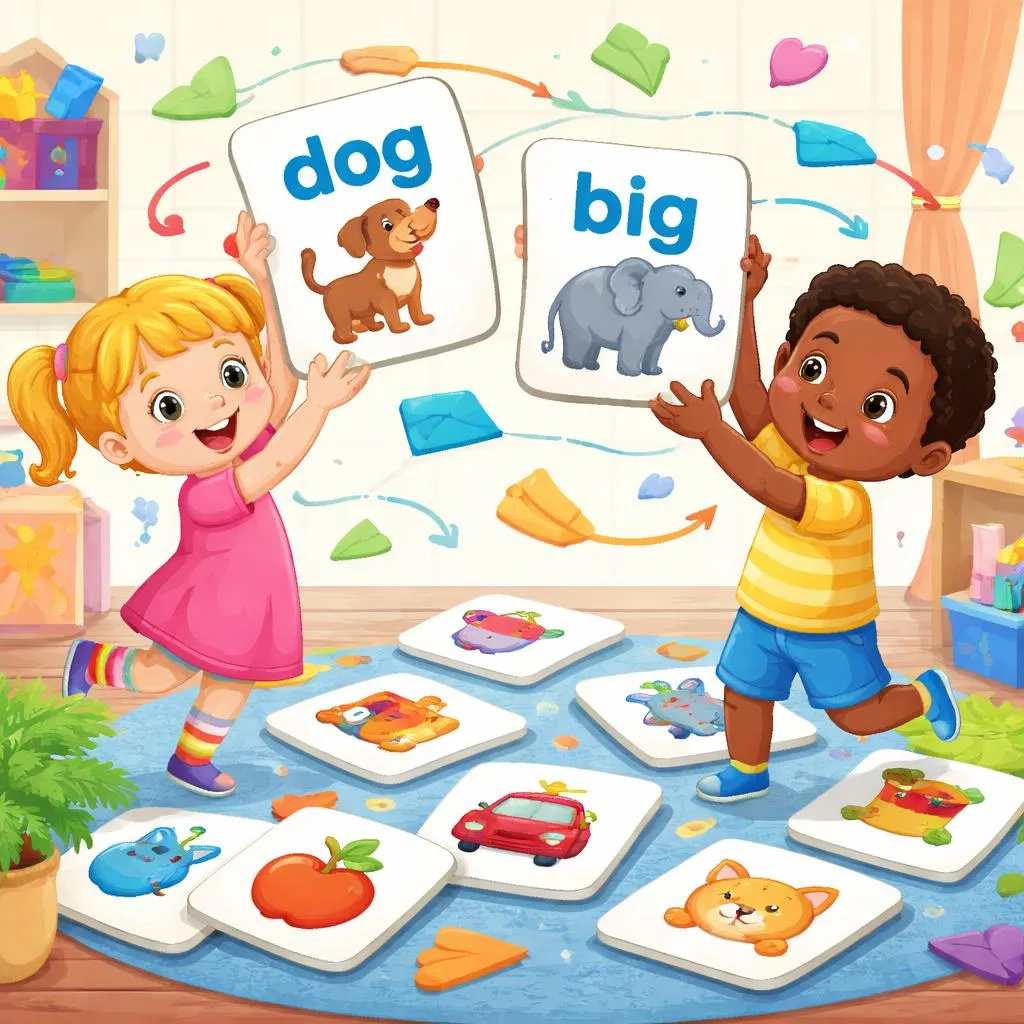

Hello, little word dancer! Do you know how to do a somersault? You turn upside down! It is a fun flip. Words can do a flip too! This flip is called inversion. Inversion is when we mix up the usual word order in a sentence. We do it for questions or to sound a little different. Today, we will learn forty fun word flips. Our guide is Flip the Fox. Flip loves to do flips and mix up word dances! He will show us inversion at home, the playground, school, and in the forest. Let's start flipping!
What Is Inversion? Inversion is a word dance flip. In a normal sentence, we say "You are here." The subject "you" comes first, then the verb "are". In a flip, we mix it. We say "Are you here?" Now the verb "Are" comes first, then the subject "you". This is the most common flip for asking questions. We also flip for other reasons, like with "here" or "there". "Here is your cup!" instead of "Your cup is here." At home, you ask "Is this my shirt?" That is a flip. At the playground, you say "Here comes the slide!" That is a flip. At school, you ask "Can I have a turn?" That is a flip. In nature, Flip says "There goes a rabbit!" "Flip asks, 'Do you see me?'" Learning these must-know inversions makes your talking lively and correct for questions.
Why Do a Word Dance Flip? Inversion is your question tool! It helps your ears listen. You know right away if someone is asking something. It helps your mouth speak. You can ask clear questions. "May I go?" It helps your eyes read. You will see flipped word order in all the questions in your books. It helps your hand write. You can write notes that ask things. Doing a word flip makes your sentences polite and curious.
What Are the Main Types of Flips? We have a few main types of word dance flips. Each one has a special starter.
First, the question flip. This is the most important. We flip the subject and a helping verb. Normal: "You can go." Flip: "Can you go?" Normal: "She is happy." Flip: "Is she happy?" Normal: "They have finished." Flip: "Have they finished?"
Next, the "here/there" flip. We start with "Here" or "There", then the verb, then the subject. Normal: "Your toy is here." Flip: "Here is your toy!" Normal: "The bus comes there." Flip: "There comes the bus!"
We also have the "so/neither" flip. This is for agreeing. "I am hungry." "So am I." This is harder. For 3-year-olds, we will start with question flips and "here/there" flips.
How Can You Spot a Word Flip? Spotting inversion is a fun game. For questions, listen for the verb or helping verb at the very start. "Are you ?" "Can I ?" "Do they ?" If the verb comes before the subject, it is a flip! For "here/there" sentences, the word "Here" or "There" starts the sentence, followed by the verb. Look at Flip's sentence. "Is that a berry?" The verb "Is" comes before the subject "that". You found a question flip! "Here is a big tree!" The word "Here" starts the sentence, then the verb "is", then the subject "tree". You found another flip.
How Do We Do a Word Flip? Doing a flip is about switching two parts. For a yes/no question, take the helping verb (is, are, can, do, have) and put it before the subject. The formula is: Helping Verb + Subject + Main Verb? "She is running." becomes "Is she running?" For a "here/there" sentence, take the phrase and move it to the front. "The ball is here." becomes "Here is the ball." Flip shows us. Normal: "You can jump." Flip: "Can you jump?" Start with making questions. It is the most useful flip.
Let's Fix Some Tricky Flips. Sometimes our flips are wobbly. Let's fix them. A common mix-up is forgetting to use the helping verb. A child might say "You are going?" with a rising voice. This sounds like a question, but the word order isn't flipped. For a clear question flip, say "Are you going?" Another mix-up is flipping when we shouldn't. In a normal telling sentence, we don't flip. "Am I happy" is a question. "I am happy" is the statement. Also, remember to change the verb to match the subject after the flip. "Does she likes it?" is wrong. The flip is "Does she like it?" The main verb goes to its simple form.
Can You Be a Flip Master? You are a great dancer! Let's play a game. The "Flip It" game. I will say a normal sentence. You flip it to make a question. "You are tired." You flip: "Are you tired?" "He can swim." You flip: "Can he swim?" Great! Here is a harder challenge. Take a "here" sentence and flip it. "The cookie is here." You flip: "Here is the cookie!" You are using must-know inversion.
Your Flip Book of 40 Must-Know Inversions. Ready to see the flip book? Here are forty wonderful word flips. Flip the Fox uses them all the time. They are grouped by type. The first line is the normal order. The second line is the flipped order.
Question Flips (Yes/No). You are my friend. Are you my friend? She is coming. Is she coming? I can help. Can I help? We are done. Are we done? They have a dog. Do they have a dog? (Note: We add "Do" as a helper). He likes cake. Does he like cake? You want more. Do you want more? It is raining. Is it raining? I am first. Am I first? You were there. Were you there?
Question Flips (With Question Words). What is that? (This is already flipped. Normal would be "That is what?" which we don't say). Where are you? (Normal: You are where?) When is lunch? (Normal: Lunch is when?) Why are you sad? (Normal: You are sad why?) How can I help? (Normal: I can help how?) Who is there? (Normal: There is who?) Which one do you want? (Normal: You want which one?) Whose toy is this? (Normal: This is whose toy?)
"Here" and "There" Flips. Your book is here. Here is your book! The cat is there. There is the cat! My mom is here. Here is my mom! The bus is there. There is the bus! Your snack is here. Here is your snack! The ball is there. There goes the ball! The sun is here. Here comes the sun! The dog is there. There goes the dog!
Negative Adverb Flips (A Little Harder). I have never seen that. Never have I seen that! (This is for drama). She will not go. Not will she go. (We usually say "She will not go").
Question Tags (A Mini Flip at the End). You are happy, aren't you? It is fun, isn't it? You can swim, can't you? He is fast, isn't he?
So/Neither Agreement Flips. I am hungry. So am I. I like apples. So do I. I can't fly. Neither can I. I don't like bugs. Neither do I.
These forty sentences are your must-know inversions. Practice flipping your word dance!
Making Your Questions Clear and Lively. You did it! You are now familiar with inversion. You know inversion is a word dance flip. It mixes up the usual word order. You flip to ask questions. You flip with "here" and "there" for emphasis. You know how to spot them and make them. Flip the Fox uses inversion to ask questions and point things out in the forest. Now you can too! You can ask clear questions. You can make your sentences sound exciting. Your talking will be correct and full of curiosity.
Here is what you can learn from our dance adventure. You will know what inversion is. You will understand that it's often used for questions. You can flip a statement into a yes/no question. You can identify inverted sentences. You have a flip book of forty essential inversion examples.
Now, let's do some life practice! Your mission is today. Be a word flipper. Ask three questions using inversion. Ask your grown-up: "Are you ready? Can we play? Is this my cup?" Try one "here" flip: "Here is my teddy bear!" You just used inversion four times! Keep practicing your fun word flips. Have fun, little dancer!