
What is the hardest language to learn?
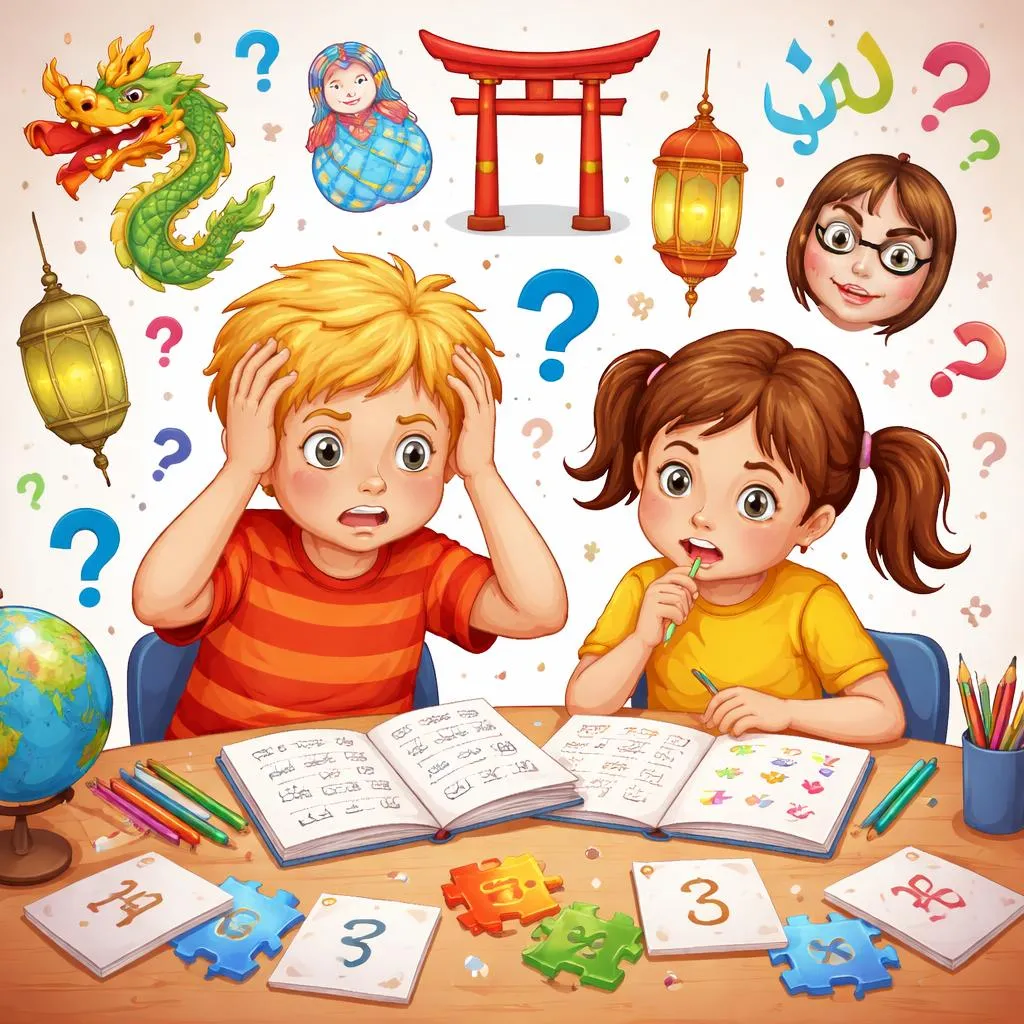
Hello, curious linguists. Today, we are going to explore a very interesting question. Many people ask, "What is the hardest language to learn?" This is a fun puzzle, but the answer is not simple. It is not like saying one mountain is the tallest. For a child who speaks English, the hardest language depends on what makes it different from English.
Think of languages like different kinds of puzzles. A puzzle that looks a little like one you have done before might be easier to start. A puzzle with completely new shapes and rules might be harder, but also more exciting. There is no single hardest language in the world for everyone. But there are languages that are famous for being big, exciting challenges for English speakers. They are like the expert-level puzzles of the language world. Let's see what makes them so interesting and tough.
Meaning and explanation
When we talk about the hardest language to learn, we are really talking about difference. The biggest challenge comes from how different a new language is from the one you already know. For a brain that thinks in English, a language that works in a totally new way is a bigger puzzle to solve.
The difficulty can come from many places. It might be a new alphabet or writing system that looks like art. It might be sounds your mouth has never made before. It might be grammar rules that feel backwards or have many, many parts to remember. It might be a culture that thinks about the world in a different way, and the language reflects that.
It is also important to remember that "hard" is not bad. Climbing a tall mountain is hard, but the view from the top is amazing. Learning a tough language is a big adventure. It takes more time, more practice, and a lot of patience. Every language is a beautiful and smart way to communicate. Some are just built from a very different blueprint than English.
Categories or lists
Let's look at some languages that are often called the hardest to learn for English speakers. We will group them by what makes their puzzle so special.
Languages with a Different Writing System. These languages do not use the ABCs. Learning to read and write is a huge first step. Chinese (Mandarin): It uses thousands of characters. Each one is a small picture that stands for a word or idea. You must memorize the shape and meaning of each one. Plus, it is a tonal language. Your voice pitch (high, low, rising, falling) changes the meaning of a word. "Ma" can mean "mother," "horse," "hemp," or "scold" depending on your tone.
Arabic: Its beautiful script is written from right to left. Letters change shape depending on if they are alone, at the start, middle, or end of a word. It also has sounds made deep in the throat that are new for English speakers.
Japanese: It uses three different writing systems at once. One is Kanji (borrowed Chinese characters). Two are Kana, which are syllabaries for sounds. Learning to read means mastering all three systems, which is a massive task.
Languages with Very Complex Grammar. These languages have many rules for changing words to show their job in a sentence. Russian: It uses the Cyrillic alphabet, which is new. But the bigger challenge is grammar. Nouns, adjectives, and pronouns change their endings (this is called "case") based on their role. There are six main cases to learn. Word order is very free, which can be confusing.
Hungarian: This language is famous for its complex grammar. It can have many cases (some say over 15). It adds many little bits (suffixes) to the end of root words to create long, detailed meanings. The vocabulary is also very different from English.
Finnish: Like Hungarian, it has many grammatical cases. Words can get very, very long as you add suffixes. Its vocabulary is not related to English, Latin, or Greek, so most words are completely new.
Languages Isolated from English. These come from a completely different language family and share almost no history with English. Korean: It has a brilliant and simple alphabet called Hangul. But the grammar is very different. Sentences are Subject-Object-Verb, so the verb comes last. It also has complex levels of formality and honorifics (special ways to show respect) that change how you speak to different people.
Basque: Spoken in parts of Spain and France, it is a "language isolate." This means it is not related to any other known language in the world. Its structure and vocabulary are completely unique, making it a fascinating mystery for linguists and a huge challenge for learners.
Daily life examples
You can think about language difficulty in your own world. Here are two ways.
In a Diverse Classroom or Neighborhood: Imagine you have a new friend from China. Writing their name in characters might look like drawing. Saying "Hello" (Nǐ hǎo) requires a tone your voice might not be used to. This makes you appreciate the challenge they face learning English, and the challenge you would face learning Mandarin. It is not about one being better, just very different. This shows that the hardest language to learn is often the one most different from your own.
Trying to Read a Menu or Sign in a Different Script: Have you ever seen a restaurant menu in Arabic or Japanese? The writing might look beautiful, but you cannot sound out the words because the letters are different. You might see a sign in a video game with Cyrillic letters. You know it says something important, but it is a code you have to crack. These small moments show what the first big hurdle is like for learners of these languages: cracking the writing code.
Printable flashcards
Let's make learning about tough languages an adventure with printables. Create "Language Explorer Cards."
Each card features one challenging language. The front has the country's flag and the language's name in its own script. The back has a "Fun Fact" and a "Super Learner Challenge." For Arabic, the Fun Fact is: "Arabic is written from right to left!" The Challenge is: "Try writing your name from right to left. How does it feel?" For Mandarin, the Fun Fact is: "The word for 'mother' is 'mā' with a high, flat voice." The Challenge is: "Can you say 'mā' with a high, flat voice, then 'mǎ' (horse) with a low, dipping voice?" Kids collect these cards, celebrating the differences.
Another idea is a "Language Passport of Grit." Print a small passport-style booklet. Each page is for a "hard" language. The page has space to draw the flag, write "Hello" in that language, and get a "stamp" (a sticker or drawn stamp) for attempting the Super Learner Challenge from the explorer card. This turns the "hardest language to learn" idea into a series of fun, achievable mini-missions.
Learning activities or games
Let's play games that celebrate the challenge. First, play "Super Learner Challenge Stations." Set up stations around the room for different languages. Chinese Station: Practice drawing three simple characters (人 for person, 山 for mountain, 口 for mouth) on big grids.
Arabic Station: Practice writing your name from right to left, connecting the letters.
Russian Station: Match Cyrillic letters (A, B, B, Γ) to their English sounds (A, V, B, G).
Tone Station: Listen to high, low, rising, and falling tones and try to copy them with your voice.
Kids rotate, try each challenge, and get a stamp. The goal is joyful exposure, not mastery.
Try the "Codebreaker" game. Create a simple message using symbols (for character-based languages) or a new alphabet (like a simple substitution cipher for Cyrillic). Give kids a "decoder key." Their mission is to work together to crack the code and read the message. This simulates the exciting feeling of deciphering a new writing system, which is the first step in tackling the hardest language to learn.
Create a "World Greetings Relay." Teach kids how to say a cheerful "Hello" in a few of these languages: Nǐ hǎo (Mandarin), Marhaba (Arabic), Zdravstvuyte (Russian), Annyeonghaseyo (Korean). Form teams. One runner from each team must sprint to the other side, correctly say one greeting to a judge, and run back to tag the next teammate. Mixing physical activity with practicing new, tricky sounds makes it a fun, team-based way to engage with the challenge. It shows that even the hardest language to learn starts with a simple, friendly "hello."