
Start! Find a Pair of 'Water Twin' Words
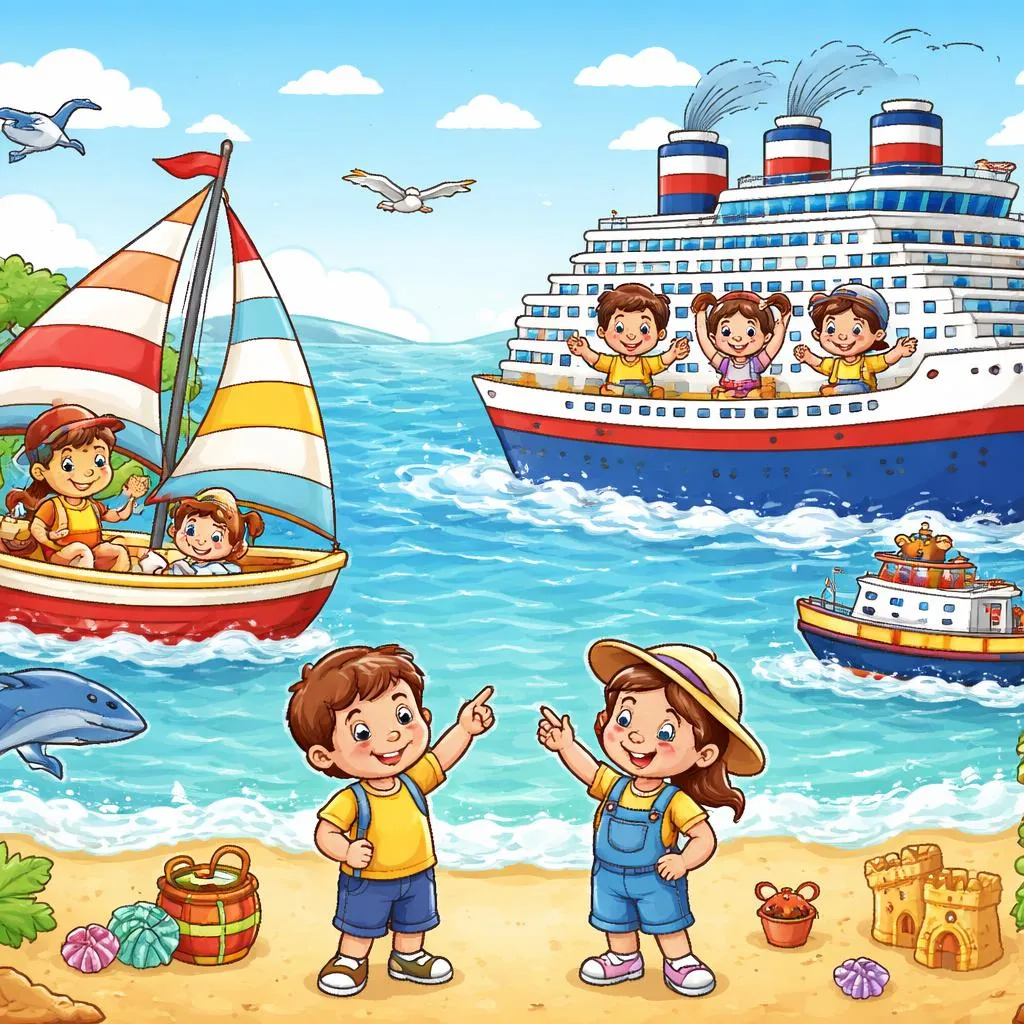
Hello, word explorer! Have you ever seen a vehicle on the water? It floats and moves. What do you call it? You might say "boat." Now, imagine a huge, huge one on the ocean. It is like a floating building. Is that a boat too? Maybe it is a "ship." They are both water vehicles. Are they the same? This is a fun water puzzle. Today we explore a word pair. We explore boat and ship. They are like two different sizes of water friends. One is small. One is giant. Knowing the difference is a superpower. Your water stories will be clear and smart. Let us start our word sail!
Be a Language Observer now. Our first clue is at home. You watch a movie about pirates. They sail a huge wooden vessel. Your brother says, "That's a pirate ship!" Then, you see a man fishing on a lake. He is in a small, open vessel. Your dad says, "He has a fishing boat." They are both on water. But are they the same? Let us test with two sentences.
"They rowed the small boat across the calm lake." This is about a small, personal vessel. "The massive cargo ship carried containers across the ocean." This is about a huge, working vessel.
They both describe water vehicles. But one feels small and personal. One feels enormous and powerful. Your observation mission starts. Let us sail into their word sea.
Adventure! Sail Into the Word Sea
Feel the Word's Size and Vibe!
Feel the word boat. It is a small, personal word. It feels like a fun day on the water. It is for fishing, rowing, or short trips. The word ship is a huge, powerful word. It feels like a long journey. It is for carrying cargo or many people. Boat is the small swimmer. Ship is the giant whale. One is for a pond. The other is for the ocean. Let us see this at school.
In a story about a family trip, you read: "We rented a boat for the afternoon." This sounds like a fun, short activity. In a geography lesson, you learn about trade. "Goods travel by ship between continents." This sounds serious and large-scale. Saying "goods travel by boat" is less common for ocean travel. The feeling of size is different.
Compare Their Purpose and Where They Go!
Think about a bicycle and a massive truck. The word boat is the bicycle. It is for personal use, recreation, or small jobs. It often stays near the coast. The word ship is the massive truck. It is for commercial work, long voyages, and heavy loads. It crosses oceans. Their purpose is a big clue. A boat you might own. A ship is run by a company and a crew. Let us test this on the playground.
You and a friend sit close together, pretending to row. You say, "We are in a boat!" A group of friends line up to form a huge vessel. They say, "We are a ship carrying passengers!" The word boat suggests a small, simple activity. The word ship suggests a large, organized operation. The playground shows the difference.
Meet Their Best Word Friends!
Words have favorite water partners. The word boat likes recreational and small words. It teams up with 'row', 'sail', 'speed', 'life', and 'house'. You go boating. You see a boat house. The word ship likes commercial and large words. It teams up with 'cargo', 'battle', 'space', 'wreck', and 'yard'. He works in a shipyard. The ship sank in a shipwreck. Their partners are different. Let us go back to school.
In a physical education class, you might do the boat pose in yoga. This is an exercise. In a history class, you study the sinking of a famous ship. This is a major event. You would not usually study the "sinking of a famous boat." The word friends set the scale.
Our Little Discovery!
We sailed the word oceans and lakes. We made a clear discovery. The words boat and ship are different water vehicles. The main difference is size and purpose. The word boat usually describes a smaller vessel. It is for personal use, fishing, or short trips. The word ship usually describes a very large vessel. It is for long voyages, carrying cargo, or many passengers. Boat is the small, personal friend. Ship is the giant, working machine. One is for a day out. The other is for a months-long journey.
Challenge! Become a Nautical Word Expert
"Best Choice" Challenge!
Let us look at two water scenes. Read each one. Pick the champion word. Scene one: You are at a summer camp. You and a friend paddle a small, open vessel on the lake. Your instructor says, "Good job rowing the ______!" Is it Boat or Ship? The champion is Boat! A small, paddled vessel is a boat. Scene two: You visit a harbor. You see a gigantic vessel that carries thousands of cars. The guide says, "That is a car carrier ______." Is it boat or ship? The champion is ship! A vessel that large is always a ship. Excellent!
"My Sentence Show"!
Now, create your own sentences. Here is a fun scene: Imagine a quiet, sunny river. Use the word boat in one sentence. Now imagine a stormy, vast ocean. Use the word ship in another. Try it! Here is an example. Sentence one: "The wooden boat floated gently down the river." Sentence two: "The mighty ship battled through the huge waves." See the difference? The first is peaceful and small-scale. The second is powerful and large-scale.
"Eagle Eyes" Search!
Can you find the word that needs help? Read this sentence: "My uncle works on a large fishing boat that stays at sea for months and has a crew of fifty people." Hmm. This is a tricky one. A vessel that large, with a crew of fifty, is more likely called a fishing ship. A fishing boat is usually smaller. A better sentence is: "My uncle works on a large fishing ship that stays at sea for months and has a crew of fifty people." You fixed it!
What a wonderful voyage through words! You started as a curious sailor. Now you are a word captain. You know the secret of boat and ship. You can feel their different sizes and vibes. You see their purpose and where they go. You know their best word friends. This is a real language superpower.
You can learn amazing things from this article. You now know that a 'boat' is usually a smaller water vessel for personal use, fishing, or short trips. You understand that a 'ship' is a very large water vessel for long voyages, carrying cargo, or many passengers. You can explain that the main difference is size and what the vessel is used for. You learned the terms 'boating' and 'spaceship'.
How can you use this today? It is easy and fun. Next time you are near water, be a detective. Is the vessel small, like for fishing or rowing? It is likely a boat. Is it enormous, like a cruise liner or a container carrier? It is definitely a ship. Look at pictures of historical voyages. Were they in boats or ships? Draw two pictures. Draw a small boat on a lake. Draw a giant ship on the ocean. You are using your new skill every day.
Keep your explorer eyes on the water and on words. The world is full of amazing vehicles. You are learning to name them correctly. Great work, word expert. Your English journey is sailing smoothly with every new word pair you discover!What Is the Fun and Simple Difference Between a Boat and a Ship for Kids to Learn? Vocabulary, English Learning, Children, Grammar, Synonyms, Transportation
Start! Find a Pair of 'Water Twin' Words
Hello, word explorer! Have you ever seen a vehicle on the water? It floats and moves. What do you call it? You might say "boat." Now, imagine a huge, huge one on the ocean. It is like a floating building. Is that a boat too? Maybe it is a "ship." They are both water vehicles. Are they the same? This is a fun water puzzle. Today we explore a word pair. We explore boat and ship. They are like two different sizes of water friends. One is small. One is giant. Knowing the difference is a superpower. Your water stories will be clear and smart. Let us start our word sail!
Be a Language Observer now. Our first clue is at home. You watch a movie about pirates. They sail a huge wooden vessel. Your brother says, "That's a pirate ship!" Then, you see a man fishing on a lake. He is in a small, open vessel. Your dad says, "He has a fishing boat." They are both on water. But are they the same? Let us test with two sentences.
"They rowed the small boat across the calm lake." This is about a small, personal vessel. "The massive cargo ship carried containers across the ocean." This is about a huge, working vessel.
They both describe water vehicles. But one feels small and personal. One feels enormous and powerful. Your observation mission starts. Let us sail into their word sea.
Adventure! Sail Into the Word Sea
Feel the Word's Size and Vibe!
Feel the word boat. It is a small, personal word. It feels like a fun day on the water. It is for fishing, rowing, or short trips. The word ship is a huge, powerful word. It feels like a long journey. It is for carrying cargo or many people. Boat is the small swimmer. Ship is the giant whale. One is for a pond. The other is for the ocean. Let us see this at school.
In a story about a family trip, you read: "We rented a boat for the afternoon." This sounds like a fun, short activity. In a geography lesson, you learn about trade. "Goods travel by ship between continents." This sounds serious and large-scale. Saying "goods travel by boat" is less common for ocean travel. The feeling of size is different.
Compare Their Purpose and Where They Go!
Think about a bicycle and a massive truck. The word boat is the bicycle. It is for personal use, recreation, or small jobs. It often stays near the coast. The word ship is the massive truck. It is for commercial work, long voyages, and heavy loads. It crosses oceans. Their purpose is a big clue. A boat you might own. A ship is run by a company and a crew. Let us test this on the playground.
You and a friend sit close together, pretending to row. You say, "We are in a boat!" A group of friends line up to form a huge vessel. They say, "We are a ship carrying passengers!" The word boat suggests a small, simple activity. The word ship suggests a large, organized operation. The playground shows the difference.
Meet Their Best Word Friends!
Words have favorite water partners. The word boat likes recreational and small words. It teams up with 'row', 'sail', 'speed', 'life', and 'house'. You go boating. You see a boat house. The word ship likes commercial and large words. It teams up with 'cargo', 'battle', 'space', 'wreck', and 'yard'. He works in a shipyard. The ship sank in a shipwreck. Their partners are different. Let us go back to school.
In a physical education class, you might do the boat pose in yoga. This is an exercise. In a history class, you study the sinking of a famous ship. This is a major event. You would not usually study the "sinking of a famous boat." The word friends set the scale.
Our Little Discovery!
We sailed the word oceans and lakes. We made a clear discovery. The words boat and ship are different water vehicles. The main difference is size and purpose. The word boat usually describes a smaller vessel. It is for personal use, fishing, or short trips. The word ship usually describes a very large vessel. It is for long voyages, carrying cargo, or many passengers. Boat is the small, personal friend. Ship is the giant, working machine. One is for a day out. The other is for a months-long journey.
Challenge! Become a Nautical Word Expert
"Best Choice" Challenge!
Let us look at two water scenes. Read each one. Pick the champion word. Scene one: You are at a summer camp. You and a friend paddle a small, open vessel on the lake. Your instructor says, "Good job rowing the ______!" Is it Boat or Ship? The champion is Boat! A small, paddled vessel is a boat. Scene two: You visit a harbor. You see a gigantic vessel that carries thousands of cars. The guide says, "That is a car carrier ______." Is it boat or ship? The champion is ship! A vessel that large is always a ship. Excellent!
"My Sentence Show"!
Now, create your own sentences. Here is a fun scene: Imagine a quiet, sunny river. Use the word boat in one sentence. Now imagine a stormy, vast ocean. Use the word ship in another. Try it! Here is an example. Sentence one: "The wooden boat floated gently down the river." Sentence two: "The mighty ship battled through the huge waves." See the difference? The first is peaceful and small-scale. The second is powerful and large-scale.
"Eagle Eyes" Search!
Can you find the word that needs help? Read this sentence: "My uncle works on a large fishing boat that stays at sea for months and has a crew of fifty people." Hmm. This is a tricky one. A vessel that large, with a crew of fifty, is more likely called a fishing ship. A fishing boat is usually smaller. A better sentence is: "My uncle works on a large fishing ship that stays at sea for months and has a crew of fifty people." You fixed it!
What a wonderful voyage through words! You started as a curious sailor. Now you are a word captain. You know the secret of boat and ship. You can feel their different sizes and vibes. You see their purpose and where they go. You know their best word friends. This is a real language superpower.
You can learn amazing things from this article. You now know that a 'boat' is usually a smaller water vessel for personal use, fishing, or short trips. You understand that a 'ship' is a very large water vessel for long voyages, carrying cargo, or many passengers. You can explain that the main difference is size and what the vessel is used for. You learned the terms 'boating' and 'spaceship'.
How can you use this today? It is easy and fun. Next time you are near water, be a detective. Is the vessel small, like for fishing or rowing? It is likely a boat. Is it enormous, like a cruise liner or a container carrier? It is definitely a ship. Look at pictures of historical voyages. Were they in boats or ships? Draw two pictures. Draw a small boat on a lake. Draw a giant ship on the ocean. You are using your new skill every day.
Keep your explorer eyes on the water and on words. The world is full of amazing vehicles. You are learning to name them correctly. Great work, word expert. Your English journey is sailing smoothly with every new word pair you discover!