
What is english derived from?
Hello, word detectives. Today, we are going on a wonderful trip back in time. We are going to ask a big question. What language is English derived from. The word "derived" means it comes from, or has its roots in, another language. English is like a big, beautiful soup. Many different languages went into the pot to make the English we speak today.
The main ancestor, the biggest ingredient, is a language called Old English. This was spoken over a thousand years ago by tribes in what is now England. But that is not the whole story. Other languages came and added their own flavors. Latin, Old Norse, and French all played a big part. So, English is not derived from just one language. It is a wonderful mix. Let's find out where all these words came from.
Meaning and explanation
So, what does it mean to say a language is derived from another. Think of it like a family tree. A child has features from a mother and a father. A language can have features from a "parent" language. Words, sounds, and grammar rules are passed down and change over a very long time.
The main language that English is derived from is part of the Germanic branch of a huge family called Indo-European. This means English is a cousin to languages like German and Dutch. But because of history—invasions, kings, trade, and exploration—English borrowed thousands of words from other language families too. This mixing makes English very rich and sometimes surprising. It is a language that loves to collect new words from everywhere.
Categories or lists
Let's look at the main languages that English is derived from or has borrowed from heavily. This shows the mix in our word soup.
Old English (Anglo-Saxon): This is the core. It gives us our most common, everyday words. Words for people and family: man, woman, child, mother, father.
Words for nature: sun, moon, day, water, house, tree.
Short, strong verbs: be, have, do, go, see, eat, drink, sleep, fight.
Latin: The language of the Romans. It came first with the Romans, then later through the Church and science. Church and learning words: altar, priest, school, master.
Fancy and scientific words: aquarium, dictionary, solar, lunar, medicine.
Old Norse (Viking language): The Vikings came and settled, adding their words. Everyday words: sky, egg, knife, leg, skin, they, them, their.
Action words: call, take, get, scare.
Norman French: After 1066, French was the language of kings and courts for centuries. Government and law: court, judge, jury, prison, parliament.
Fancy food: beef, pork, mutton, sauce (while the animal names cow, pig, sheep are from Old English!).
Art and culture: art, music, poetry, beauty, color.
Daily life examples
You can be a word historian in your own life. Here are two places to look for clues about what language English is derived from.
Look at the Names of the Days of the Week: These are a perfect example. Most are named after old Germanic gods. Sun-day, Moon-day, Tiw's-day (god of war), Woden's-day (chief god), Thor's-day (god of thunder), Frigg's-day (goddess of love), Saturn-day (a Roman god). Just by saying the days, you are speaking history from Old English and Latin.
At the Supermarket, Look at Meat Counters: This shows the Norman French influence. The live animals have Old English names: cow, pig, sheep. But the meat from them, served at the noble's table, has French names: beef (from French boeuf), pork (from porc), mutton (from mouton). This is a living history lesson in your local store.
Printable flashcards
Printable flashcards can make this history adventure come alive. Create a "Word Origin" detective cards.
Each card has a modern English word on the front. On the back, it shows which language it came from and the old word. Front: "SKY". Back: "From Old Norse: 'ski' meaning cloud." Front: "PORK". Back: "From Norman French: 'porc' meaning pig." Kids can sort the cards into piles by origin language. This turns vocabulary building into a historical puzzle.
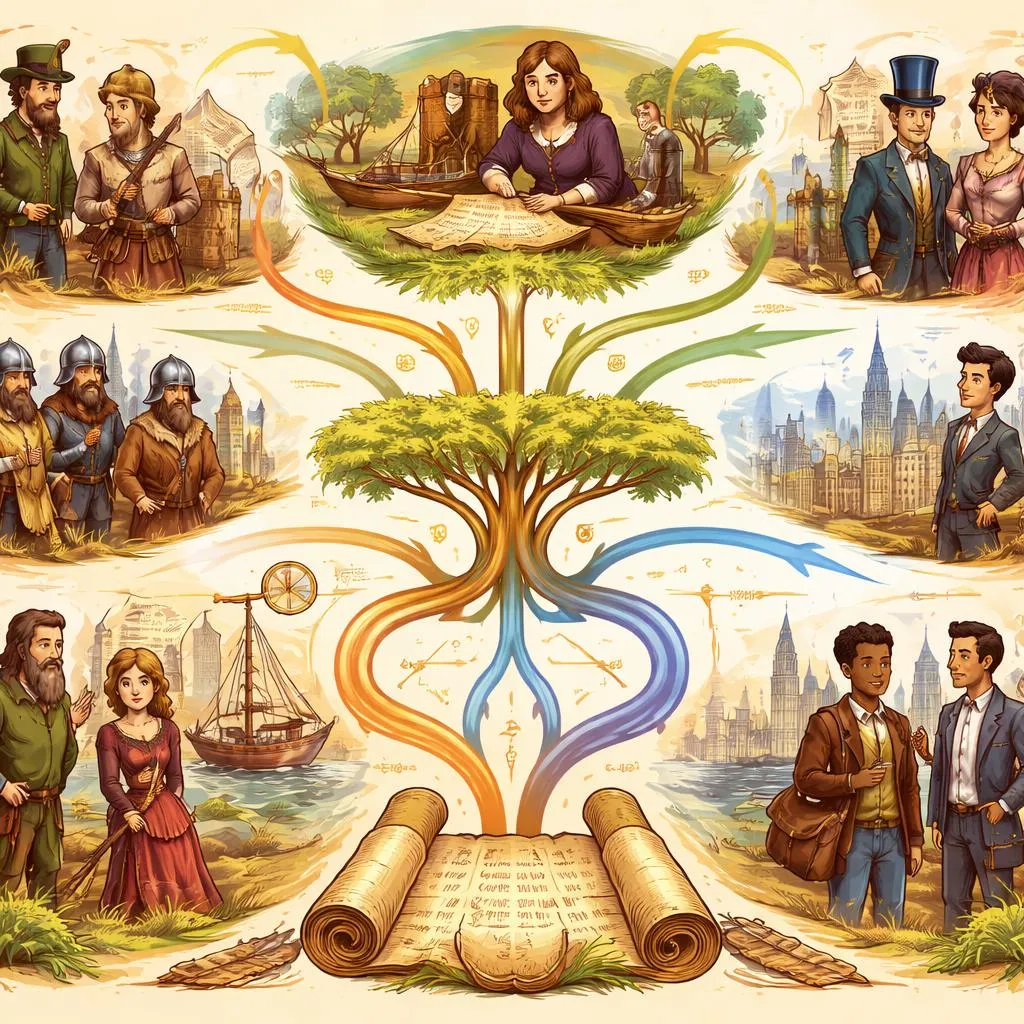
Another fun idea is a "Language Family Tree" poster. Print a large tree. The roots are labeled "Proto-Indo-European." A big branch is "Germanic." On that branch, have a leaf that says "Old English." From Old English, a branch grows to "Modern English." Then, show other branches reaching in with arrows labeled "Latin," "Old Norse," "French" adding leaves (words) to the English branch. This gives a powerful visual of how English is derived from and influenced by many sources.
You can also make a "History of English Timeline" for the wall. Mark key dates: 450 AD (Old English begins), 1066 (Norman French invasion), 1400s (Chaucer's Middle English). Add pictures and example words from each period. Kids can add new words they discover to the timeline.
Learning activities or games
Let's play "Word Origin Detective." Provide a list of common words: house, beef, they, school, sky, mountain. Give kids reference sheets showing common origins. Their job is to investigate and decide if each word is likely from Old English, Latin, Old Norse, or French. They can present their "case" for each one. "I think 'house' is Old English because it's a simple, everyday word."
Try the "Vocabulary Bingo" with a twist. Create bingo cards with English words. The caller doesn't say the word. Instead, they give a clue about its origin. "I'm thinking of a word for meat that comes from a French word for pig." Players must find "pork" on their card. This links the word to its history.
Create a "Make Your Own Word" activity. Explain that languages create new words by mixing old ones. "Television" = "tele" (Greek for far) + "vision" (Latin for sight). Challenge kids to invent a new object and give it a name by blending roots from different languages that English is derived from. They can draw it and explain the name. "This is a 'lunawalker' (luna=moon, walker=English) for walking on the moon!" This creative activity celebrates the mixed-up, inventive spirit of the English language itself.