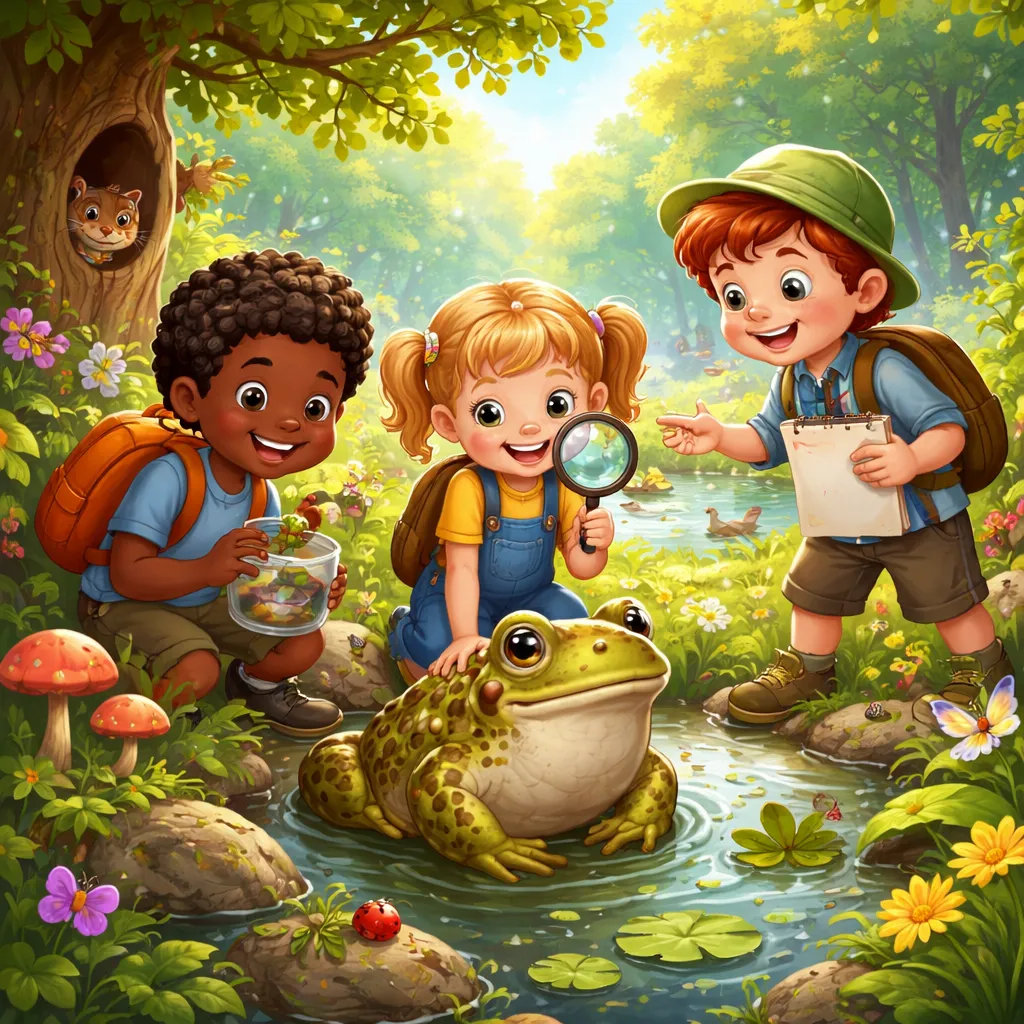

What Is This Animal?
A toad is a close relative of the frog. It has dry, bumpy skin. Toads often look like they are wearing tiny warts. They do not have smooth skin like frogs. Their legs are shorter. They prefer to walk or take small hops instead of making long jumps.
Toads are also amphibians. They begin life in water. As adults, they spend most of their time on land. They come back to water only to lay eggs. Toads have a wide, flat body. Their head is broad. They have a wide mouth that looks like a gentle smile.
Many people mistake toads for frogs. But toads are different. They have a sturdy shape. They move slowly. They do not leap far. Toads live in gardens, forests, and fields. They like places with soft soil where they can dig. Children often spot toads hiding under leaves or logs.
Toads have a calm nature. They do not move quickly. They sit quietly and watch the world. This makes them easy to observe. For children, toads are a gentle introduction to wildlife. They show us that not all animals need to be fast or flashy to be interesting.
English Learning About This Animal
Let us learn the English word toad. We say it like this: /toʊd/. The t sound comes from the tip of the tongue touching the top of the mouth. The oa makes a long o sound, like in “boat.” The d is a soft ending. Say it together: toad. Try it three times. Toad. Toad. Toad.
Now let us learn words about a toad’s body. The skin is dry and bumpy. The warts are the small bumps on the skin. The eyes have golden circles around them. The legs are short and strong for walking. The feet do not have much webbing. The parotoid gland is a large bump behind each eye. This is a special part of the toad.
There is a famous saying about toads. In old stories, people said, “Toads have jewels in their heads.” This came from the belief that toads carried a special stone inside their skull. Today we know it is a story. But the saying teaches us to look for hidden treasures in unexpected places. Another gentle proverb is, “A toad does not forget the way to the pond.” This means living things remember where they belong.
These English words give children new ways to describe nature. When they learn the word wart, they understand toad skin better. When they say parotoid gland, they use a real science word. Parents can help by pointing to pictures. Ask your child to say the words while touching the parts on a drawing. This builds both language and observation.
Animal Facts and Science Knowledge
Toads belong to the amphibian group. Their scientific family is called Bufonidae. This group includes more than 500 types of toads around the world. Toads are cold-blooded. They need the sun to warm their bodies. They also need shade to cool down.
Toads live on land more than frogs. They prefer forests, grasslands, and gardens. Some toads live in deserts. They dig deep into the soil to stay cool. Toads eat insects, worms, and slugs. They use their sticky tongue to catch food. A toad waits for its prey. Then it flicks its tongue out fast. The food sticks and goes straight into its mouth.
Toads have an interesting defense. Their skin contains a mild poison. This poison tastes bad to other animals. Dogs, cats, and wild animals learn not to bite toads. The bumps on a toad’s skin are part of this protection. The parotoid glands release the poison when a toad feels threatened. This does not harm humans if we do not touch our eyes or mouth after handling a toad.
Toads do not need to live in water as adults. But they need moisture. They absorb water through their skin. They often dig into damp soil during hot or dry weather. In colder months, toads hibernate. They bury themselves deep underground until spring returns. Some toads live ten years or more in the wild.
Toads move by walking or taking short hops. They are not fast. But they are patient hunters. Their eyes help them see movement. A toad can sit still for a very long time. It waits until a bug comes close. Then it strikes. This patient hunting style helps toads survive.
How to Interact With This Animal Safely
Toads are wild animals. We should respect their space. If you see a toad in the garden, let it be. Watch it from a short distance. Do not try to pick it up unless necessary. Toads do not like being held. It makes them feel scared.
If a child wants to see a toad up close, an adult should help. First, wet your hands with plain water. Dry or soapy hands can irritate a toad’s skin. Gently scoop the toad from underneath. Hold it low to the ground. This way, if it jumps, it will not fall far. Look at the toad for a moment. Then place it back where you found it.
Teach children to wash their hands after touching a toad. The skin has natural oils and mild toxins. Washing with soap and water keeps everyone safe. Do not touch your eyes or mouth before washing. This is a simple habit that builds responsibility.
Never take a wild toad home as a pet. Wild toads need their natural home. They know where to find food and shelter. Taking them away can make them sick. If your family wants a pet toad, research first. Some toad species live well in tanks. But they need the right setup. They need soil, water, food, and proper temperature.
Always be gentle. Do not poke a toad with sticks. Do not throw things at it. Do not try to make it jump for fun. A toad’s body is soft. Its legs are not made for constant jumping. Kind treatment teaches children empathy. When we care for small creatures, we learn to care for all living things.
What Can We Learn From This Animal
Toads teach us to be patient. A toad waits for food without rushing. It does not get upset. It trusts that something good will come. Children can learn this kind of patience. When waiting for a turn, waiting for help, or learning something new, patience makes the experience better.
Toads teach us to stay calm. They do not panic when danger comes. They sit still. Sometimes they hide. Sometimes they use their skin to warn others. Staying calm helps us think clearly. When children feel upset, they can take a deep breath. Like a toad, they can pause and find a good next step.
Toads teach us about protection. They do not fight. They have natural ways to stay safe. This reminds us that we all have ways to protect ourselves. We can ask for help. We can walk away from trouble. We can use our words. Protection does not mean being mean. It means taking care of ourselves.
Toads show us that different is good. They are not frogs. They do not jump high. They have bumpy skin. They move slowly. Yet they survive and thrive. Children learn that being different is okay. Everyone has strengths. A toad’s strength is patience and protection. Each child has their own special strengths too.
Fun Learning Activities
Let us make learning about toad joyful. One fun activity is the toad walk. Ask your child to walk like a toad. Take slow, small steps. Keep the body low. Pause every few steps. Look around. This movement helps children feel how a toad moves. While walking, say “toad walks slowly” or “toad stops to look.”
Another activity is making a toad home in the garden. Find a shady spot. Place a small clay pot on its side. Add some leaves nearby. This gives toads a cool place to rest. Check the spot together in the morning. See if any toad visits. This builds connection with nature.
Create a simple story about a toad’s day. Ask your child what the toad does when the sun rises. Where does it go? What does it eat? Write three or four sentences together. Let your child draw the toad’s journey. Read the story aloud. Use the English words you learned.
Draw a toad together. Focus on its bumpy skin and short legs. Label the parts. Write “skin,” “warts,” “eyes,” “legs,” and “parotoid gland.” Say each word as you write. This activity combines art, science, and language.
Listen for toad sounds in the evening. Toads make soft trills. Some sound like long musical notes. Ask your child to describe the sound. Is it high or low? Does it sound like a whistle? Try to hum along. This listening game sharpens attention and brings quiet joy.
Through these simple moments, children build language and understanding. Learning about toad becomes a shared experience between parent and child. Each new fact, each careful observation, and each gentle interaction adds to a child’s growing world. Toads, with their quiet ways, leave a lasting impression of patience, respect, and natural wonder.