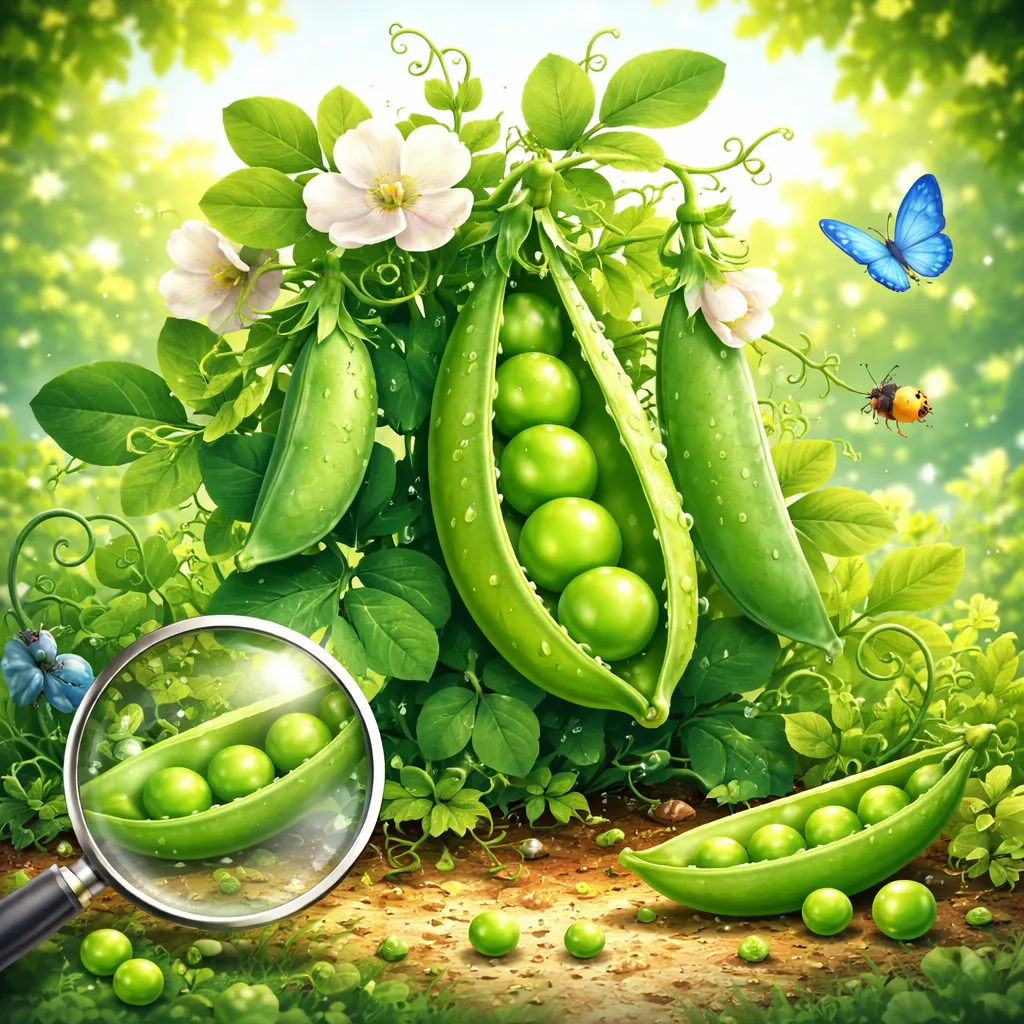

Have you ever helped in the kitchen and opened a long, green pod? Inside, you found a row of perfect, round, green jewels that pop out with a gentle squeeze. Maybe you’ve eaten them cooked, frozen, or straight from the garden. They are sweet, crunchy, and fun to harvest. This amazing plant grows on twisting vines that reach for the sun, and it’s one of the first vegetables people plant in spring. Let’s open the pod of discovery and learn about the wonderful Pea plant.
Let’s Learn the Word! – Open the Treasure Box of Language
Formal Name and Pronunciation This climbing friend is called the Pea plant. Its scientific name is Pisum sativum. You can say it like this: /piː plænt/ (pee plant). The word “Pea” sounds exactly like the letter “P.” Pea. Say it: Pea. It’s a very short, happy word.
The Etymology Tale The word “Pea” has a funny history. Long ago, in English, the word was “pease,” as in “pease porridge.” People thought the “s” sound at the end meant it was plural (more than one). So, they started calling one single seed a “pea!” It’s like the word was cut in half. The scientific name Pisum comes from a very old Latin word for the pea.
Nicknames and Friendly Aliases Pea plants have friendly names. The common garden type is the Garden Pea or English Pea. The type with flat, edible pods is the Snow Pea or Sugar Pea. The one with a thick, crunchy pod is the Snap Pea. Because they grow on vines, they are called Pea Vine. The young, curly shoots are a gourmet treat called Pea Shoots or Pea Tendrils.
Building Your Word Web: Core Parts Let’s learn the words for a Pea’s clever body. The Pod is the green house that holds the peas. A single Pea is the round seed inside. The Vine is the long, thin stem that grows upward. Tendrils are the special thin, curly threads the vine uses to grab onto things and climb. The Leaf is usually made of smaller leaflets and ends in a tendril. The Flower is most often white, sometimes pink or purple, and looks like a little butterfly. The Root has nodules—tiny bumps that are homes for helpful bacteria.
Action and State Words Pea plants are active climbers. They sprout quickly in cool soil. The vine climbs and twines with its tendrils. The pod swells as the peas inside grow. You can pop a pod open to harvest. The plant fixes nitrogen in the soil. A pea plant is climbing, cool-season, nutritious, and annual.
Ecosystem Friends Vocabulary The pea patch is a helpful place. Bees and other pollinators visit the sweet flowers. Birds might snack on the tender shoots. The most important friends are underground—the Rhizobia bacteria in the root nodules. They take nitrogen from the air and feed the plant, which in turn feeds the soil. It’s a perfect partnership.
Cultural Imprint in Language Peas are in our stories and rhymes. The nursery rhyme goes: “Pease porridge hot, pease porridge cold, pease porridge in the pot, nine days old.” This shows how long people have eaten peas! The phrase “two peas in a pod” means two people or things that are very similar and close. Peas symbolize simplicity, friendship, and the joys of the garden.
Ready for Discovery We know its climbing, popping name. Are you ready to be a garden detective and uncover the secrets of this springtime favorite? Let’s explore the life of the Pea plant.
Discover the Plant’s Secrets! – A Nature Detective’s Notebook
The Plant Passport Peas belong to the legume family, Fabaceae. Their genus is Pisum. The plant is an annual vine that can be low and bushy or tall and climbing. The leaves are compound, with one or more pairs of leaflets and a curling tendril at the end. The flowers are typical “sweet pea” shaped. The fruit is the pod, containing several seeds (the peas). It thrives in cool weather and is one of the first crops planted in spring. It grows quickly and is usually harvested in late spring or early summer.
Survival Smarts The pea plant’s brilliant trick is its tendrils. These thin, sensitive threads reach out and coil around anything they touch—a stick, a fence, or other plants. This lets the vine climb up towards the sunlight without having a strong, woody stem. Another superpower is in its roots. The nodules host bacteria that grab nitrogen from the air, a natural fertilizer that helps the plant grow strong and even enriches the soil for the next plants.
Its Role and Gifts In the garden, peas are soil enrichers and early food producers. Their greatest gift is the delicious, sweet pea seed, packed with protein, vitamins, and fiber. We eat the seeds from garden peas, the whole pods of snow peas, or the crunchy pods of snap peas. The young shoots are a tasty green. Peas can be eaten fresh, frozen, or dried. They are a true gift of spring.
Human History and Cultural Symbol Peas are one of the oldest cultivated vegetables, grown for over 7,000 years in the Middle East and Europe. They were a staple food for centuries. The scientist Gregor Mendel used pea plants in his famous experiments in the 1800s to discover the basic rules of heredity—how traits are passed from parents to offspring. This makes the humble pea a hero of genetics! It represents discovery, sustenance, and the beginning of science.
Fun “Wow!” Facts Get ready for a space fact! Peas were one of the first plants to be grown in the Veggie plant-growth system on the International Space Station! And here’s a science fact: Gregor Mendel grew over 28,000 pea plants to figure out how traits like color and shape are inherited. Your garden pea is a piece of scientific history!
From Ancient Vine to Your Fence The story of the Pea plant is one of climbing success. Would you like to grow your own living curtain of green and sweet pods? You can grow peas in a pot or garden easily! Let’s see how.
Let’s Grow It Together! – A Little Guardian’s Action Guide
Good for Home Growing? Perfectly! Peas are one of the best plants for children to grow. They sprout fast, grow quickly, and don’t need a lot of space. You can grow them in a large pot on a sunny balcony or in a garden bed. They love cool weather, so you can plant them very early in spring. Give them something to climb, and they will do the rest!
Little Gardener’s Toolkit You will need a packet of pea seeds (choose a variety you like to eat!). Get a large, deep pot or find a sunny garden spot. Use good potting soil. Have a watering can ready. You will also need a support: a small trellis, a tomato cage, or even some sticks and string for the tendrils to grab.
Step-by-Step Growing Guide
Planting Your Climber Plant peas as soon as the soil can be worked in early spring—they don’t mind a little chill! Plant the seeds about 1 inch deep and 2 inches apart. If in a pot, plant seeds in a circle around the edge of the pot. Water the soil well. Place your support in the center. Put the pot in a sunny spot.
Care Calendar Keep the soil moist until the seeds sprout. Peas need regular water, especially when they are flowering and making pods. They love full sun but can handle a little shade. You don’t need to fertilize because they make their own nitrogen! Just make sure their tendrils can find the support to climb.
Watch and Be Friends Watch for the first shoots to pop out of the soil. See the first pair of leaves, then watch for the tendrils to appear. The tendrils will slowly reach out and wrap around your support. Watch for the pretty flowers. Then, tiny pods will form where the flowers were. Watch the pods get longer and fatter. The best part is picking a pod and eating the sweet peas right in the garden!
Problem Diagnosis If leaves turn yellow, it might be too hot—peas love cool weather. If you see holes in leaves, look for tiny beetles; pick them off. The most common problem is not providing a support for climbing vines, which can make them tangled on the ground. Also, don’t plant them in the heat of summer.
Your Rewards and Gifts Your gift is the taste of sunshine and spring. You are learning about plant growth, the importance of support, and the joy of harvesting your own food. Caring for peas teaches patience, gentle observation, and the sweet reward of eating something you nurtured from a tiny, hard seed. You become a grower of delicious science.
Creative Fun Start a Pea Pod Diary. Draw your plant each week. Measure how high it climbs. Make a simple trellis from sticks and yarn. Press a pea flower and a leaf in a book. With an adult, make a simple pea and mint soup or just enjoy them raw. Create a comic strip about a pea’s journey from seed to pod. Write a song about the climbing, coiling tendrils. Count how many peas are in different pods—are they all the same?
Growing a Curtain of Green By planting peas, you are not just growing a vegetable. You are growing a living lesson in botany and genetics, a snack for your table, and a beautiful green decoration. You are a cultivator of spring’s first taste.
Conclusion and Forever Curiosity What a climbing, popping, and sweet journey! You started by learn about the Pea plant, you discovered its secrets as the tendril-climbing, nitrogen-fixing hero of the spring garden, and you learned how to help it grow on your own. You now know the Pea plant is not just a vegetable; it is a soil scientist, a champion climber, a piece of genetic history, and a symbol of fresh beginnings. Remember, its power is in its partnership and its sweet gift. Your curiosity helps you see the wonder in everyday plants. Keep planting seeds of all kinds, watching them grow, and tasting the fruits of your care. Your adventure to learn about the Pea plant shows us that great discoveries and great tastes often come in small, green packages.