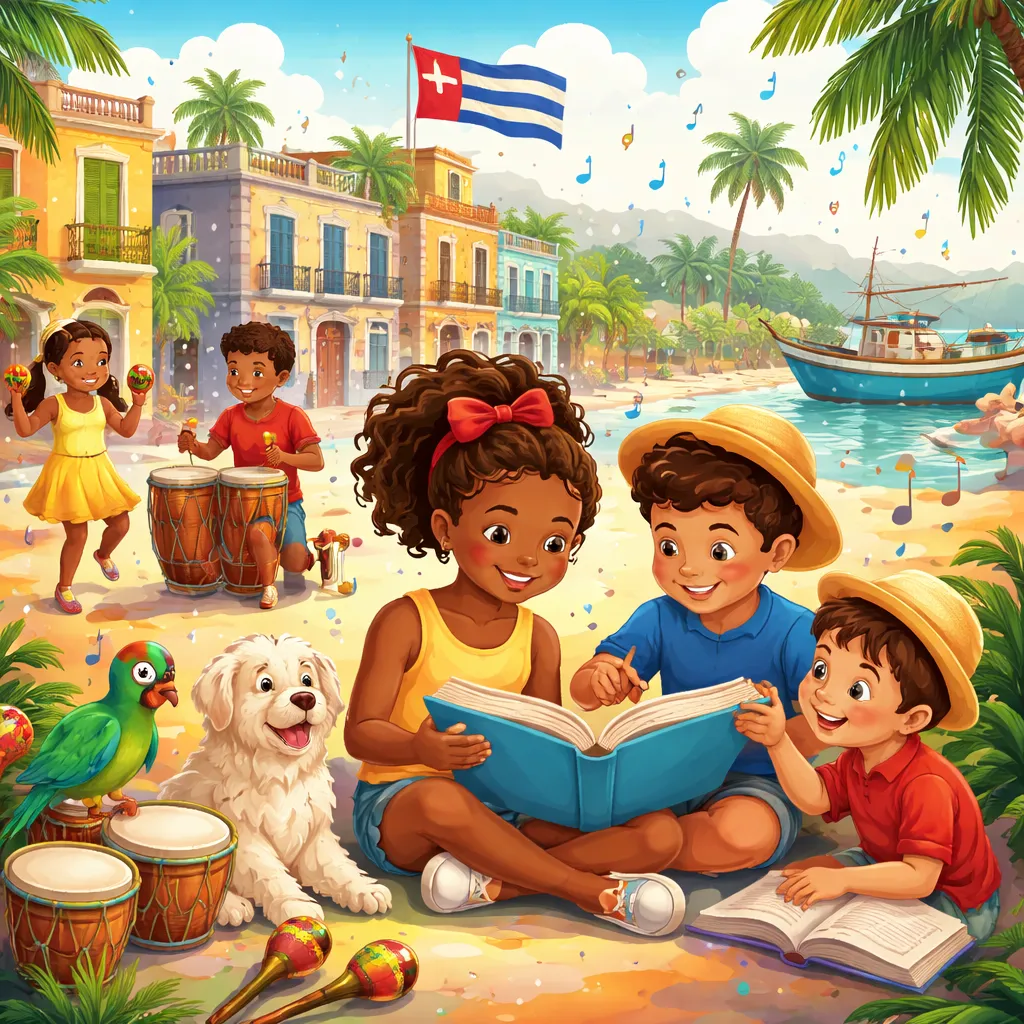

A Friendly Hello and First Impressions
?Hola! (OH-lah). This is the warm, musical "Hello" in Spanish. ?Gracias! (GRAH-see-ahs). This is a sincere "Thank you". People say it with a big smile. Learning reading about Cuba starts with these friendly, rhythmic words.
Cuba is the largest island in the Caribbean. Its shape looks like a sleeping crocodile. The crocodile rests in the blue sea. The country is in the Caribbean Sea. It is part of North America. The United States is to the north. Mexico is to the west. The island is long and narrow. It has many small keys and beautiful beaches.
People call it the "Pearl of the Antilles". This nickname is very old. It describes the island's beauty and value. Another name is the "Key to the Gulf". Cuba's location is very strategic. It controls the entrance to the Gulf of Mexico. What music plays on the streets of this tropical pearl?
Deep Dive into Culture and Stories
Echoes of History
A national hero is Jos谷 Mart赤. He was a poet, writer, and revolutionary. He lived in the 19th century. He fought for Cuba's independence from Spain. He believed in freedom for all. He died in battle in 1895. His words and ideas inspire Cubans today. His story is a key part of learning reading about Cuba. It is a story of passion and sacrifice.
Another important moment was the Cuban Revolution. Fidel Castro led it. The revolution succeeded in 1959. It changed the country completely. The government became socialist. This period is very important. It shapes modern Cuba. The revolution's legacy is complex. It is a story of change and controversy.
A World of Medicine and Music
Cuba gives the world two great gifts. The first is medical cooperation. Cuban doctors are famous. They travel to other countries. They help in disasters and epidemics. Cuba also makes its own vaccines. The country has a strong healthcare system. This is a gift of solidarity.
The second gift is music. Cuban music is loved everywhere. Styles like son, mambo, and salsa started here. The rhythm makes everyone want to dance. Musicians like Compay Segundo spread this joy. This music is a UNESCO treasure. It is a gift of rhythm and soul.
A Land of Plains and Mountains
Cuba's geography is varied. Most of the island is flat plains. These are perfect for farming. The west has rolling hills. The southeast has the Sierra Maestra mountains. These are the highest mountains. The coast has many natural harbors. The beaches have white sand and clear water.
The climate is tropical. It is warm all year. The dry season is from November to April. The rainy season is from May to October. Hurricanes can sometimes hit the island. The environment shapes life. People grow sugarcane, tobacco, and coffee. Houses are often painted in bright colors. The colors are like a rainbow. This brightens the streets. The main export was sugar. Now tourism and services are important.
A special animal is the Cuban crocodile. It is smaller than other crocodiles. It lives only in Cuba. The national bird is the tocororo. It has red, white, and blue feathers. These are the colors of the Cuban flag. The national flower is the butterfly jasmine. It is white and fragrant. The royal palm tree is a national symbol. It is tall and graceful.
Landmarks of History and Color
Visit Old Havana. It is called "La Habana Vieja". It is a UNESCO World Heritage site. The streets are full of history. Colorful buildings line the cobblestone roads. You can see old forts and palaces. The Capitolio building looks like the U.S. Capitol. A fun story is about a cannon shot. Every night at 9 p.m., a cannon fires. This was a signal to close the city walls. The tradition continues today.
See the Vi?ales Valley. It is in the west. The valley has strange limestone hills. They are called "mogotes". The land is red and green. Farmers grow tobacco in the traditional way. You can see oxen plowing the fields. The landscape looks like a painting. A legend says the mogotes are petrified giants. They protect the valley.
Another wonder is the Malec車n in Havana. It is a long sea wall. It stretches for 8 kilometers along the coast. People walk, fish, and talk here. It is a place for meeting and relaxing. The waves crash against the wall. The sunset view is beautiful. It is the soul of the city.
Festivals of Fire and Drum
The biggest festival is the Carnival of Havana. It happens in July and August. The streets fill with people. Dancers wear amazing costumes. They move to the sound of conga drums. Giant floats parade down the street. The music is loud and joyful. The festival is a burst of color and energy. It celebrates Cuban culture and resilience.
Another important day is Independence Day. It is on October 10th. It marks the start of the war for independence in 1868. There are parades and speeches. The national flag is everywhere. The colors are blue, white, and red. A single white star is on a red triangle. People celebrate with music and food. The day is about freedom and national pride.
Food and Flavors
The national dish is Ropa Vieja. It means "old clothes". It is shredded beef in a tomato sauce. The meat looks like torn rags. It is served with rice and black beans. Families eat it for Sunday lunch. It tastes savory, tender, and hearty. It is a classic comfort food.
You must try Moros y Cristianos. This means "Moors and Christians". It is a dish of rice and black beans. They are cooked together. The black beans are the Moors. The white rice is the Christians. It is a symbol of the island's mixed history. The dish is simple, tasty, and filling. It is a staple of daily life.
A Culture of Resilience and Sport
Baseball is the national sport. Cubans love baseball passionately. The season is a big event. Many great players come from Cuba. Children play in streets and fields. The sport is a shared national passion. This love for baseball is a fun part of learning reading about Cuba.
Cuba is famous for its classic American cars. The 1950s cars are everywhere. They are brightly colored. They are kept running with great care. They are a symbol of ingenuity. They also show the country's unique history. These rolling museums are a lesson in creativity.
Tips for Young Explorers
Cultural Manners Matter
Cubans are very friendly and expressive. Greetings are warm. A handshake is common. Friends often hug. Say "?Hola! ?C車mo est芍s?" (Hello, how are you?). People like to chat. It is polite to ask about the family.
Punctuality is flexible. Being 15-30 minutes late is normal. This is called "hora cubana". But try to be on time for appointments. For social events, it is fine to be late.
Always say "buen provecho" before eating. It means "enjoy your meal". It is a nice custom. Compliment the food. The cook will be very happy.
A Note on Staying Safe
Cuba is a very safe country. Violent crime is rare. But be smart in cities. Do not show expensive phones or cameras. Keep your bag close in crowds. Use common sense.
The sun is very strong. Use a high SPF sunscreen. The tropical sun can burn you quickly. Wear a hat and sunglasses. Drink lots of water to stay hydrated.
Be careful with street food. Eat at busy places. The food should be cooked fresh. This is usually a good sign. Drink bottled water. It is called "agua embotellada".
A Tasty Stop
Look for a "coppelia" stand. This is an ice cream parlor. Try the ice cream. It is creamy and delicious. The flavor "coppelia" is a mix of fruits. Or try "granizado". This is a sweet shaved ice. It is perfect on a hot day. Eat it with a spoon. It is cool, sweet, and refreshing.
Healthy and Happy Travels
Drink bottled water. Tap water is not for drinking. Use it only for brushing teeth. This simple habit keeps you healthy. Bottled water is cheap and easy to find.
Mosquitoes can be annoying. Use insect repellent. This helps prevent itchy bites. Wear light, long sleeves in the evening. Your hotel may have a mosquito net. Use it.
Wear comfortable walking shoes. You will walk a lot. The streets in old towns are cobblestone. Good shoes make exploring fun. You can dance salsa all night.
Your Invitation to Explore
Start your journey with music. Listen to Cuban son or salsa. Feel the rhythm. Try to dance a few steps. Or, read a poem by Jos谷 Mart赤. His simple words are powerful. This is a wonderful way of learning reading about Cuba.
Visit a local market. Look for Cuban coffee or a cigar. Smell the rich aromas. Imagine the tobacco fields. You can also try making a simple rice and bean dish. Taste the staple food of the island. Imagine the family meals in Havana.
The world is a big, open book. Each country is a different chapter. Cuba's chapter is about music, revolution, and vintage cars. Open it with curiosity. Read about its heroes, rhythms, and resilience. Your curiosity is your guide.
Cuban families share a pot of ropa vieja. Friends play baseball in the street. Children dance to music in the park. We all know these feelings. We love sharing meals. We enjoy sports and music. We cherish time with friends. Learning about Cuba shows us this. Our global family shares the same simple joys. Keep exploring, one page, one country, at a time. Your adventure has just begun.