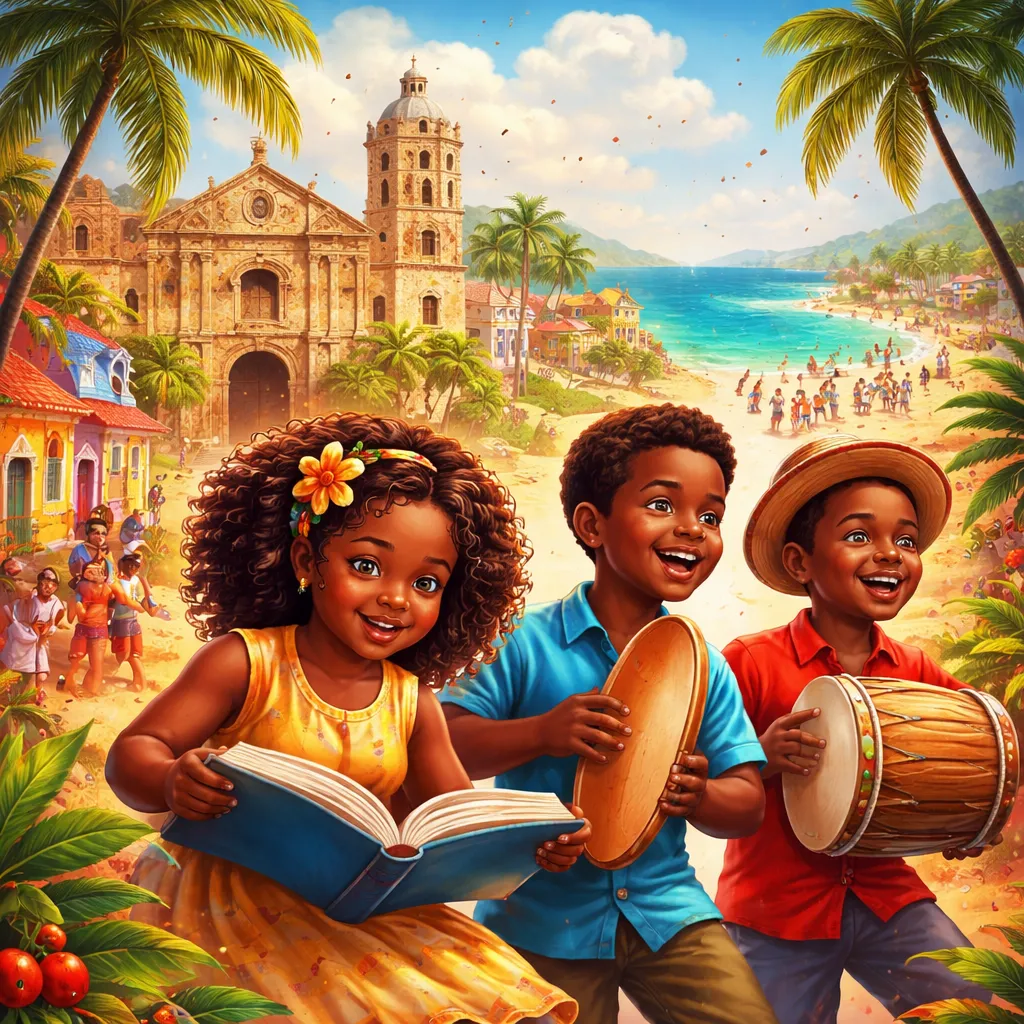

A Friendly Hello and First Impressions
?Hola! (OH-lah). This is the warm, musical "Hello" in Spanish. ?Gracias! (GRAH-see-ahs). This is a sincere "Thank you". People say it with a big smile. Learning reading about the Dominican Republic starts with these friendly, rhythmic words.
The Dominican Republic is on an island. It shares the island of Hispaniola with Haiti. Its shape looks like a rugged triangle. The triangle points toward Puerto Rico. The country is in the Caribbean, part of North America. The Atlantic Ocean is to the north. The Caribbean Sea is to the south. The land is a mix of mountains, valleys, and beautiful beaches.
People call it the "Cradle of the Americas". Why? The first permanent European settlement was here. It was in Santo Domingo. Another nickname is the "Land of Eternal Spring". The weather is warm and pleasant all year. The island has spring-like weather. What music fills the air in this historic land?
Deep Dive into Culture and Stories
Echoes of History
A founding father is very important. His name was Juan Pablo Duarte. He lived in the 1800s. He dreamed of a free country. He and others fought for independence from Haiti. The Dominican Republic became free in 1844. Duarte is a national hero. His story is a key part of learning reading about the Dominican Republic. It is a story of love for one's country.
Long before Duarte, the Taino people lived here. They were the first inhabitants. Then Christopher Columbus arrived in 1492. The island became the center of Spanish rule. The first university, hospital, and cathedral in the Americas were built here. This history is a source of great pride.
A Gift of Rhythm and Joy
The Dominican Republic gives the world a dance. It is merengue. This music and dance is fast and happy. The rhythm is driven by a drum and an accordion. It makes everyone want to move. UNESCO calls it a masterpiece. It is a gift of joy and cultural expression. This music is a key part of learning reading about the Dominican Republic.
A Land of Mountains and Beaches
The geography is very diverse. The center has the highest mountains in the Caribbean. Pico Duarte is the tallest. The east has sandy beaches and palm trees. The southwest is dry and has desert plants. The north coast has cliffs and green hills. The landscape changes from lush jungle to dry plains.
The climate is tropical. It is warm all year. The mountains are cooler. There is a rainy season from May to November. The environment shapes life. People grow sugarcane, coffee, and cocoa. They also grow tobacco for cigars. Houses are often painted in bright colors. They have open windows to catch the breeze. The main exports are medical devices, cigars, and bananas.
A special animal is the palmchat. It is the national bird. It builds big, messy nests in palm trees. The national flower is the rose of Bayahibe. It is a pink flower that grows on a tree. The mahogany tree is the national tree. It is strong and gives beautiful wood. The rhinoceros iguana is a unique lizard. It has horn-like bumps on its head.
Landmarks of Stone and Firsts
Visit the Zona Colonial in Santo Domingo. It is the first European city in the Americas. The streets are made of stone. You can see the first cathedral. It is the Cathedral of Santa Mar赤a la Menor. You can also see the Alc芍zar de Col車n. This was the palace of Diego Columbus. A fun story says the city has a secret tunnel. The tunnel goes from the palace to the river. The colonial zone is a living history book.
See Pico Duarte. It is the highest mountain in the Caribbean. It is 3,087 meters tall. The hike to the top takes about two days. You walk through pine forests and cloud forests. The view from the top is amazing. You can see the whole island. A legend says the mountain is the home of a spirit. The spirit protects the forest. The mountain is a challenge for hikers.
Another wonder is Los Haitises National Park. It is on the northeast coast. The park has mangrove forests and limestone hills. The hills look like giant mushrooms. You can see Taino cave drawings. You explore the park by boat. It is a wild, natural place full of birds.
Festivals of Color and Freedom
The biggest festival is Carnival. It happens every Sunday in February. Each town has its own parade. People wear amazing costumes and masks. The most famous character is the "Diablo Cojuelo". This means the "Limping Devil". He wears a colorful suit and mask. He carries a balloon to playfully hit people.
The music is loud and joyful. The parades are full of energy. The festival mixes African, Taino, and Spanish traditions. It is a celebration of identity and freedom. The whole country is in a party mood.
Another important day is Independence Day. It is on February 27th. It marks freedom from Haiti in 1844. There is a big military parade. People wear the national colors. The colors are red, white, and blue. The national flag has a white cross. The day is full of patriotic pride.
Food and Flavors
The national dish is La Bandera. This means "The Flag". It is a plate of rice, red beans, and meat. It is served with salad and fried plantains. People eat it for lunch almost every day. It is hearty, delicious, and filling. It tastes like the staple of daily life.
You must try Sancocho. It is a rich, hearty stew. It has many types of meat. It has chicken, pork, and beef. It also has vegetables like yuca and plantains. Families eat it for special Sunday meals. The stew is savory, thick, and comforting. It tastes like a celebration in a pot.
A Culture of Music and Sport
Music is in the soul of the people. Merengue is the national dance. But bachata is also famous. It is a slower, romantic music. Artists like Juan Luis Guerra are loved worldwide. This love for music is a joyful part of learning reading about the Dominican Republic.
Baseball is the national sport. The country produces many Major League Baseball stars. Children play in streets and fields. The sport is a passion. It is a way to dream big. The country is proud of its baseball legends.
Tips for Young Explorers
Cultural Manners Matter
Dominicans are very friendly and expressive. Greetings are important. A handshake is common. Friends often hug. Say "?Hola! ?C車mo est芍s?" (Hello, how are you?). People like to chat. It is polite to ask about the family.
Punctuality is flexible. Being 15-30 minutes late is normal. This is called "la hora dominicana". But try to be on time for appointments. For parties, it is fine to be late.
Always say "buen provecho" before eating. It means "enjoy your meal". It is a nice custom. Compliment the food. The cook will be very happy.
A Note on Staying Safe
The Dominican Republic is generally safe. But be smart in cities. Do not show expensive phones or jewelry. Keep your bag close in crowds. Use official taxis. Ask your hotel for safe areas.
The sun is very strong. Use a high SPF sunscreen. The tropical sun can burn you quickly. Drink lots of water. Stay hydrated.
Hurricane season is from June to November. Check the weather forecast. Follow local advice. This keeps you safe.
A Tasty Stop
Look for a "chimichurri" stand. It is not the Argentinian sauce. It is a Dominican burger. The meat is in a crunchy roll. It has cabbage, tomatoes, and sauces. It is delicious and messy. Eat it with your hands. The flavors are savory, crunchy, and tangy.
Healthy and Happy Travels
Drink bottled water. Tap water is not for drinking. Use it only for brushing teeth. This simple habit keeps you healthy. Bottled water is cheap and easy to find.
Use insect repellent. Mosquitoes can be annoying, especially at dusk. It helps prevent itchy bites. Wear light, long sleeves in the evening.
Wear comfortable walking shoes. You will walk a lot. The old town has cobblestone streets. Good shoes make exploring fun. You can dance merengue all night.
Your Invitation to Explore
Start your journey with music. Listen to a merengue song. Feel the fast, happy rhythm. Try to dance a few steps. Or, read about Juan Pablo Duarte. Learn about his dream of freedom. This is a wonderful way of learning reading about the Dominican Republic.
Visit a local market. Look for Dominican cocoa or coffee. Taste the rich flavors. Imagine the mountains where they grow. You can also try making a simple rice and bean dish. Taste the staple food of the island. Imagine the family meals in Santo Domingo.
The world is a big, open book. Each country is a different chapter. The Dominican Republic's chapter is about music, baseball, and the first city. Open it with curiosity. Read about its history, rhythms, and resilience. Your curiosity is your guide.
Dominican families share a plate of La Bandera. Friends play baseball in the street. Children dance in the Carnival parade. We all know these feelings. We love sharing meals. We enjoy sports and music. We celebrate with our community. Learning about the Dominican Republic shows us this. Our global family shares the same simple joys. Keep exploring, one page, one country, at a time. Your adventure has just begun.