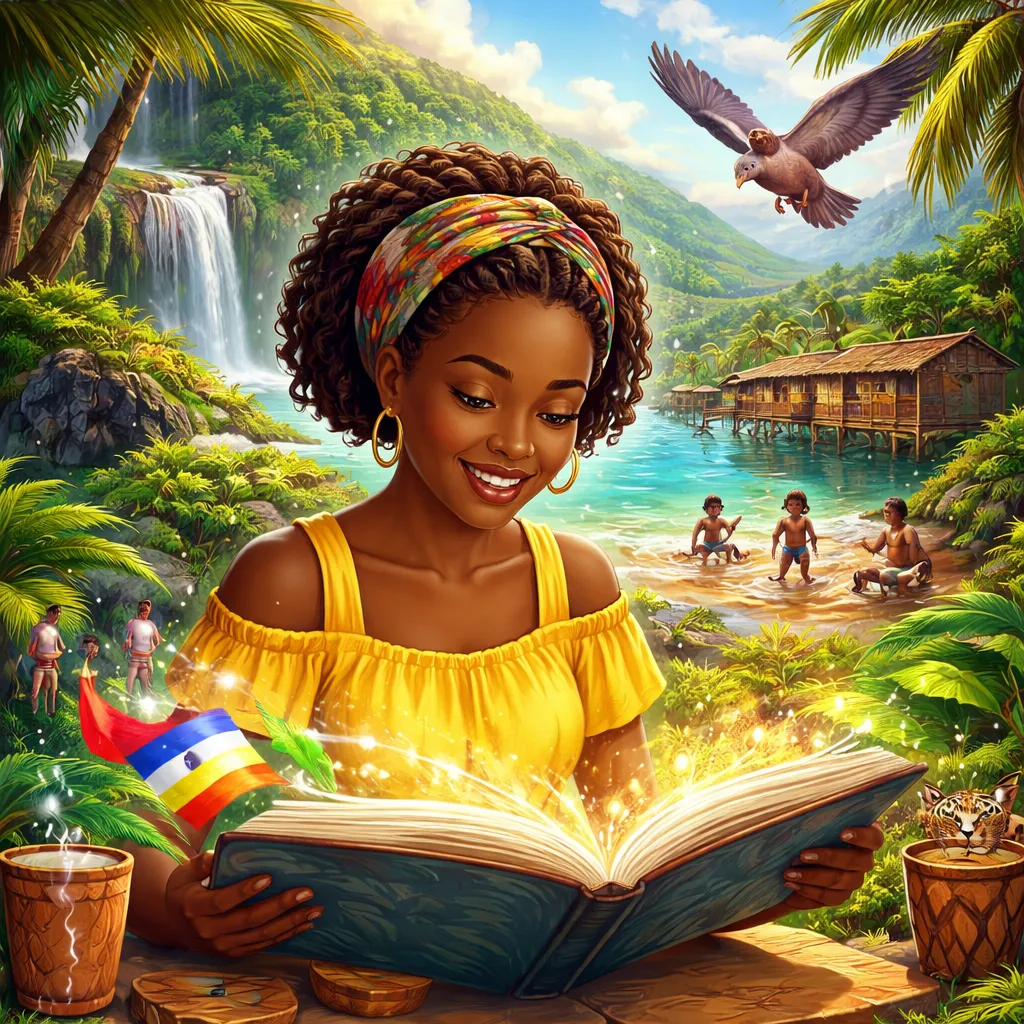

A Friendly Hello and First Impressions
?Hola! (OH-lah). This is the official "Hello" in Spanish. ?Gracias! (GRAH-see-ahs). This is a sincere "Thank you". People speak Spanish every day. Learning reading about Equatorial Guinea starts with these European words in Africa.
Equatorial Guinea is in Central Africa. Its shape is two separate pieces. The larger piece is the mainland. It is called R赤o Muni. The smaller piece is the island of Bioko. The country is in Africa. Cameroon and Gabon are its neighbors. The Gulf of Guinea touches its coast. The land is a mix of dense forest and volcanic islands.
People call it the "Kuwait of Africa". This nickname comes from its oil wealth. The country has a lot of oil. Another name is the "Only Spanish-Speaking African Nation". Spanish is the official language. This is unique in Africa. What mysteries lie in its green forests?
Deep Dive into Culture and Stories
Echoes of History
Long ago, the Bubi people lived on Bioko Island. They had their own kingdom. Their king was called the "Moka". He ruled from the village of Moka. The Bubi were skilled farmers. They grew yams and cocoyams. They lived in peace. Their story is a key part of learning reading about Equatorial Guinea. It is a story of a forest kingdom.
Then, European explorers arrived. The Portuguese came first. Later, Spain took control. The country was a Spanish colony. It gained independence in 1968. The first president was Francisco Mac赤as Nguema. His rule was very harsh. The country suffered. Today, it is ruled by his nephew. The country is working on development.
A World of Energy
Equatorial Guinea gives the world energy. It is a major oil and gas producer. The oil is under the sea. It brings a lot of money to the country. The country also grows cocoa. Cocoa beans make chocolate. This mix of oil and cocoa is unique. It shows the country's natural wealth.
A Land of Forest and Sea
Equatorial Guinea's geography is two parts. The mainland is covered in dense rainforest. It has low hills and many rivers. The island of Bioko is volcanic. It has high mountains and black sand beaches. The landscape is green and humid.
The climate is tropical. It is hot and wet all year. Rain is very common. The environment shapes life. In the forest, people hunt and fish. They grow cassava, plantains, and cocoa. Houses are often made of wood with thatched roofs. In the city, buildings are modern. The main export is oil. Cocoa and coffee are also important.
A special animal is the drill monkey. It lives only in this region. It has a colorful bottom and face. It is very shy. The national animal is the goliath frog. It is the world's largest frog. The national tree is the ceiba. It is a giant, sacred tree. The national flower is the vermilion torch-ginger. It is red and spiky.
Landmarks of Faith and Nature
Visit the Cathedral of Santa Isabel. It is in the capital, Malabo. It is a beautiful old church. It was built in 1916. The cathedral has two tall towers. The inside is quiet and cool. The stained glass windows are pretty. A fun story says the cathedral bells were a gift. They came from Spain by ship. The cathedral is a symbol of history.
See the Monte Alen National Park. It is on the mainland. It is a huge area of rainforest. The park has many animals. You can see gorillas, chimpanzees, and forest elephants. The air is full of bird sounds. You must hike with a guide. A legend says a spirit protects the forest. The spirit is a giant snake. The park is wild and beautiful.
Another wonder is the Basilica of the Immaculate Conception. It is in the city of Mongomo. It is a very large, modern church. It can hold thousands of people. The building is white and grand. It shows the country's Catholic faith. It is a striking sight in the forest.
Festivals of Dance and Freedom
The biggest national holiday is Independence Day. It is on October 12th. It marks freedom from Spain in 1968. There is a big parade in Malabo. The military and school bands march. Traditional dancers perform. They wear colorful costumes and masks. The drums are loud and fast.
People wear clothes with the national flag. The flag has green, white, and red. A blue triangle is on the left. A coat of arms is in the center. Families have parties with music and food. The day is full of national pride.
Another important festival is Christmas. People go to church at midnight. Then they have a big family meal. They eat roast meat, rice, and plantains. Children receive small gifts. The holiday is about family and faith.
Food and Flavors
The national dish is Succotash. It is a hearty stew. It is made with smoked fish or meat. It has peanuts, plantains, and okra. It is cooked in palm oil. The stew is thick and savory. Families eat it with fufu. Fufu is pounded cassava. It is a filling, everyday meal.
You must try Grilled Fish. The fish is fresh from the ocean. It is marinated with peppers and spices. It is cooked over charcoal. The skin is crispy. The meat is soft and flaky. People eat it with fried plantains. It is a popular meal by the sea. It tastes smoky and delicious.
A Culture of Rhythm and Language
Music is central to life. The Fang people have a famous instrument. It is the "mvet". It is a string instrument. It is used to tell epic stories. Drums are also very important. This love for rhythm is a key part of learning reading about Equatorial Guinea. It connects people to their history.
The country is unique in language. Spanish is the official tongue. But people also speak French and Portuguese. Local languages like Fang and Bubi are strong. This mix of languages is special. It shows the country's place in the world.
Tips for Young Explorers
Cultural Manners Matter
Elders are highly respected. Always greet the oldest person first. A handshake is common. Say "Buenos d赤as" (Good morning). Use titles like "Se?or" (Mr.) or "Se?ora" (Mrs.). This is polite.
When visiting a home, bring a small gift. Fruit, drinks, or pastries are good. Do not start eating until the host invites you. Try a bit of everything. Compliment the food. The cook will be happy.
Dress modestly. The country is conservative. Wear clothes that cover your shoulders and knees. This shows respect, especially in villages.
A Note on Staying Safe
Equatorial Guinea is generally safe. But be careful in cities at night. Do not walk alone. Keep your belongings close. Do not show expensive phones or cameras. Use common sense.
The rainforest is wild. Only go with a certified guide. Do not touch plants or animals. Some are dangerous. Your guide knows the way. Follow their advice.
A Tasty Stop
Look for "bollo" on the street. It is a steamed corn dough. It is wrapped in a banana leaf. It is soft and white. People eat it for breakfast or a snack. Eat it hot. The bollo is plain, soft, and filling. It is often eaten with fish or sauce.
Healthy and Happy Travels
Drink only bottled water. This is the most important rule. Do not drink tap water. Avoid ice in drinks. Brush your teeth with bottled water. This keeps your stomach happy.
Malaria is a big risk. Take anti-malaria medicine if your doctor says. Use strong insect repellent. Wear long sleeves in the evening. Sleep under a mosquito net. This prevents bites.
The sun is very strong. Wear a hat and use sunscreen. The humidity can be tiring. Drink lots of water to stay hydrated. Wear light, cotton clothing.
Your Invitation to Explore
Start your journey with language. Learn a few Spanish words. Say "hola" to your family. Or, listen to the music of the mvet. Hear the storytelling sound. This is a wonderful way of learning reading about Equatorial Guinea.
Visit a natural history museum. Look for animals of the African rainforest. See a model of a drill monkey or a goliath frog. Imagine the thick, green jungle. You can also draw a picture of a ceiba tree. Make it tall and grand, with roots deep in the earth.
The world is a big, open book. Each country is a different chapter. Equatorial Guinea's chapter is about oil, Spanish, and sacred forests. Open it with curiosity. Read about its kingdoms, drums, and dual identity. Your curiosity is your guide.
Families in Malabo share a pot of succotash. Storytellers play the mvet for children. Friends play soccer on a dusty field. We all know these scenes. We love sharing meals. We enjoy stories and music. We play games with friends. Learning about Equatorial Guinea shows us this. Our global family shares the same simple joys. Keep exploring, one page, one country, at a time. Your adventure has just begun.