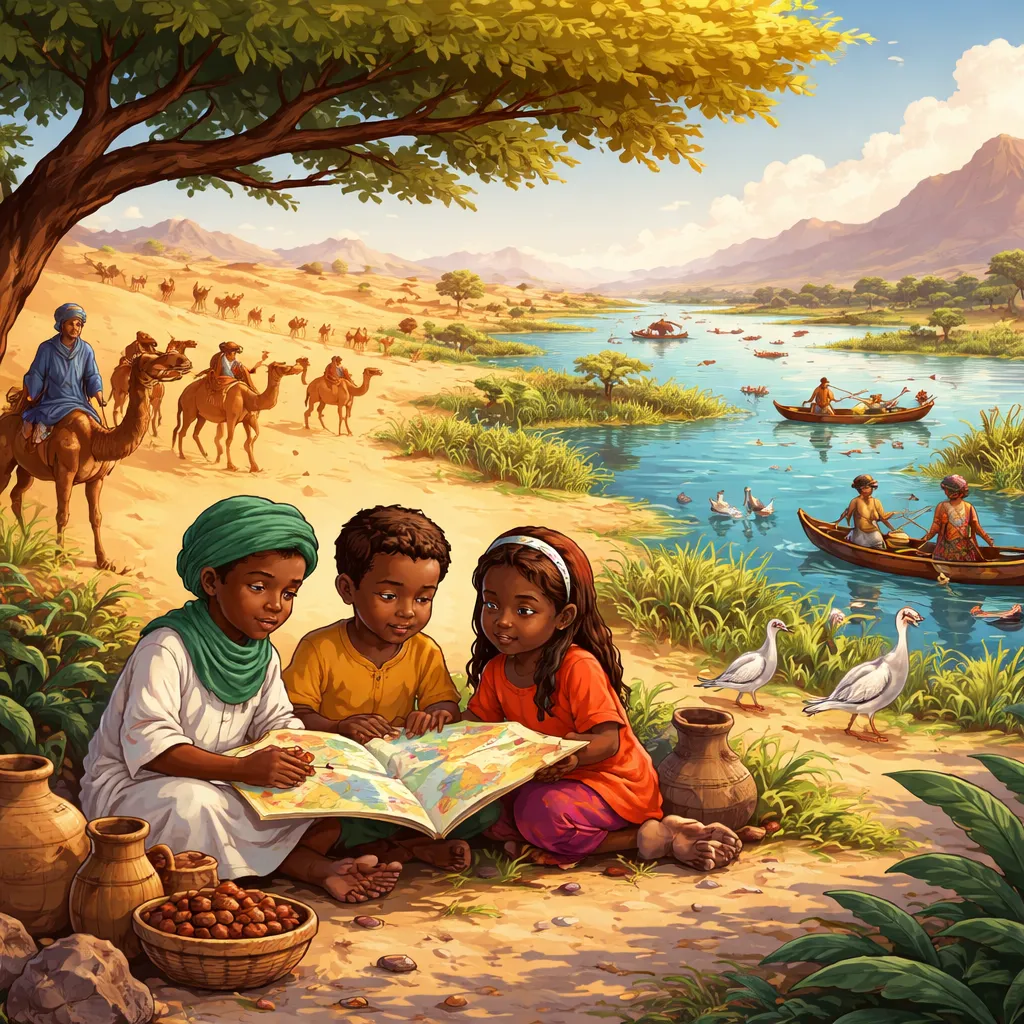

A Friendly Hello and First Impressions
As-salamu alaykum! (ah-sah-LAH-moo ah-LAY-koom). This Arabic greeting means "Peace be upon you". Merci! (mehr-SEE). This is "Thank you" in French. People use both every day. Learning reading about Chad starts with these two traditional words.
Chad is a large, landlocked country. It sits in the very heart of North-Central Africa. Its shape looks like a giant, uneven circle. The country is in Africa. Libya, Sudan, and Cameroon are its neighbors. The great Sahara Desert covers the northern third. The mighty Lake Chad is in the west. The land is a world of harsh beauty.
People call it the "Dead Heart of Africa". This nickname is old and not very nice. It came from the dry, remote desert. But Chad is very much alive. Another name is the "Land of the Toubou". The Toubou are a tough desert people. They are famous for their camel caravans. What stories do the desert winds carry?
Deep Dive into Culture and Stories
Echoes of History
Long ago, a great empire ruled the region. It was the Kanem-Bornu Empire. It lasted for over 1,000 years. The empire was rich and powerful. It controlled trade routes across the Sahara. It traded salt, gold, and slaves. The empire was a center of Islamic learning. Its history is a proud part of learning reading about Chad.
A more recent history involves conflict. Chad has had civil wars and unrest. The country is working hard for peace. The people are resilient. They face many challenges. Their story is about survival and hope. This resilience is a key part of learning reading about Chad.
A World Heritage of Culture
The Lakes of Ounianga are a UNESCO World Heritage site. They are a series of lakes in the desert. The lakes are incredibly beautiful. They are blue and green in a sea of yellow sand. They are a scientific wonder. They exist in one of the driest places on Earth. This site is a gift of natural beauty. It shows the surprising nature of Chad.
A Land of Desert and Savanna
Chad's geography has three zones. The north is the Sahara Desert. It is hot, dry, and sandy. The center is the Sahel. This is a semi-desert with some grass. The south is the Sudanian Savanna. It is greener with more rain. The land is mostly flat. The Tibesti Mountains are in the north. They are the highest in the Sahara.
The climate is mostly hot and dry. The north gets almost no rain. The south has a rainy season. The environment is tough. People adapt. In the desert, nomads live in tents. They herd camels and goats. In the south, people farm. They grow sorghum, millet, and peanuts. Houses are often made of mud bricks. They have flat roofs.
A special animal is the addax. It is a white antelope. It lives in the desert. It can survive without water for a long time. The national animal is the goat. It provides milk and meat. The national bird is the black-crowned crane. It is tall and elegant. The date palm is a vital tree. Its fruit is sweet and nutritious.
Landmarks of Water and Rock
Visit the Lakes of Ounianga. There are 18 lakes in total. The largest is Lake Teli. The water is very salty. The lakes are fed by underground water. The contrast of blue water and orange sand is stunning. A local legend says the lakes are the tears of a giant. He cried for his lost love. The lakes are a true desert miracle.
See the Ennedi Plateau. It is a sandstone massif in the northeast. Wind and water carved it into amazing shapes. There are arches, towers, and canyons. The plateau has ancient rock art. The art shows giraffes, elephants, and people. The art is thousands of years old. The plateau is a UNESCO site. It feels like a lost world.
Another wonder is Lake Chad. It is a huge, shallow lake. It is shared with three other countries. The lake is shrinking. This is a big problem. But it is still a vital resource. Many people fish and farm near it. The lake is a source of life.
Festivals of Culture and Color
The biggest festival is the Gerewol. It is celebrated by the Wodaabe people. The Wodaabe are nomadic herders. The festival happens after the rainy season. It is a male beauty contest. Men wear elaborate makeup and jewelry. They dance and sing for hours. They show their white teeth and eyes. The women choose the most handsome man. The festival is colorful and unique.
Another important day is Independence Day. It is on August 11th. It marks freedom from France in 1960. There is a parade in the capital, N'Djamena. The military and school groups march. People wear traditional clothes. The national flag is everywhere. The colors are blue, yellow, and red. The day is full of national pride.
Food and Flavors
The national dish is "Boule". It is a thick porridge. It is made from millet or sorghum flour. It is white and sticky. People eat it with their hands. They dip it into a sauce. The sauce can be okra, meat, or leaf sauce. The meal is simple and filling. It tastes like the staple of daily life.
You must try "Daraba". It is a popular vegetable stew. It has okra, tomatoes, and leafy greens. Sometimes it has meat or fish. It is cooked with peanut butter. The stew is thick and savory. It is served with rice or boule. It tastes hearty and nutritious.
A Culture of Music and Survival
Music is very important in Chad. The griot is a storyteller and musician. He passes history through songs. The music often uses the "hu hu" sound. This is a vocal technique. The music is rhythmic and soulful. It tells stories of love, war, and daily life. This love for music is a joyful part of learning reading about Chad.
The people are masters of survival. Life in the desert is hard. But they are tough and resourceful. They know how to find water. They know how to travel the dunes. This knowledge is passed from parent to child. It is a way of life.
Tips for Young Explorers
Cultural Manners Matter
Greetings are very important. Always greet people when you meet them. Shake hands with your right hand. A common greeting is "As-salamu alaykum". The reply is "Wa alaykum as-salam". You should ask about the person's health and family. This shows you care. Do not rush the greeting.
Elders are highly respected. Always greet the oldest person first. Listen when they speak. Do not interrupt. Stand up when an elder enters the room. Offer them your seat. This is good manners.
When eating, use your right hand. The left hand is considered unclean. Wash your hands before and after the meal. If food is shared from a common bowl, take only from the part in front of you. Always try a bit of everything. Compliment the cook.
A Note on Staying Safe
Chad has security problems. Some areas are not safe. Terrorist groups are active in the north and west. Kidnapping is a risk. It is very important to check travel advisories. It is best to travel with a trusted tour company.
In cities, be careful at night. Do not walk alone. Keep your belongings close. Do not show expensive items. Be aware of your surroundings. Listen to local advice.
A Tasty Stop
Look for "Salanga" in the market. It is dried, salted fish. It is a popular snack. The fish is small and crunchy. People eat it with peanuts. It is very salty and flavorful. Try a small piece. It is a taste of the lake.
Healthy and Happy Travels
Drink only bottled or boiled water. This is the most important rule. Do not drink tap water. Avoid ice in drinks. Brush your teeth with bottled water. This keeps your stomach happy.
The sun is extremely strong. Wear a hat and use sunscreen. The desert heat is dangerous. Drink lots of water to avoid dehydration. Wear light, loose clothing.
Malaria is a risk in the south. Take anti-malaria medicine if your doctor says. Use insect repellent. Wear long sleeves in the evening. Sleep under a mosquito net.
Your Invitation to Explore
Start your journey with a map. Find Chad, the landlocked country. See the huge Sahara Desert and Lake Chad. Then, listen to Chadian music online. Hear the rhythmic drums and voices. This is a wonderful way of learning reading about Chad.
Visit a natural history museum. Look for animals of the Sahara. See a model of a camel or an addax. Imagine the vast, sandy dunes. You can also draw a desert scene with a bright blue lake.
The world is a big, ancient book. Each country is a different chapter. Chad's chapter is about desert caravans, salty lakes, and resilient people. Open it with respect. Read about its festivals, music, and survival. Your curiosity is your guide.
Chadian families share a bowl of boule. Nomads gather for the Gerewol festival. Children help their parents herd goats. We all know these feelings. We love sharing meals. We enjoy music and celebration. We help our families. Learning about Chad shows us this. Our global family shares the same human spirit. Keep exploring, one page, one country, at a time. Your adventure has just begun.